Events
Think Tank
Is Europe Preparing for the Right Crisis? Lessons from Finland and the Eastern Flank
15 October 2026

30 June 2025

Democratic forces are struggling to win elections convincingly. FIMI/DIMI operations continue to affect results, and build polarisation and political disillusionment, preying on poor leadership.
Join our event


Click here to download the PDF of the policy brief
*EUDS consultation has ended. EUCSS consultation open until 5 September.
* Nawrocki won in Poland with 51% support, reflecting a polarised society. Dan won in Romania with 54%, but political disillusionment is rife.
* ANO Party set to win in Czechia, but public concerns about electoral interference by the current government (54%) and Russia (39%).
* Tisza leads Fidesz by 15%.
* Orbán and Fico push anti-NGO and anti-LGBTIQ+ legislation, diverting from economic struggles.
* Merz pushes for stricter action on Hungary and Slovakia.
* Tusk calls for repolonisation of the economy, amid US tariff negotiations and China threat.
* The EU unveiled a plan to phase out Russian energy by 2028.
* NATO allies set 5% defence targets amid ‘friends of steel’.
The six-month Polish EU Council (EUCO) Presidency successfully placed the ‘resilience of democracy to curb polarisation and radicalisation’ among the bloc’s priorities, as outlined in the latest June briefing of the European Democracy Shield (EUDS). 25 member states agreed to include language on defending democracy in the conclusions of the EUCO gathering on 27 May, as part of a broader security umbrella including civic education and strengthening civil society.
Meanwhile, public consultation closed for the EUDS and has now opened for the EU Civil Society Strategy (EUCSS). These mechanisms – should they prove effective, not just symbolic – could not come at a more critical time, amid ever-growing threats to electoral integrity, as well as falling public trust and involvement in democratic institutions.
The German Marshall Fund’s report on the EUDS warns that Russia and China are conducting ‘increasingly sophisticated foreign interference campaigns that blend information manipulation, cyberattacks, malign finance, economic coercion, and kinetic operations’. At the same time, internally, illiberal actors are eroding the rule of law and civic freedoms. The EU’s response often remains ‘fragmented and reactive’.
The EU Agency for Fundamental Rights lists many threats to European democracies in its annual report, including disinformation and misinformation, mal-use of AI, harmful rhetoric and more. It also warns of lacking teeth to combat those threats. The EU’s new digital regulations, for example, may be hampered by ‘lack of capacity, lack of political will and lack of compliance by online platforms.’
All of these threats are on display in the sandbox region of Central and Eastern Europe. They have affected elections over the past three months, with more interference expected throughout election periods in the second half of 2025.
Law and Justice (PiS)-backed Karol Nawrocki defeated pro-EU mayor of Warsaw Rafał Trzaskowski to become the next Polish President, securing 50.9% of the vote. While defeat for Trzaskowski can be put down to many factors – like a lack of convincing leadership, lower-than-expected turnout as a result, and 90% of a growing, far-right base opting for Nawrocki – there was also real interference, at home and from abroad.
Poland’s cybersecurity body (NASK) found that a foreign group had promoted Nawrocki and far-right candidates with a €120,000 operation. Russia also ramped up disinformation campaigns designed to build division and distrust, varying from anti-Ukraine, anti-migrant propaganda to critiques of NATO and the EU, as per the Alliance4Europe. At the same time, foreign-financed political adverts were also found promoting Trzaskowski on Facebook, prompting opposition outrage and concern within the FIMI defender community.
Now, there is added confusion around vote-counting, after tens of thousands of election protests were filed with the Supreme Court. A recount found that a number of polling stations wrongly attributed more votes to Nawrocki, while several officials have accused PiS of organising commissions filled with its supporters to ensure so-called ‘protection’ of voting.
‘Discussion around this issue [of voting irregularities] has revealed a high degree of polarisation and declining trust in the electoral process. The biggest challenge remains to build and maintain such trust. Another issue is the vague regulations on campaigning on social media. Great doubts surround the activities of third parties. This process also requires urgent changes to the electoral code,’ says Krzysztof Izdebski, Visegrad Insight Fellow from Poland, Director for Advocacy and Development at the Stefan Batory Foundation.
Pro-EU Bucharest mayor Nicușor Dan won a surprise victory in Romania with 54% support against far-right candidate George Simion. This came despite repeated claims of Russian interference. For example, an international influence operation comprising 32,500 TikTok videos targeted diaspora voters across Europe, amplifying fake slogans in support of Simion and amassing 40 million likes, according to tech company Refute. The Russian founder of the Telegram app also messaged all Romanian users in the week of the elections, claiming France had asked for ‘conservative’ voices in Romania to be silenced. All of this after pro-Russia candidate Călin Georgescu benefited from 27,000 fake TikTok accounts in November.
‘TikTok has emerged as a powerful political force in Central Europe, with its recommendation algorithms and influencer networks significantly shaping public opinion – most notably helping accelerate the rise of fringe candidates in Romania’s 2025 rerun of the presidential race. Meanwhile, in Poland, influencers on TikTok have been detected spreading disinformation about supposedly ‘rigged’ elections and directing insults at leading figures like Rafał Trzaskowski, demonstrating the app’s growing role as a conduit for political manipulation and toxicity,’ says Marcin Jerzewski 葉皓勤, Visegrad Insight Fellow from Poland, Head of the Taiwan Office of the European Values Center for Security Policy.
Importantly, Romania and Poland show not just how difficult it is to win elections, but that victory for pro-democratic forces is often followed by difficult coalitions or cohabitation.
Former Romanian Prime Minister Marcel Ciolacu resigned as head of the Social Democratic Party (PSD), the largest party in Romania, after Crin Antonescu, the mainstream-backed candidate, failed to make it to the presidential second round. It then took over a month of political wrangling for Ilie Bolojan to be appointed Prime Minister and for a broad pro-EU coalition government to win a confidence vote. Meanwhile, the far-right Alliance for the Union of Romanians (AUR) leads opinion polls on 38% support, according to the latest Informat/INSCOP Research barometer. Established political parties are seeing a decline in support, with the PSD falling dramatically to 16%.
‘Romania is known for the tumultuous elections of November 2024, yet the behaviour of political parties and leaders indicates new threats to democracy. One example is the manner the Constitutional Court considers interfering with the political process itself, not only the legislative, igniting debates about the potential misuse of such self-styled powers,’ says Radu Albu-Comǎnescu, Visegrad Insight Fellow from Romania, Lecturer at the University of Cluj-Napoca.
In Poland, Tusk heralded a ‘new beginning’ for his ruling coalition after it won a confidence vote in parliament, which he called himself to solidify support after Nawrocki’s presidential win. Ruling coalition leaders pledged tighter cooperation and the appointment of a government spokesperson to improve public messaging, but this is only the start of hard work. The close presidential result reflects a population that is still deeply divided, while 44.8% of Poles think Tusk is not the man for the job, according to a United Surveys poll.
‘FIMI never targets elections per se, as the traditional thinking goes. Rather, FIMI targets the social cohesion and the shared understanding of reality in a democratic society, the governing and decision-making processes, with the objectives to block, blur, delay or distort them. When applied in electoral contexts, the ultimate objective of FIMI is to split societies in equal camps – symbolic camps that do not have a shared understanding of reality – so as to render the future governing process almost impossible’, says Alina Bârgǎoanu, Visegrad Insight Fellow from Romania, Member of the European Digital Media Observatory Advisory Board.
Distrust of mainstream politicians is often the result of electoral interference, but also poor governance. In Poland’s presidential first round, turnout among voters aged 18-29 reached a remarkable 74%, but they flocked to the extreme left or right. The centrist Third Way alliance has now collapsed, after Polska 2050 and the Polish People’s Party confirmed they will run separately in the next election, ending a project that once aimed to reshape the country’s political middle.
‘A big factor is disillusionment and disengagement stemming from the feeling that mainstream parties are not addressing their concerns, fears and grievances. [Young people] seem not to be stakeholders anymore, they are not interested in partnering to fix broken parts of the system, they opt for blowing it up rather even if it costs and hurts initially. For me, this requires a systemic response and a new social contract,’ says Gabor Berczeli, Director at the Robert Schuman Institute, Advisory Board Member at European Party Monitor.
None of this bodes well for countries with key elections in the second half of 2025, like Moldova and Czechia. EU top diplomat Kaja Kallas’s warning that parliamentary elections in Moldova will be ‘a prime target of Moscow’s hybrid war’ is of little surprise, given that Russia spent nearly €200 million to buy votes in the Moldovan presidential race and EU referendum in 2024. Pro-EU forces won the latter with just 50.35% support.
After the Moldovan elections on 28 September, Czech citizens will vote on 3 October. The populist ANO party of billionaire former Prime Minister Andrej Babiš has been consistently polling above 30%, far ahead of the joint SPOLU list led by Prime Minister Petr Fiala (around 20%), far right SPD (around 13%), ruling coalition centrist STAN (10%), liberal Pirate Party (6%) and red-brown Kremlin-appeasing list STAČILO! (6%).
Like other countries in the region, Czechia has become more vulnerable to Kremlin disinformation. An internal Ministry of Interior survey, reported by PageNotFound, showed that 54% of people are worried the elections could be manipulated by the sitting pro-EU government, while 39% are worried that the elections will be manipulated by Russian information influence.
‘Figures suggest a strong proliferation of conspiracy thinking and doubting of democratic essentials in a country which has some of the best election integrity in the region. We can expect further normalisation of radical rhetoric in the mainstream public discourse and politics – likely to be impacted by the election campaign – combined with voter disillusionment whipped up by the unprecedented corruption scandal of the sitting cabinet involving a CZK 1 billion donation from a sentenced drug dealer,’ says Albín Sybera, Contributing Editor for Visegrad Insight from Slovakia.
Each election is different, but every election is now manipulated by a combination of FIMI operations and DIMI actors, which also prey on weak governance. Strong protections of electoral and democratic integrity – as well as support for CSOs and other means of encouraging public trust – are needed, with instruments like the EUDS and EUCSS taking on lessons from Central and Eastern Europe. The current trajectory is that, by 2027, each nation in the Visegrád Group could be governed by leaders with autocratic tendencies.
‘Poland’s presidential elections have upheld a stalemate in domestic politics, as President Nawrocki is expected to operate alongside the same fault lines with Prime Minister Tusk as President Duda did. This is a major threat to effective policy making and pro-democratic reforms. As most CEE political systems operate on a similar model, and with elections coming up in Czechia and Hungary, the same dynamic could play out elsewhere, slowing down the electorate’s desire for change,’ says Ivan L. Nagy, Visegrad Insight Fellow from Hungary, political journalist.
The incoming Danish EUCO Presidency is slated to build on the EU’s whole-of-society approach to defending democracy with ‘an explicit focus on the role of media and culture’, as per the June EUDS briefing. Many of the threats to media and culture are apparent in Central and Eastern Europe.
Hungary ranks as the third-worst country for press freedom in the EU, according to the 2025 World Press Freedom Index by Reporters Without Borders (RSF). Globally, Hungary comes in 68th place – falling from 67th place in 2024. Slovakia also dropped from 29th globally to 38th. In contrast, Czechia rose to 10th place in the world (from 17th last year), and Poland came in 31st (from 47th). Estonia climbed to second in the world, beaten only by Norway, marking its highest-ever position.
Viktor Orbán’s government is accused of handing more than €1 billion in unlawful subsidies to pro-government media between 2015 and 2023, heightening scrutiny over the Prime Minister’s grip on critical voices. Mass departures at the Origó Hungarian-language news website have also signalled its final merger into Hungary’s pro-government Mediaworks’ media machine. Meanwhile, Georg Spöttle, a pro-Fidesz propagandist and former Fidesz candidate, has become embroiled in a national security scandal, after it was revealed that he has ties to Russian Intelligence Services. The German-Hungarian media personality is best known for his regular appearances in government-aligned outlets.
Orbán’s inner circles have also decided that the HUN-REN research network will be dismantled and transferred to the Eötvös Lóránt University (ELTE). The latter is one of the last universities that is independent from the government and therefore receives less funding. If it were to become responsible for financing HUN-REN at the same time, it could well lead to both institutions facing financial difficulties.
The nine-place drop by Slovakia is perhaps even more concerning, however, as the Robert Fico government continues its public media takeover. Jozef Krošlák, a former spokesperson for authoritarian-era Prime Minister Vladimír Mečiar, was chosen as chair of Slovakia’s new public broadcaster (STVR) council. Martina Flašíková – the daughter of Smer Party founder, Fedor Flašík, and head of e-report, an outlet that has been called a conspiracy site – was then elected new STVR Director General. Fico has also doubled down on his proposal to scrap the country’s long-standing tradition of Sunday political talk shows, claiming they are dominated by ‘verbal attacks and aggressive exchanges of opinions’.
TV Markíza, the largest Slovak commercial TV, has also continued to scale down news reporting under PPF group ownership, removing flagship hosts and programmes. PPF, Czechia’s richest investment company, has meanwhile announced an offer to buy shares of the German media group ProSiebenSat.1. Media, having earlier collaborated with UAE partner e& to take over Serbian Total TV. Czech energy and media oligarch Daniel Křetínský is reportedly also eying a minority stake in the Spanish Prisa media group, which owns the influential El País and El Economista outlets.
The government takeover of public media in Slovakia is coupled with increased conspiracies and misinformation. When it was revealed, for example, that influential Smer officials between 2015 and 2018 systematically used EU funds to build their own mansions, Deputy Speaker of Parliament and one of Fico’s closest allies, Tibor Gašpar, called the entire scandal a ‘hybrid operation’ and claimed that ‘the real goal is to create a reason for the EU to blackmail Slovakia’. Fico labelled MEP Tomáš Zdechovský, who led the EU delegation sent to investigate, a ‘hired political assassin’. Peter Kotlár, the government envoy investigating alleged mismanagement of the Covid-19 pandemic, also published his controversial study, questioning the safety of Covid vaccines and accusing leading scientists of being ‘charlatans, quacks and frauds.’
‘The European democracy shield should have a mandatory component on education at all levels, requiring the introduction of year-long courses that offer critical tools on preventing disinformation via critical thinking and reinforced knowledge of institutions and of decision-making processes. The security component should be emphasised in association with the civil society, that can become a partner to such endeavour by shaping the agenda together with education institutions,’ says Radu Albu-Comǎnescu.
At the very least, ‘Communication policy about EU programmes for young people like Erasmus should be strengthened as well as any support for teachers willing to promote EU knowledge in their schools. Going local and strengthening financial support for initiatives like Europe Direct Information Centres is crucial in order to counteract disinformation about the EU which is spread by far-right politicians and their social media activities,’ says Marzenna Guz-Vetter, Senior Fellow at Visegrad Insight, Former Director of the European Commission Representation in Poland.
In Czechia, ANO plans to dismantle the government’s strategic communication department within hours of forming the next cabinet, as deputy leader Karel Havlíček said during a political podcast. This would be another blow to the fragmented efforts of the Czech state to counter disinformation and foreign manipulation and propaganda.
These efforts are not helped by a 4% y/y increase in cyberattacks on Czech companies and institutions. These range from a hacker posting fake content of Fiala’s X account, mentioning an attack by Russian forces ‘on Czech troops near the Kaliningrad border,’ to a full-blown Chinese cyber-campaign against the Ministry of Foreign Affairs, feared to have accessed thousands of emails since 2022. Similarly, 32% of Polish businesses faced a cybersecurity incident in 2024, the second-highest share in the EU according to Eurostat. The website of Poland’s governing party was hit with a cyberattack just two days before its presidential first round, leading Digital Affairs Minister Krzysztof Gawkowski to activate a national ‘cyber-shield’ to protect electoral infrastructure.
‘Strategic communication should be aimed at improving awareness of the democratic functioning of the country. Quality public media could be key in this. This does not have to be ‘barking at the bad guys,’ but calmly explaining how democracy works and what checks and balances are in place, and are working,’ says Albín Sybera.
‘It is certainly important to fund organisations that deal with the integrity of the electoral process, and identify and counteract the phenomenon of disinformation. It is also important to strengthen the mechanisms for involving organisations in the work on improving anti-corruption legislation not directly related to the electoral process, but, for example, having an impact on limiting the use of public resources for party purposes or politicians’ interests between elections,’ says Krzysztof Izdebski.
Fidesz has done much to discredit the role of anti-corruption institutions and the rule of law, most obviously announcing its intention to leave the International Criminal Court after hosting Israeli leader Benjamin Netanyahu in Budapest. It has also managed to get the US Treasury Department to remove key minister Antal Rogán from its Magnitsky sanctions list. This is despite the Trump administration expressing ‘serious concerns’ over corruption in Hungary in a recent trade report, and Transparency International once again denouncing the foundations behind the Central Bank – claiming they embezzled over €600 million from Central Bank assets in 2014. The State Audit Office reported that the Central Bank has misused over €1.2 billion, enriching people close to Fidesz and the bank.
At the same time, Orbán’s government prepares for the 2026 elections. A law meaning political parties will have no financial limit for spending in election campaigns was passed through parliament and now only requires the President’s approval – not that Fidesz respected the previous law. Bálint Gábor Nagy has also been elected Chief Prosecutor, making sure a Fidesz-loyal prosecutor will be in power in case the government fails next year and corruption cases are brought to light.
Meanwhile, civil society groups and government critics have reported receiving suspicious interview requests in recent months, similar to Black Cube’s infamous operations ahead of the 2018 and 2022 elections. In those instances, interviews were conducted many months before votes, from which videos were cut, often with quotes taken out of context, to surface later in pro-government media during the campaign. By far the most worrying, however, was a controversial bill targeting foreign-funded CSOs and media.
‘A parliamentary bill titled ‘Transparency of Public Life’ sent shockwaves through Hungarian society, as it proposed fines and bans for NGOs, media outlets, and even political parties if they received foreign funding and the government labelled them as a threat to sovereignty – akin to Russia’s foreign agent bill. Amidst popular backlash, Fidesz slowed down the adoption of the bill, and Undersecretary for Foreign Affairs Levente Magyar admitted that they might not even move forward with it. That said, the looming threat is enough to generate a chilling effect and lead to self-censorship, which cannot be downplayed,’ says Ivan L. Nagy.
Similarly, in Bratislava, tens of thousands demonstrated against a new, Russian-style law on NGOs put forward by Fico’s government. This would require NGOs to publish data on their donors and submit reports to authorities about their activities. Slovak National Party (SNS) chairman Andrej Danko admitted that the draft version was discussed during a visit to Moscow. The government defended the move as ‘legitimate’ in light of the EP’s decision to investigate NGO funding.
‘There are worrying signals coming from Brussels and EPP circles about attempts to undermine the credibility of NGOs in order to exclude them from keeping an eye on politicians,’ says Krzysztof Izdebski. This comes as some forces look to roll back the green agenda and use criticism of green NGOs as a precedent for conflict with NGOs in general. Meanwhile, Transparency International EU’s new analysis of more than 30,000 logs of EU lawmakers’ meetings with interest reps shows a growing presence from MAGA groups like the Heritage Foundation and Republicans for National Renewal.
The Slovak government has also sought to use the police to prosecute the opposition, whether by giving police officials luxury hotel rooms on the cheap – courtesy of Interior Minister Matúš Šutaj Eštok – or blocking parliamentary debate on a special report detailing systemic police brutality. Former Defence Minister and Demokrati Party leader Jaroslav Naď – who Slovak police recently attempted to detain over suspected embezzlement around military donations to Ukraine – has said that he receives death threats frequently, yet ‘We don’t even bother going to the police anymore – they’re too busy carrying out politically motivated witch hunts ordered by Fico’s government.’ Fico has escalated attacks on the officers who led the ‘Purgatory’ corruption investigations into two of his close allies, Tibor Gašpar and Norbert Bödör, now that the long-delayed case is set to proceed to trial.
Smer Justice Minister Boris Susko has begun using his powers to help influential individuals convicted of corruption, including ex-special prosecutor Dušan Kováčik and influential lawyer Zoroslav Kollár – both convicted of bribery.
However, National Bank Governor Peter Kažimír has been convicted of bribery and fined €200,000, or alternatively one year in prison – an important sign that Slovakia still has an independent judiciary capable and courageous enough to convict high-ranking individuals close to the Hlas Party. Slovakia’s conflict of interest committee also launched proceedings against Robert Kaliňák after he failed to declare a Croatian villa owned by his wife, and President Peter Pellegrini had to pay €10,000 for violating election rules last year, after it was revealed that his own Hlas party sent him money after the campaign ended. Unlike his main rival and former diplomat Ivan Korčok, who ran a transparent crowdfunding campaign, it appears that 46 out of Pellegrini’s 56 donors were Hlas members or had run as Hlas candidates in the 2023 elections.
In Poland, ‘There are numerous reports of irregularities in the counting of votes, which, with a difference of 370,000 votes, does not promote democracy and electoral integrity. In addition, there is still controversy surrounding the actions of the previous government and its ‘reshuffling’ of the Supreme Court. It is the Supreme Court that will review these protests, so there is a fear that it will not contribute to improving electoral integrity. On the contrary, regardless of the outcome, it will be questioned. Incidentally, the intentions and objectives of the newly elected president with regard to the judiciary are still unknown. And this is only the beginning,’says Jarosław Gwizdak, Visegrad Insight Fellow from Poland, Former judge and Court President in Katowice.
In Czechia, Justice Minister Pavel Blažek has resigned amid a police investigation into a €40 million bitcoin donation from a sentenced online drug dealer, Tomáš Jiříkovský. In past years, Blažek was able to weather several high-profile scandals thanks to backing from Fiala, who Blažek supported when Fiala first came to the helm of the ODS party in 2014. These included reports of Blažek’s interventions in anti-graft cases involving ODS politicians, and an off-record meeting with a controversial Kremlin-linked lobbyist and former aide to ex-President Miloš Zeman, Martin Nejedlý. While Fiala’s SPOLU government survived a motion of no-confidence, this scandal appears to be the final nail in the ODS coffin ahead of October elections, as proof the party could not cut itself away from the corruption links which first sank ODS in 2013 before the Fiala takeover.
The populist former Prime Minister Babiš is now also in legal trouble, after Prague’s High Court overturned an earlier ruling clearing him of wrongdoing in a €2 million EU subsidy fraud. The prospect of retrial is unlikely to dent his election chances, however, and may actually boost him – much how legal trials boosted Donald Trump’s campaign before his election win.
‘One general weakness and vulnerability of the whole region is the lack of proper lustration since the 1990s. This is one of the great success factors for FIMI/DIMI. Just the simple technical operations by actors could not be so influential without the corrupted and successfully adapting network from the past,’ says Gabor Berczeli.
‘Building consensus, maintaining trust and credibility, forging social cohesion, tackling disinformation while avoiding polarisation and protecting freedom of speech – these are more daunting tasks than winning elections, no matter how difficult elections may have been,’ says Alina Bârgǎoanu.
To mark the anniversary of the assassination attempt on his life, Fico convened a meeting of the National Security Council and declared, without evidence, that there is a high risk of another tragic attack. Government officials have expressed concern that polarisation and hatred in Slovak society has increased in the past year – though some of the most vocal spreaders of hate speech are, in fact, Smer Party members.
The largest protests took place against the aforementioned Russian-style law on NGOs and Fico’s foreign policy lean away from the EU. On top of his visit to Moscow in January and public suggestions that Slovakia should adopt neutrality, the Prime Minister has also praised China, Vietnam and Uzbekistan for their models of governance. Fico seems to be looking for innovative ways to limit democratic electoral competition. Since he does not have a constitutional majority to implement fundamental changes to the electoral system like in Hungary, he has begun openly discussing the idea of reducing the number of political parties in parliament to the benefit of Smer.
The ruling coalition also rustled feathers by trying to amend the Constitution to enshrine traditional conservative themes, like a ruling that there are only two, biologically determined genders, as well as new terms such as ‘national identity’ and ‘sovereignty in cultural and ethical matters’ – terminology that used in Hungary and the like to interfere in civil society and education. The amendment failed by one vote and was postponed to September, but prompted public kickback.
Orbán’s government also passed anti-Pride legislation, criminalising public displays of homosexuality in the name of protecting children. In response, Budapest witnessed its biggest ever Pride parade, with estimates suggesting hundreds of thousands of demonstrators attended. Orbán’s response was to call out a so-called Brussels-backed attack on Hungary – after Ursula von der Leyen and other EU officials supported the parade, from abroad and in person. Critics argued the Pride ban was not just an attack on minority rights, but part of a broader campaign to suppress the right to assembly. Tens of thousands also demonstrated against Orbán’s anti-NGO bill, and polls suggest 75% of Hungarians disapprove of the legislation – with disagreement even within the Fidesz party, Minister of Transportation János Lázár said.
The number of EU governments calling on the EC to take action against Hungary for its ban on Pride celebrations has reached at least 20, including France and Germany. EU capitals even considered suspending Hungary’s voting rights at a General Affairs Council, after 329 CSOs signed a letter asking for help against Hungary’s now-postponed anti-NGO law.
This push was driven by new German Chancellor Friedrich Merz, who also warned Slovakia that it could lose access to EU funds, similarly to Hungary, if it disrupts EU unity. This aligns with a leaked draft of the German coalition agreement, which calls for stricter enforcement tools on the rule of law. European Commissioner in charge of democracy and the rule of law, Michael McGrath, has said that Brussels is looking into ways the upcoming Multiannual Financial Framework can build a closer link between the rule of law and access to EU funding.
Merz entered the international stage by meeting French President Emmanuel Macron in Paris and then Tusk in Warsaw, where the Polish Prime Minister declared a ‘new beginning in Polish-German relations’ and security ties. It remains to be seen how the two countries collaborate on preventing illegal immigration, however, as well as on war reparations. Macron assessed that the Weimar Triangle could now ‘consolidate’ international action, as France and Poland also signed a ‘historic’ friendship and cooperation treaty.
Facing the growing prospect of EU sanctions under Article 7, Orbán looked to shore up his veto bloc of allies. This explains his controversial endorsement of Romania’s far-right George Simion, which he was forced to withdraw after outcry over the latter’s past anti-Hungarian sentiment – a potential misstep given the significant ethnic Hungarian population in Romania, which is allowed to vote in Hungary. Orbán also celebrated Nawrocki’s win in Poland, writing that he looks forward to ‘strengthening the Visegrad Cooperation’ – just as Hungary takes on the V4 Presidency. Poland fears Orbán will use this regional role to undermine the EU direction it has just championed – not least because Budapest has kept its programme secret, breaching protocol between V4 capitals.
The Conservative Political Action Conference (CPAC) also came to Poland for the first time ahead of the presidential election, before then travelling to Hungary. CPAC Chairman Matt Schlapp promised to organise many more conferences, commenting on the many ‘Trump hats’ he sees in Poland, and the rejection of the centre-right in the region.
Domestically, Tisza is now polling 15% ahead of Fidesz. Insiders say the latter is quietly bracing for defeat in the 2026 elections, with the potential for Orbán not to run now a discussed, albeit distant, possibility, as per Vsquare. Meanwhile, the Hungarian opposition entered a period of transformation, driven by declining support following the rise of Péter Magyar. Momentum, one of the key opposition parties, has already decided not to run in the 2026 elections, while former Prime Minister Ferenc Gyurcsany announced his resignation from all political roles. Gyurcsány beat Orbán in the 2006 elections, but his 40-year career has been marred by the infamous ‘Őszöd speech’, in which he admitted to high-level corruption and misleading the public, with critics arguing his lack of popularity has indirectly helped Orbán maintain power.
In Latvia, municipal elections revealed growing political fragmentation as pro-Russian populists secured a narrow victory. The far-right Latvia First party won in Riga, which is home to a third of the country’s population, with 18% support, backed in particular by Latvia’s Russian-speaking minority. A coalition was then formed of the centre-left Progressives (17%), the National Alliance nationalists (14%), the New Unity conservatives and the pro-business United List, but with parliamentary elections in October 2026, these results reinforce growing momentum for Latvia First.
EUCO President António Costa defended his visit to Belgrade following Aleksandar Vučić’s appearance in Moscow for Russia’s Victory Day, saying he sought clarity on Serbia’s EU ambitions. ‘We need to talk always’, Costa added, before warning that cosying up to the Kremlin doesn’t signal readiness to align with the EU. Vučić reaffirmed the country’s plan for EU accession and to implement necessary reforms, including those related to media freedom and anti-corruption. The President also visited Ukraine for the first time for the Ukraine-Southeast Europe Summit, but has since halted all ammunition exports amid pressure from Russia. Protests continue across Serbia, having now passed the six months since the Novi Sad railway tragedy. Recent protests in Belgrade ended with violent clashes with police, as demonstrators called for snap elections.
Elsewhere on his tour of the Western Balkans, Costa praised progress in Montenegro and Albania, saying he envisions both countries’ EU accession before 2030. The latter took a strong step towards this as pro-EU Prime Minister Edi Rama secured a historic fourth win, defeating Sali Berisha – despite a high-profile campaign led by Trump strategist Chris LaCivita.
The Moldovan government has approved an €8.4 billion National Development Plan for 2026-2028, outlining over 260 infrastructure and reform projects aimed at aligning the country more with EU standards. Kaja Kallas said that Moldova has made good progress on its path toward the EU, and that the first-ever EU-Moldova Summit will take place next month. The leaders of Poland, Romania, Germany, France, Italy and the UK issued a joint statement in support of Moldova on the margins of the European Political Community Summit in Tirana.
Similarly, EU Commissioner for Enlargement Marta Kos confirmed that Ukraine has completed the screening of three negotiation clusters: the Fundamentals Cluster (1), the Internal Market Cluster (2), and External Relations (6). Poland and Ukraine have also signed a cooperation agreement on regional policy that will see Warsaw support Kyiv in its negotiations to join the EU, Polish companies take part in the postwar reconstruction of Ukraine, and Ukraine help Poland develop infrastructure for protecting civilians.
However, Kos has said that she would not rule out ‘decoupling’ Moldova’s accession process from that of Ukraine – despite both countries being set to join the EU by the end of the decade – amid growing international opposition. At a major rally in Budapest, nicknamed the ‘Fight Club’, Orbán declared that Ukraine’s EU membership is the greatest threat to Hungary, warning of economic burdens, migration risks and foreign influence. The aggressive designs against Kyiv extended to a secret Hungarian military intelligence network operating in Zakarpattia, uncovered by the Ukrainian Security Service.
The Prime Minister also launched the Voks 2025 referendum, an expensive anti-EU, anti-Ukraine PR campaign ostensibly meant to gauge public opinion on Ukraine’s EU membership – while spreading advertisements featuring Volodymyr Zelenskyy, Ursula von der Leyen, Manfred Weber and text: ‘Don’t let them decide over our heads!’. The government claims more than 2 million people voted, with 95% against Ukrainian accession, but there is no reliable evidence to support this. Meanwhile, over 35,000 Hungarians, including public figures, signed an open letter expressing solidarity with Kyiv.
‘The Orbán regime is finalising an informal referendum on Ukraine’s EU membership, which fulfils none of the official criteria for an actual referendum, yet the government vows to act upon it in its foreign policy. Such manoeuvres undermine the value of electoral politics through deliberate misinterpretation of participatory politics,’ says Ivan L. Nagy.
Importantly, Orbán is not alone in this anti-Ukrainian push. While domestic rival Magyar has promised to make Hungary ‘a fully-fledged member of the EU’ and release EU funds, he has also promised a national referendum on Ukraine’s accession. The results of his ‘Voice of Hungary’ consultation suggested that 58% of Hungarians are in favour, but polling ranges greatly, with some measuring only 44% support for Ukraine.
Incoming Polish President Nawrocki also said he opposed fast-tracking EU membership for Ukraine in an interview with Hungarian weekly Mandiner – his first interview with a foreign media outlet – while Fico continues to collaborate with Orbán. This extends beyond Ukraine and includes opposition to an 18th sanctions package and EU plans to decouple from Russian fuel. Currently, Fico says that he will only support the package if he receives guarantees Slovakia will be given special conditions for the Russian phase out. At times, therefore, Fico has shown willingness to support Ukraine and sanctions, but the Prime Minister is also turning the screw. He was the only EU leader, after all, to travel to Moscow for Russia’s Victory Day.
‘The Democracy Shield and the Civil Society Strategy are mainly focused on fighting foreign disinformation and strengthening citizens’ engagement in governance. This is a fully justified approach, but not sufficient as both strategies are silent about the rise of far-right nationalist parties which openly undermine the existence of the EU and its policies. The far-right Alternative for Germany (AfD) is the second strongest party in the German parliament; in Hungary, Victor Orbán is openly contesting EU decisions; a populist government is already in power in Slovakia and will probably be installed in Czechia; in Poland, an EU-sceptic, populist candidate just won the presidential elections, and the far-right Confederation is the third strongest party with a support of 17%,’ says Marzenna Guz-Vetter.
This comes despite the fact that the populations of all the above countries remain majority pro-Western. More than 70% of Slovaks support NATO and EU membership, according to a Globsec survey, while half of the respondents view Russia as a threat. A study by the Central European Institute of Asian Studies shows that Russia is still the global power perceived most negatively in the region, including in Slovakia (55.3% of respondents opted for either negative or very negative) and Hungary (61%). China is generally perceived unfavourably as well, but is also increasingly recognised for economic strength. In Slovakia, respondents tied the US and China, with just under 40% viewing both countries negatively or very negatively.
‘Russia is hardly the only force undermining democratic processes and institutions within the bloc. As an instrument designed to respond to geopolitical challenges, the EU Democracy Shield should thus facilitate the effective identification, analysis, and deterrence of malign influence stemming from China’s status as the EU’s systemic rival. NATO allies have already identified China as a ‘decisive enabler’ of Russia’s full-scale war of aggression in Ukraine, and we can also observe an increasing overlap in techniques, tactics, and procedures of Beijing’s and Moscow’s hybrid operations,’ says Marcin Jerzewski 葉皓勤.
There were positive signs over the past three months that the US remains committed to NATO’s Article 5 on mutual defence and that Washington would increase pressure on Russia. After a meeting in the Vatican, Trump questioned whether Vladimir Putin truly wants a peace agreement and raised the possibility of imposing new sanctions on Russia. This came as the Russian leader continued to refuse a ceasefire deal and escalated attacks on civilian infrastructure in Ukraine. Kyiv and Washington also signed a bilateral agreement establishing the US-Ukraine Reconstruction Investment Fund – according to which Ukraine will contribute 50% of future revenue from newly issued licenses for critical minerals, oil and gas – and approved the potential sale of F-16 training and sustainment.
In turn, a meeting of Tusk, Merz, Macron, Zelenskyy and UK Prime Minister Keir Starmer in Ukraine was followed by a joint call with Trump, who reportedly agreed to use the threat of ‘massive’ new sanctions to pressure Russia. Back at home, a group of 50 Republican and Democratic US senators had proposed a sanctions package with a 500% tariff on imports from countries that buy Russian oil. Sanctions seem to be working, as Economy Minister Maxim Reshetnikov suggested Russia is on the verge of recession at an event in St. Petersburg.
No US pressure has been placed on Russia, however, with its gaze now also turned by Israel-Iran hostilities. Trump left a key meeting of G7 leaders in Canada early, and reportedly poured cold water over plans to lower the price cap on Russian oil. This was one of several measures the EU put forward for its 18th sanctions package, which also included a ban on the Nord Stream pipelines, cutting more banks from the SWIFT payments system, listing more vessels from Moscow’s shadow fleet, and further export controls relating to drones. US Secretary of Defence Pete Hegseth has even signalled that Washington may cut US security aid to Ukraine.
Meanwhile, Russia continues to build its war footing. Zelenskyy travelled to Istanbul for peace talks, but Russian officials – not Putin, who refused to join – arrived and threatened to ‘fight forever’ unless Ukraine concedes to Moscow’s demands, as per Ukraine’s Deputy Foreign Minister Sergiy Kyslytsya. Meanwhile, Putin has appointed Andrei Mordvichev as the new commander of the Russian Land Forces – a ‘meat assault’ general who distinguished himself in some of the most bloody battles in Moscow’s war on Ukraine. Russia has also expanded its military force to over 600,000 soldiers, Ukraine’s Commander-in-Chief has said, and sharply increased industrial operations, according to data from The Economist.
President Xi Jinping declared that China and Russia should become ‘true friends of steel’ during his visit to Moscow for
‘Victory Day’, as the duo pledged to raise cooperation to a new level and ‘decisively’ counter Washington’s course of ‘dual containment’ of Russia and China. Xi Jinping summarised that the pair ‘have been through a hundred trials by fire’ and must now work together to counter ‘unilateralism and bullying’.
‘I anticipate increased turbulence in the transatlantic relationship, and there are several temptations that are to be avoided: a) the temptation to associate some challenges with the current Trump administration, when, in reality, the era when transatlantic relations dominated US foreign policy came to an end before; b) the temptation to misrepresent that reality and to consider that the transatlantic relationship is doomed to fail, and not subject to transformation; c) the temptation to look with disdain at Europe or the US without understanding their changed geopolitical challenges; d) the temptation to perceive special bilateral relationships, at the expense of EU commitments,’ says Alina Bârgǎoanu.
In this context, NATO Secretary General Mark Rutte said that members of the alliance need to deliver a ‘quantum leap’ in collective defence, or a 400% increase in air and missile protection. At a summit in Vilnius, he called on B9 and Nordic leaders to lead the pivot to warfighting readiness, including more forces that are well-trained, well-equipped, fully supported and sustainable. This comes amid several warnings that Russia could test NATO’s mutual defence obligations in the next five years, per EU Defence Commissioner Andrius Kubilius and German Intelligence Chief Bruno Kahl. 41% of Eurobarometer respondents found ‘peace’ was the value that best represents the EU, while 81% supported an EU-wide common defence policy – the highest proportion since 2004.
In turn, NATO members signed off on the most ambitious capability targets since the Cold War at their June summit in The Hague, with every country except Spain agreeing on a 5% defence spending goal – including 1.5% on dual-use technology. At an EU level, regulation was adopted setting up the Security Action for Europe (SAFE) instrument; EU members agreed on the €150 billion loan-based defence fund; the Vice-President of the European Investment Bank said it is ready to triple its funding for defence-related projects; and most finance ministers expressed interest in the Northern and Eastern European idea of a joint defence fund to buy and own equipment, prepared by Bruegel for Poland’s EUCO Presidency.
Germany has offered to take the lead on joint EU projects regarding air defence, land and marine systems, Defence Minister Boris Pistorius said, adding that Berlin is open to getting spending up to 5% of GDP – following the Polish-Baltic lead. Germany’s conservatives have told the military to be fully equipped by 2029, and are considering compulsory military service, amid concerns that voluntary recruitment won’t meet Bundeswehr personnel needs. Berlin also inaugurated its first permanent foreign military deployment since World War II in Lithuania, which Merz called ‘the beginning of a new era’ where ‘We are taking the defence of NATO’s eastern flank into our own hands’. Latvia is in talks with German arms maker Rheinmetall on producing defence equipment locally, following an existing agreement between Rheinmetall and Lithuania.
Nevertheless, the security precedent is still set by Poland and the Baltics. Estonia, for example, has approved a four-year €2.8 billion additional defence funding bill that will push spending to 5.4% of GDP through to 2029, up from 3.4%. In turn, Tallinn is preparing to procure a long-range missile defence system worth around €1 billion and is investing heavily in new military infrastructure, including a new military base on the west bank of the Narva river, which forms the border between Estonia and Russia, an explosives factory and a UAV training centre. The region has also held several large-scale military exercises. Hedgehog 25 was one of the largest in Estonia’s history, with 16,000 NATO troops involved. Atlantic Trident 25 was hosted in Finland, marking the first time it has taken place outside recurring trilateral partners the US, UK and France.
It was also during the six-month Polish EUCO Presidency that the bloc agreed or began working on: the SAFE mechanism, ReArm programme, White Paper on Defence, Preparedness Strategy, redefining border parameters, Baltic sea protection, the East Shield, and re-programming of cohesion funds multiplying defence preparedness.
This defence posture applies not just to hard security, but also to societal readiness. In Latvia, for example, the Ministry of Defence has established a professional military secondary school to strengthen patriotic education and provide military training. The country recognises that its biggest challenge is a shortage of human resources, said Elīna Egle-Ločmele, Chairwoman of the Board of the Latvian Security and Defence Industries Federation. In addition, Latvia’s Security Service has provided advice to its citizens on how to identify possible Russian operatives, while the Interior Minister has called for an improved civil protection system. All three Baltic countries have pledged to develop joint mass evacuation plans.
Poland became the first country allowed by the EC to use €6.1 billion of EU post-pandemic recovery funds for security and defence purposes. It has also asked to buy 800 missiles for its Patriot air defence system from the US in a deal that could be worth $5.8 billion. In his annual address to parliament, Foreign Minister Radosław Sikorski said the government has focused on ‘safety, sovereignty and leadership’ through its foreign policy. He also mentioned Poland’s 4.7% of GDP defence spending, linking investment in the armed forces to economic growth. The Czech-led ammunition initiative has secured funding to continue into 2026, and an amendment to the country’s Act on Professional Soldiers, designed to retain and replenish army personnel, will come into force on 1 July.
Hungary is set to ‘privatise’ most of its defence industry interests with 4iG, whose owner, Gellért Jászai, is embedded in Fidesz circles, and also visited the US after Trump’s election to have strategic discussions with American partners.
Poland and the Baltics also looked to lead on hybrid threats. Tusk announced plans for a targeted information campaign to discourage migrants from entering Poland illegally, following a rise in attempted illegal crossings from Belarus. He also unveiled a new maritime strategy dubbed ‘Polish Sea’, aimed at boosting security in the Baltic, while prioritising Polish companies in providing the necessary oversight and intelligence services. Tallinn warned that Russia is willing to defend its shadow fleet with military force, after a Russian fighter jet entered NATO airspace in response to an attempt by the Estonian navy to intercept a tanker. 13 EU governments have also called for action against Russia and Belarus for GPS jamming in the area, while 14 have called for ratcheted-up efforts to tackle Russia’s shadow fleet.
Lithuania’s foreign ministry warned citizens not to fall for ‘twisted fearmongering’, after social media posts claimed locals were fleeing the Suwałki gap – a strategic area on the border with Poland – over fears of a Russian invasion. This exemplifies an intensification of the old Kremlin trick of disseminating propaganda to Russian-speaking inhabitants on NATO’s eastern flank. Estonian authorities also alleged to have uncovered a plot in which local pro-Moscow politicians collaborated with Russian intelligence to create a paramilitary unit designed to topple Tallinn – while Latvia’s State Security Service detained MP Alexey Roslikov, head of the pro-Russia Stability! party, on suspicion of inciting ethnic tensions. This is why Estonian MPs passed a bill to limit voting rights for the country’s Russian minority, and why Russians with non-biometric passports are no longer eligible for entry.
The EC has released its proposal to end Russian energy imports into the bloc by 2027, as per the REPowerEU roadmap to remove dependence on Russian fuel. The current idea is to prohibit supplies via a quota set to zero, allowing European buyers to invoke so-called force majeure to terminate agreements with Russian suppliers. As this is effectively a trade measure, it only requires a qualified majority and so seems to get around heated Hungarian and Slovak opposition. Orbán has frequently complained that the plan will cut off affordable energy, but neither Budapest nor Bratislava has shown real intention of diversifying energy sources – despite having technical and economic capacity to switch, according to a report by the Centre for the Study of Democracy (CSD) and the Centre for Research on Energy and Clean Air (CREA).
The need for diversification away from Russian energy is exemplified in Moldova, where President Maia Sandu has warned that Russia may trigger an even deeper crisis in the Moscow-backed breakaway region of Transnistria, in an effort to destabilise Moldova ahead of its parliamentary elections. The region has faced growing energy shortages since January, when Russian gas giant Gazprom halted deliveries, and has now declared a 30-day state of emergency in its economy. If the elections go Moscow’s way, Prime Minister Dorin Recean warned, Russia will look to deploy 10,000 troops in Transnistria. Moldova has started diversification by signing a key deal with Romania’s OMV Petrom, ensuring a quarter of its annual gas requirements.
Poland sealed a deal with American company Westinghouse to progress plans to build the country’s first nuclear power plant. Westinghouse also delivered the first supplies of new nuclear fuel for the Czechia’s Temelín nuclear power plant, in a push to replace supplies delivered by TVEL, an arm of the Russian state agency Rosatom. These are set to be used next year, while Westinghouse should also deliver fuel for the older Dukovany NPP. Czechia eventually signed a contract for the Dukovany nuclear power plant enhancement with South Korean Hydro & Nuclear Power (KHNP), after the Czech Supreme Court removed a block issued in response to a lawsuit by one of the unsuccessful bidders, Électricité de France.
Yet, CEE countries have not just turned more towards the US. Orbán announced that Chinese EV giant BYD will establish its European headquarters in Budapest, deepening ties with China. The move comes amid significant underperformance in Hungary’s battery and automotive sectors, with battery production dropping by 46% over the past year. Notably, Poland imported Chinese goods worth €13.7 billion in the first three months of 2025, an increase of 19% compared to the same period in 2024. Tusk also unveiled plans to make a transhipment logistics hub in southern Poland the largest of its kind in Europe, and a potentially key link for trade with Asia. China remains the region’s largest investor in new projects, with a committed investment volume of around €11.2 billion, while Poland has become the most important investment destination for China in the region, as per a wiiw study.
In this context, Donald Trump Jr. embarked on a trip around CEE to encourage businesses to deal with the US over China, and of course, to boost political allies. The tour coincided with the 10th anniversary of the Three Seas Initiative, a US-driven project that was designed to counter the Chinese 17+1 initiative.
Poland is set to remain one of the fastest-expanding economies in Europe, with the International Monetary Fund predicting it will grow by 3.2% in 2025 and 3.1% in 2026. This is driven by large-scale investment, like Poland’s application to the EC for funding to construct a €1.17 billion AI gigafactory. Sikorski said he was ‘glad’ that the US lifted restrictions on exporting advanced chips used in AI systems to most countries worldwide, including Poland, in a significant policy shift from the final days of the Biden administration.
Tusk also announced a ‘national doctrine’ intended to ensure Poland has ‘the strongest army and economy in the region’ during the 1,000-year-anniversary celebration of the first Polish king’s coronation. This was built on a speech at the Warsaw Stock Exchange, where Tusk called for a ‘repolonisation’ of the economy. ‘If we want to achieve economic success, if we want to build a secure nation,’ he said, ‘then we must loudly and clearly tell ourselves and others that Poland, in this increasingly ruthless competition of selfish parties on global markets and in war front lines, will not be a naive partner’.
The Polish Prime Minister welcomed Trump’s announcement of a 90-day pause on tariff increases until 9 July, saying the EU and US should ‘make the most’ of this to maintain transatlantic ties. While this offers a glimmer of hope, it remains to be seen whether the EU can head off a trade war. US Commerce Secretary Howard Lutnick said that, while Trump expects to sign deals with ‘most’ countries before the end of the summer, some ‘are impossible, like the European Union.’
Yet Polish Deputy Finance Minister Paweł Karbownik warned that Europe’s future trade relationship with Beijing could prove a bigger problem than US tariffs. ‘If there is to be massive imports from China because America is closing,’ he said, ‘we have to speak to the Chinese and exert a fair trade balance. We know that Chinese businesses are subsidised by the government and that there is a massive overcapacity in China which is flooding global markets.’
The EU has taken harsh steps against China, slapping major tariffs on its subsidised EV industry, but reports suggest Brussels and Beijing are working on a compromise ahead of an EU-China Summit in late July. Von der Leyen called China’s accession to the WTO ‘the biggest collective problem we have’ at the G7 meet in Canada, yet leaders failed to name-check Beijing in a statement on the weaponisation of critical minerals. US Treasury Secretary Scott Bessent has warned against seeking a pivot to China, saying ‘That would be cutting your own throat.’
‘Volatility in transatlantic relations, exacerbated by erratic governance of the Trump administration, has goaded some governments in Central Europe to identify ways to ‘normalise’ their relations with China. This includes the Paluckas government in Lithuania. Nevertheless, any productive engagement with Beijing on issues of shared interest, which includes climate action and efforts to ‘level the playing field’ in economic exchanges, cannot transpire at the expense of democratic security,’ says Marcin Jerzewski 葉皓勤.
In contrast to Poland, the Hungarian state budget is on the verge of collapse. Hungary’s parliament approved Orbán’s 2026 election-year budget, which prioritises significant tax cuts for families, a key Fidesz voter base, even after the government racked up a deficit of more than €7 billion in the first four months of 2025, the worst on record for that period. For the month of April alone, the shortfall was over €900 million. In turn, the country faces stagnant growth, soaring inflation and frozen EU funds – forcing it to take out a loan worth €3.5 billion – as the EC initiates an infringement procedure against Hungary for its ‘price cap’ policy. The Equilibrium Institute forecasts GDP growth of just 0.8% in 2025 and 1.7% in 2026.
Orbán has used attacks on civil society and LGBTIQ+ rights to divert from these economic hardships. He has also blamed the EU and the war in Ukraine, even though Hungary’s economy would struggle to stay afloat without EU funds, as GKI reveals.
Elsewhere, new Romanian President Dan has warned of hard economic times ahead, as the country faces likely the highest fiscal imbalance in the EU – the spending hole last year was 9.3% of GDP – and €29 billion in EU funds hangs in the balance.
Bulgaria is now set to join the eurozone at the beginning of next year, after both the EC and the European Central Bank (ECB) approved the change, acknowledging Bulgaria’s satisfaction of economic requirements – despite ongoing worries about money laundering and political corruption at high levels. Bulgaria’s Constitutional Court also blocked President Rumen Radev’s attempts to force a public referendum on euro adoption. Officials are increasingly having to step up their marketing of the single currency, however, as an increasing number of Bulgarians are against joining the single currency, according to the latest Eurobarometer. Former President Rosen Plevneliev has blamed this on Russian propaganda and falsehoods, while distrust in government initiatives has been further stirred up by Eurosceptic forces within Bulgaria.
Staś Kaleta
Wojciech Przybylski
Galan Dall, Katarzyna Górska, Magda Jakubowska, Tomasz Kasprowicz, Anna Kuczyńska, Natalia Kurpiewska, Jessica Moss, Magdalena Przedmojska, Albin Sybera, Luca Soltész and Simon Xiao.
Radu Albu-Comanescu (Romania), Merili Arjakas (Estonia), Alina Bârgăoanu (Romania), Bohdan Bernatskyi (Ukraine), Marysia Ciupka (Poland), Spasimir Domaradzki (Poland/Bulgaria), Martin Ehl (Czechia), Artur Nowak-Far (Poland), Jan Farfał (Poland), Oksana Forostyna (Ukraine), Philipp Fritz (Germany), Ognyan Georgiev (Bulgaria), Marzenna Guz-Vetter (Poland), Jarosław Gwizdak (Poland), Pavel Havlicek (Czechia), Alina Inayeh (Romania), Ruslanas Iržikevičius (Lithuania), Krzysztof Izdebski (Poland), Staś Kaleta (United Kingdom), Matej Kandrík (Slovakia), Christine Karelska (Ukraine), Aliaksei Kazharski (Belarus/Slovakia), Viktoryia Kolchyna (Belarus), Ádám Kolozsi (Hungary), Filip Konopczyński (Poland), Oleksandr Kostryba (Ukraine), Oleksandr Kraiev (Ukraine), Adam Leszczyński (Poland), Paweł Marczewski (Poland), Michał Matlak (Poland), Asya Metodieva (Bulgaria), Adrian Mihaltianu (Romania), Eva Mihočková (Slovakia), Malina Mindrutescu (Romania), Marta Musidłowska (Poland), Mastura Lashkarbekova (Tajikistan/Poland), Iván László Nagy (Hungary), Marco Nemeth (Slovakia), Valeriia Novak (Ukraine), Vitaly Portnikov (Ukraine), Matej Šimalčík (Slovakia), Jiří Schneider (Czechia), Sandra Sirvydyte (Lithuania), Sigita Struberga (Latvia), Zsuzsanna Szabó (Hungary), Dorka Takacsy (Hungary), Bartosz Wieliński (Poland), Volodymyr Yermolenko (Ukraine), Marcin Zaborowski (Poland) and Edit Zgut-Przybylska (Hungary).
About the project
Visegrad Insight is the main Central European analysis and media platform. It generates future policy directions for Europe and transatlantic partners. Established in 2012 by the Res Publica Foundation.
Foresight on European Values and Democratic Security (FEVDS). This project engages CEE civil society leaders in a foresight-driven debate on the future EU policy developments to protect European values and freedoms.
visegradinsight.eu/foresight-European-values
Funded by the European Union. Views and opinions expressed are however those of the author(s) only and do not necessarily reflect those of the European Union or the European Commission. Neither the European Union nor the granting authority can be held responsible for them.
© Visegrad Insight, Res Publica Foundation
Galczynskiego 5, 00-032 Warszawa, Poland
co*****@*************ht.eu
www.visegradinsight.eu
Democratic security comes at a price. What is yours?
Subscribe now for full access to expert analysis and policy debate on Central Europe.
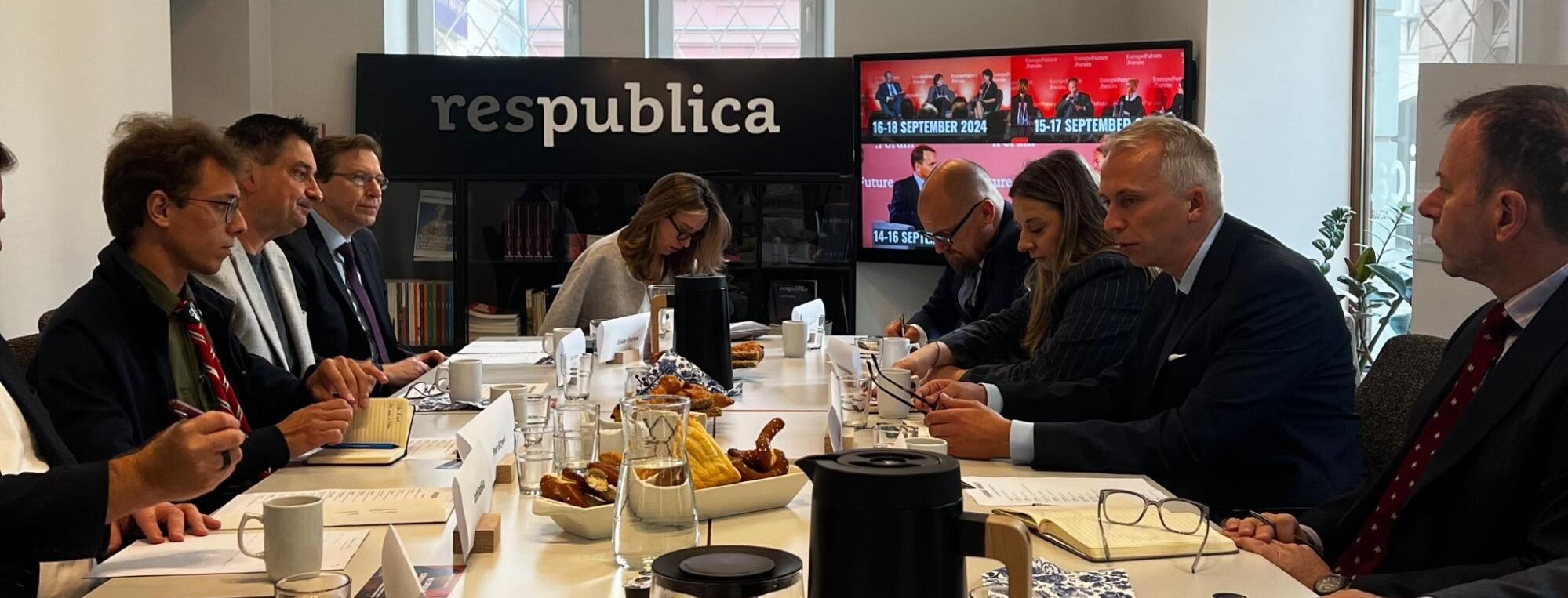
Events
Think Tank
Is Europe Preparing for the Right Crisis? Lessons from Finland and the Eastern Flank
15 October 2026
Think Tank
Visegrad Insight is Hiring!
14 October 2026
Events
Think Tank
How Europe Can Build the Capacity to Act Together
2 October 2026
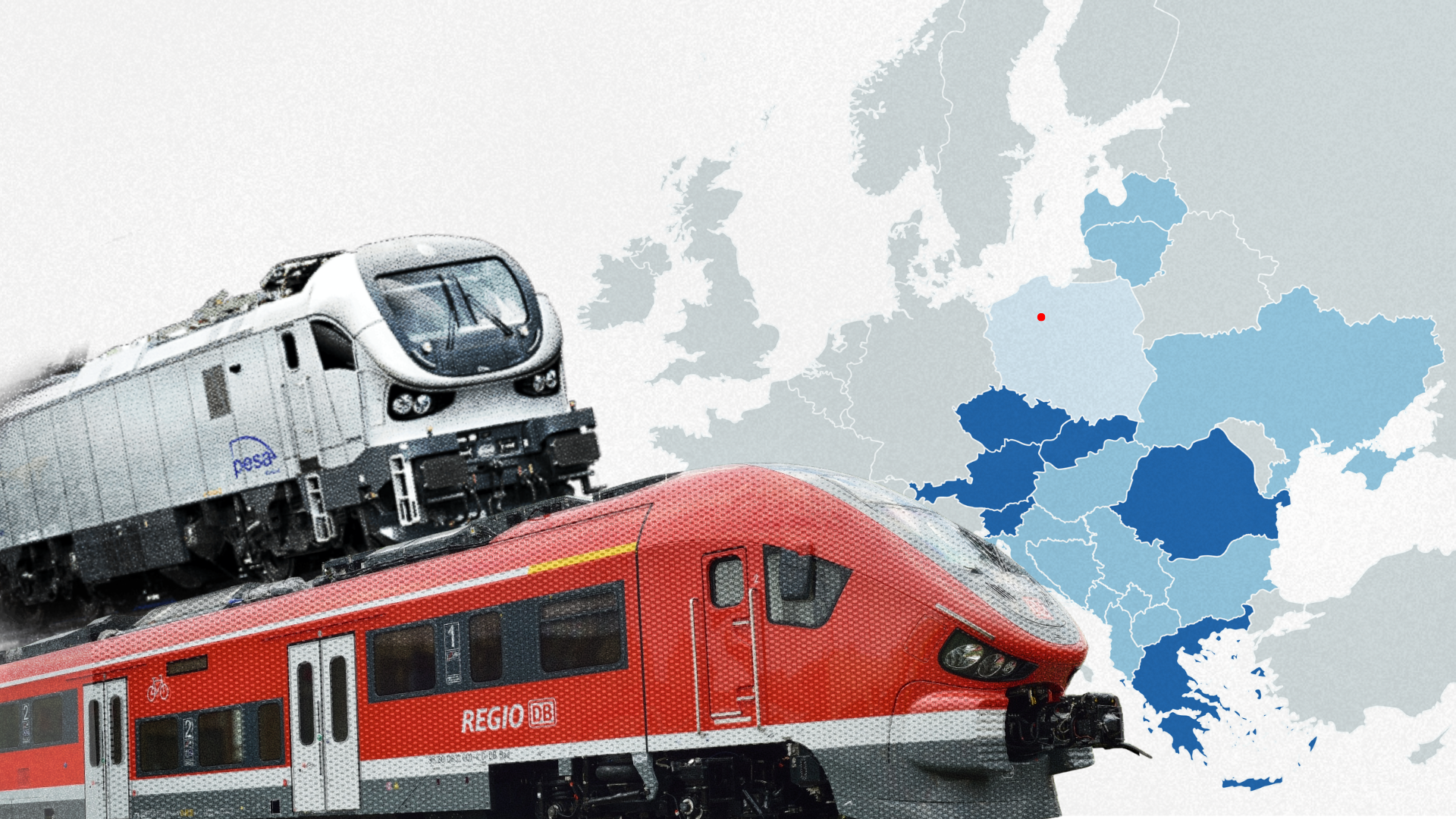
Economic Security
Think Tank
How Poland Wants to Turn a Failing Train Maker into a Geoeconomic Asset
30 September 2026