Analysis
Democratic Security
Why Protests Cannot Vote Babiš Out – EXPLAINER
19 November 2026

19 November 2026
There is no alternative to a long-term partnership between Poland and Ukraine. Grievances can strain relations, but unity and common cause are stronger.
A spring row over a brigade named after the Heroes of the Ukrainian Insurgent Army (UPA), border blockades and endless debates about Volhynia mean that Polish-Ukrainian relations are not at their best. At the same time, both countries find themselves on the front line of the same war and the same European project.
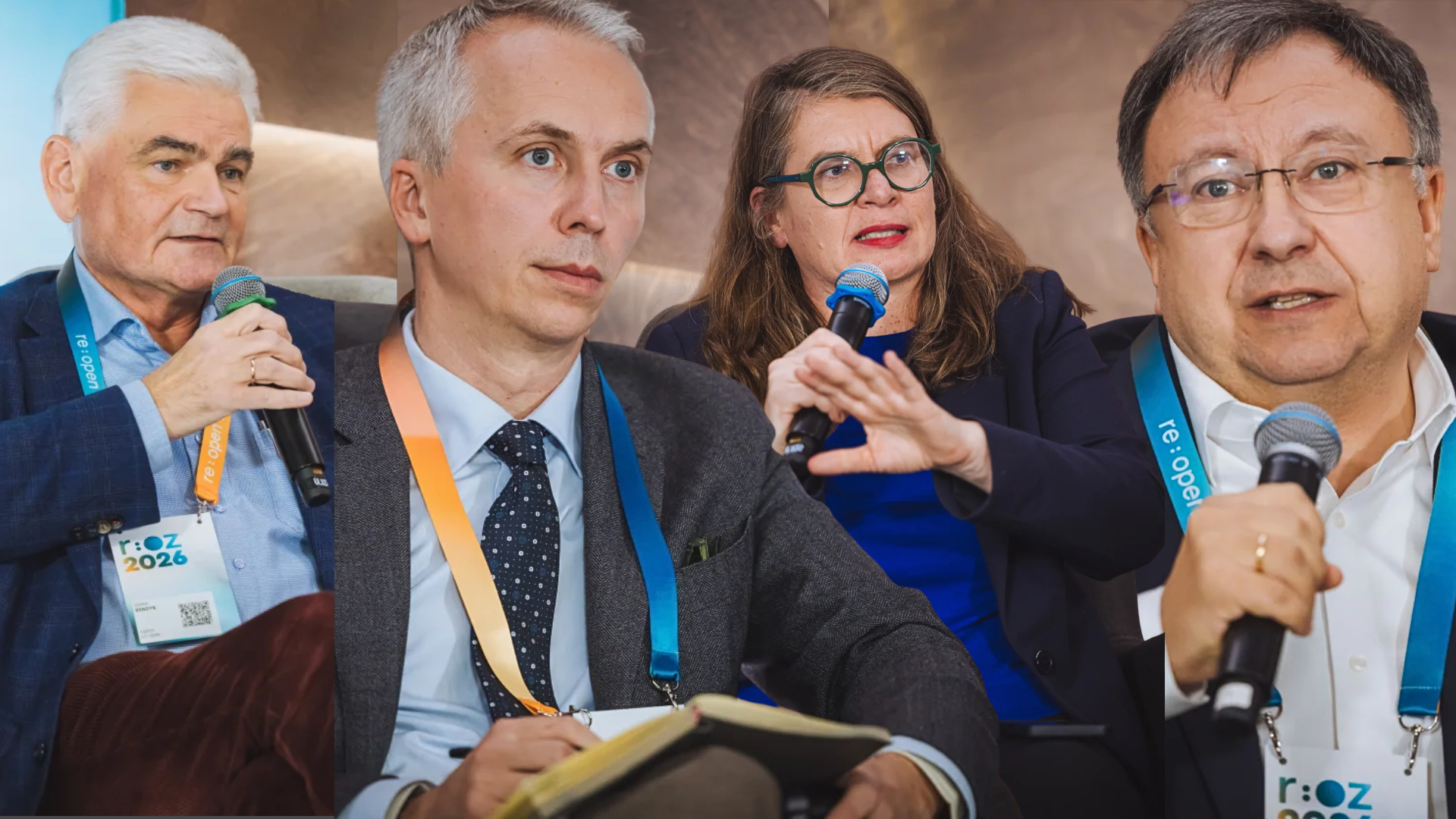
How to overcome these differences and what Ukraine and Poland can do for each other were the questions discussed at the Re:Open Zakarpattia 2026 forum in Uzhhorod. The panel ‘Why Poland Needs Ukraine and Ukraine Needs Poland‘ was organised in partnership with the Stefan Batory Foundation. The speakers were Polish columnist Edwin Bendyk, who chairs the board of the Stefan Batory Foundation, and TOK FM journalist Agnieszka Lichnerowicz. They were joined by Wojciech Przybylski, editor-in-chief of Visegrad Insight, and Ukrainian MP Mykola Kniazhytskyi. Olesia Ostrovska-Liuta, director general of Mystetskyi Arsenal Museum, moderated the discussion. Following the panel, Kniazhytskyi was appointed as the head of Ukraine’s parliamentary Council for Cooperation with the Republic of Poland.
From the outset, Poland’s partnership with Ukraine rested on strategic calculation rather than sympathy. In socialist Poland, Bendyk recalled, anti-Ukrainianism was one of the pillars of state ideology.
‘It was a continuation of pre-war nationalist thinking that Poland should be a mono-ethnic state. After the war, this idea was put into practice through, among other things, Operation Vistula, which was meant to be the final solution to the Ukrainian question in Poland‘, he said. At the same time, this propaganda concealed the Volhynia tragedy, because public memory of it would have affected relations with the Soviet Union. ‘For Poles of my age, this is still a common association. Ukrainians as a bloodthirsty nation, hostile to Poland‘, Bendyk admitted.
The turning point came in 1991. Ukraine’s President Leonid Kravchuk asked Prime Minister Jan Krzysztof Bielecki whether Poland would support Ukrainian independence and received a positive answer, even though the Soviet Union still existed and the Red Army was still stationed in Poland. On 2 December 1991, Poland became the first country to recognise Ukraine’s independence.
‘It was a strategic decision taken against the public mood. At the time, only 12 per cent of Poles had a positive attitude towards Ukrainians, while 60 per cent had a negative one. But the political elites decided that the strategic assessment mattered more‘, Bendyk stressed. This idea ran through the entire discussion. Then as now, the relationship depends on whether elites are able to put long-term goals above the mood of the moment.
Lichnerowicz described the current attitudes of Poles as a return to normal after the abnormal year of 2022. Among Poland’s neighbours, Czechs and Slovaks enjoy the most sympathy, followed by Lithuanians. ‘The second tier is Germans and Ukrainians, and the last is Belarusians and Russians‘, she explained. For three decades, between one third and one half of Poles have declared sympathy for Ukrainians.
In 2022, these figures rose sharply, as most of the several million Ukrainians who passed through Poland stayed in Polish homes. Now sympathy has returned to its usual level. According to Lichnerowicz, the spring scandal over the brigade’s name and over the Order of the White Eagle, which President Karol Nawrocki revoked and President Volodymyr Zelenskyy sent back, shook it further. ‘About a third of Poles say it reduced their sympathy for Ukrainians.’ A majority still supports military aid to Ukraine, but the gap between supporters and opponents has narrowed, and opinion on accepting new refugees is split down the middle.
Lichnerowicz named several reasons. ‘Of course, there is Russian disinformation. But it works where a problem already exists‘, she said.
The first problem is fear of war. The second is migration shock. ‘Just 15 years ago, Poland was a country of emigration, and now 15 to 18 per cent of people in big cities are immigrants, mostly Ukrainians.’ If the state does not do enough to help newcomers adapt, anti-immigrant sentiment grows, and populists amplify it, especially during elections. The third is history. In Lichnerowicz’s view, politicians in both countries abuse the Volhynia tragedy, but for many Poles it is also family memory, made up of stories heard from their grandparents.
At the same time, she pointed to a century-long tradition of activists, journalists and politicians working on Polish-Ukrainian relations. ‘Thanks to this, there is no imperial resentment in Poland over lost lands, whatever disinformation may claim. And there are very strong social ties between Poles and Ukrainians that resist political games.’
Kniazhytskyi began on a personal note. For his generation in Lviv, Poland meant Bolek and Lolek cartoon, television, books and magazines, and later Solidarity, which was ‘absolutely pro-Ukrainian‘. For a long time, he said, Poles topped the list of nations Ukrainians felt most warmly towards, ‘until a few years ago, when they first started blocking the border‘.
The MP attributes the deterioration in relations to two causes. The first is historians in both countries, which he called ‘their enormous fault‘. The second is politics. On the Polish side, he cited the resolutions on Volhynia adopted since 2016 and Wojciech Smarzowski’s film Wołyń (Volhynia), ‘in which you will not see a single good Ukrainian‘. On the Ukrainian side, he cited a politics of heroes instead of a politics of victims.
‘Every nation has the right to its heroes, but every nation has to work through its own mistakes. Heroes are never perfect. And we are afraid to say that their killing of civilians was a mistake. The Poles do exactly the same, in mirror image‘, Kniazhytskyi said.
He sees a way out in the formula once proposed by John Paul II, ‘We forgive and ask for forgiveness‘. The MP noted that a team led by historian Igor Hałagida at the Ukrainian Catholic University has identified the names of 30,000 Ukrainians who died in the Ukrainian-Polish conflict during and after the Second World War, and is now identifying the names of Polish victims. ‘I believe that a joint memorial should be erected in Volhynia bearing the names of all the victims, Ukrainian and Polish, so that we can pray for them together‘, he said.
From historical memory, the discussion moved on to interests. For Kniazhytskyi, Ukraine’s EU integration depends on its relations with Poland. There is also a broader dimension. In his view, the US and Russia want to divide Europe, while in Poland supporters of European unity are pitted against the far right. Ukraine, he is convinced, must be on the side of unity.
‘For me, cooperation with Poland is more important than with any other European nation. We have no right to give it up, because we cannot survive without Poland. And Poland will disappear without us‘, the MP said. If Ukraine falls and opponents of Ukraine and Europe win in Poland, the Polish state, he argued, will become the next target of aggression. ‘Today [Dmitry] Medvedev is saying exactly the same things about Poland that he used to say about Ukraine.’
Przybylski agreed that Poland is a priority for Ukraine and added the mirror image. For Polish politics and business, priority number one is ‘less ambitious, but absolutely essential‘, the survival of the Ukrainian state. As examples, he cited the largest Polish banks and insurance groups investing in Ukraine during the war, and Poland’s development bank, which together with its German counterpart is helping to build up the Ukrainian Development Bank.
Przybylski defined the common goal as a Europe whole and free. The European project, he reminded the audience, is still the only effective peace project on the continent, and it rejects nationalism. ‘The first great duty of Poland and Ukraine is to overcome our nationalist ideas. Nationalism is not patriotism, and that is a big difference‘, he stressed. He added that Ukraine must know why it wants to join the EU. Poland joined ‘to escape from the East, from Moscow‘, and over 30 years since its application to join the EU, it has become a different country.
Asked whether there is a place for Ukraine in this project, he answered in a single sentence. ‘There is no Europe without Ukraine.’ Przybylski then explained, ‘just as colonial powers once carved up Africa, today China, Russia and Donald Trump’s United States, not the whole of the United States, I stress, are trying to take Europe apart, because they see it as weak. And we cannot afford to be weak. Today’s world does not forgive weakness.’
Bendyk insisted that security and integration cannot be separated. ‘There is no European security without Ukraine. But neither is there European security without a Ukraine integrated with Europe‘, he said. This does not mean a special path for Ukraine or turning a blind eye to corruption, he clarified. But among the priorities, security must come first, and economic disputes, such as the one over grain, must be resolved.
In his view, the very architecture of European security has changed. France has undergone a radical shift in its strategic assessment of Russia, and the country has all the technological components needed to stand up to it, from nuclear weapons to electronic intelligence. ‘We in Poland thought the United States would always be the pillar of our security, and we discovered that this is no longer the case‘, Bendyk admitted. Now, he said, the prevailing conviction is that together with Ukraine, Europe can become a union strong enough to confront Russia. ‘Europe is very strong, technologically and militarily. It just does not know it yet.’
Bendyk also gave assurances that Poland’s strategic and military support for Ukraine remains unchanged, ‘and no political or historical disputes will change that‘. When a fake story about aid supposedly being halted appeared in Ukrainian media, the Polish government quickly refuted it, because this support also matters for Poland’s own security.
Przybylski went further and proposed formalising the relationship. ‘We lack ambitious goals. I would very much like to see a formal alliance between Poland and Ukraine, a legally binding agreement on what we would fight for on each other’s behalf‘, he said. The ideal option, in his view, is Ukraine in NATO, but even before that, an honest agreement is needed that can be explained to both societies. ‘Because you cannot hold on through emotions alone.’
At the same time, Przybylski stressed, emotions themselves have become a battlefield. ‘The current Polish-Ukrainian tension is a military operation against us‘, he said. As an example, he cited a video generated with artificial intelligence (AI) in which the Czech ambassador to Poland supposedly says, regarding a long-standing dispute, ‘We will not give this to you, Poles‘. The aim, he said, is to set Poles against Czechs, who are among Ukraine’s strongest supporters. ‘Right now we are losing this battle, and we must keep fighting it, because the strength of our societies will determine both our security and the security of Europe.’
Lichnerowicz suggested looking for support beyond governments. ‘I believe more in societies and people than in governments‘, she said. Since 2014, and especially since 2022, countless groups have emerged in both countries that cooperate with each other, from animal rights advocates to theatres and local authorities. They go unnoticed because this is grassroots work rather than a scandalous statement by a politician or an influencer.
Kniazhytskyi closed the discussion with a practical request to the Polish side. ‘In Brussels, Poland should not be putting a spoke in our wheels, but helping us‘, he said. In his view, Polish experts working in Kyiv with the Ukrainian government on legislative reform would be extremely useful.
The MP named demography as the biggest challenge. ‘Russia wants Ukraine to become depopulated. And it may turn out that we integrate into Europe one by one, living in Poland or in Germany‘, he warned. That is why Poland, in his view, has a greater interest than anyone in Ukraine’s rapid integration and in developing military cooperation, which today is ‘at a terribly low level‘.
His final words were addressed to the Ukrainian side, bringing the conversation back to the point Bendyk had opened with. The responsibility of Ukrainian politicians and elites, he said, is ‘the ability to look to the future and not to sacrifice the country’s future to populism‘, which brings a few rating points today but may cost the country tomorrow.
––
This article was first published in Ukrainian by NV.
Photo: Serhii Denysenko
Democratic security comes at a price. What is yours?
Subscribe now for full access to expert analysis and policy debate on Central Europe.
Analysis
Democratic Security
Why Protests Cannot Vote Babiš Out – EXPLAINER
19 November 2026
Commentary
Democratic Security
Bulgaria’s Strongman Keeps Moscow Close and Brussels Guessing
18 November 2026
Commentary
Democratic Security
Truth Prevails, Even When Marching Against Digital Machines
17 November 2026
Analysis
Democratic Security
Can Serbia Strengthen Central European Position in Europe After Vučić?
13 November 2026