Events
Think Tank
Is Europe Preparing for the Right Crisis? Lessons from Finland and the Eastern Flank
15 October 2026

3 July 2025

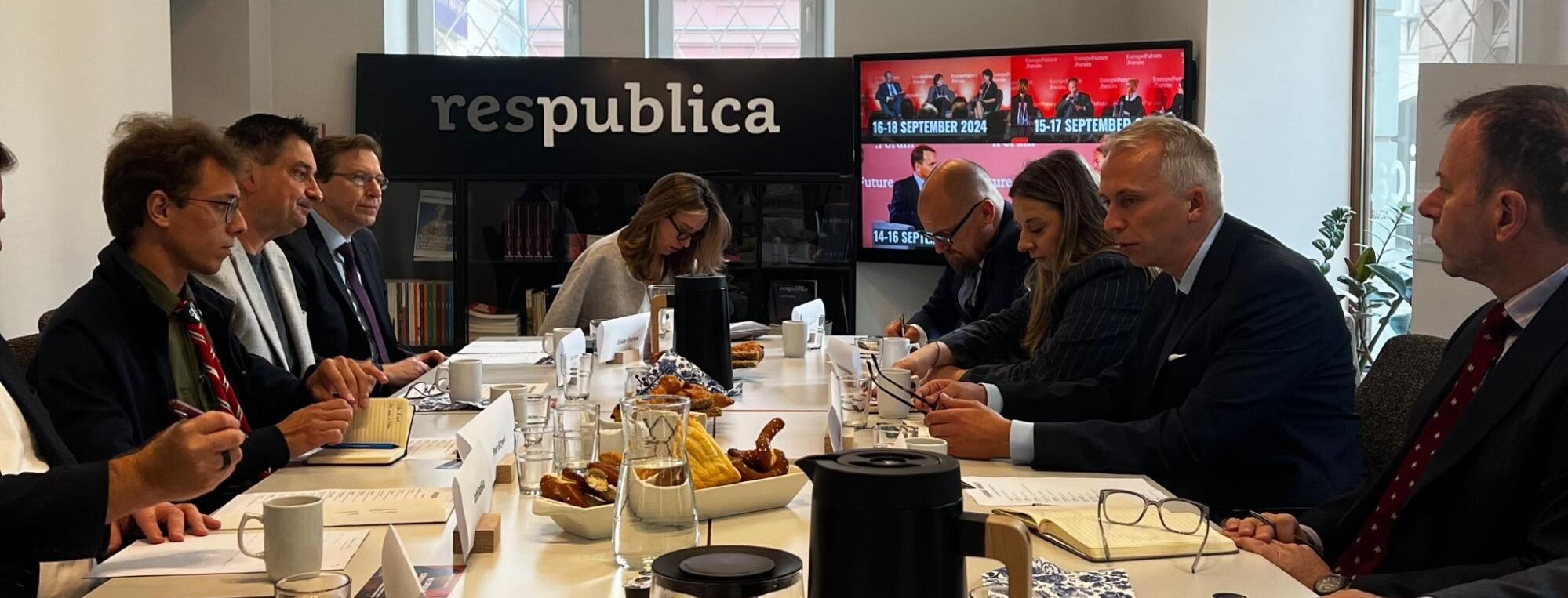
What can the EU learn from recent elections in Central and Eastern Europe (CEE), such as those in Poland and Romania?
Recent elections in Poland and Romania revealed the growing challenge for pro-democratic forces to win – and govern – amid rising disinformation and digital interference. Ahead of upcoming votes in Moldova, Czechia and Hungary, European institutions are under pressure to act.
Why it matters: It’s getting harder for centrist, pro-EU parties to win at the ballot box. And even when they do, the reward is often an unstable coalition or political paralysis.
A combination of foreign and domestic interference operations, weak governance and corruption scandals is fuelling voter disillusionment – especially among younger, digital-native audiences.
Read the Q2 2025 policy brief: Three Months of Elections Sketch Dos and Don’ts for EU Democracy Shield
What we’re watching:
Between the lines: Analysts warn that by 2027, all four Visegrad countries could be governed by parties with authoritarian tendencies. Moldova’s 2025 election could be a tipping point, with Russian influence campaigns already intensifying.
What they’re saying:
On Romania:
‘The EU needs to do more to regulate platforms and investigate links to malign actors – we are behind. But it also needs to help centrist parties rebuild trust by tackling corruption and judicial ambiguity head-on.’
On Moldova:
‘Russia will try to make Moldova the next domino. If the EU wants to preserve democratic gains, it must act before the vote, not just react afterward.’
On Czechia:
‘Disinformation took hold because public trust is eroding though how far is difficult to assess. It’s not just about pushing back on falsehoods – we need strategic communication that resonates emotionally, and civil society is key to that.’
On the Czech elections:
‘If ANO returns to power, watch for a Babiš pivot toward far-right allies and soft media capture – a Slovak-style scenario isn’t far-fetched.’
On Poland and Romania:
‘We’re past the disinformation tipping point – AI and far-right influencers have changed the game. The problem isn’t just fake news, it’s engineered influence at scale.’
On the Digital Services Act:
‘It’s a start, but it doesn’t go far enough on election-specific threats. Foreign-funded ad campaigns still slip through, and nationalist movements are outpacing mainstream parties online. Though a transparency act about political advertising will be rolled out in October.’
The bottom line: Europe’s elections are no longer just national contests – they are testing grounds for the future of democratic resilience. The EU’s Democracy Shield and Civil Society Strategy must learn fast, or risk falling behind.


Speakers:
Alina Inayeh – Visegrad Insight Fellow. She is currently a non-resident fellow with German Marshall Fund and the lead advisor for Aspen Institute Romania. She joined GMF in 2007 as the director of the Black Sea Trust for Regional Cooperation, a project dedicated to strengthening cooperation and fostering development in the Black Sea region.
Albin Sybera – Contributing Editor at Visegrad Insight. Albin is a freelance journalist, consultant and a former clerk at the State Environmental Fund of the Czech Republic. Besides Visegrad Insight, his texts can be also found at Britské listy or Balkan Insight and he is also a news reporter covering Czechia and Slovakia at bne IntelliNews.
Jakub Szymik – Lawyer specialising in digital and EU policy, with over a decade of experience in policy development and communications for non-profits, trade associations, and consumer groups. As the founder of CEE Digital Democracy Watch, he leads the organisation’s efforts on election integrity and technology regulation.
The discussion was moderated by Staś Kaleta, Visegrad Insight Editor.
Democratic security comes at a price. What is yours?
Subscribe now for full access to expert analysis and policy debate on Central Europe.
Events
Think Tank
Is Europe Preparing for the Right Crisis? Lessons from Finland and the Eastern Flank
15 October 2026
Think Tank
Visegrad Insight is Hiring!
14 October 2026
Events
Think Tank
How Europe Can Build the Capacity to Act Together
2 October 2026
Economic Security
Think Tank
How Poland Wants to Turn a Failing Train Maker into a Geoeconomic Asset
30 September 2026