Democratic Security
Interview
If Russia is the Storm, China is Climate Change – INTERVIEW
24 September 2026

31 March 2026
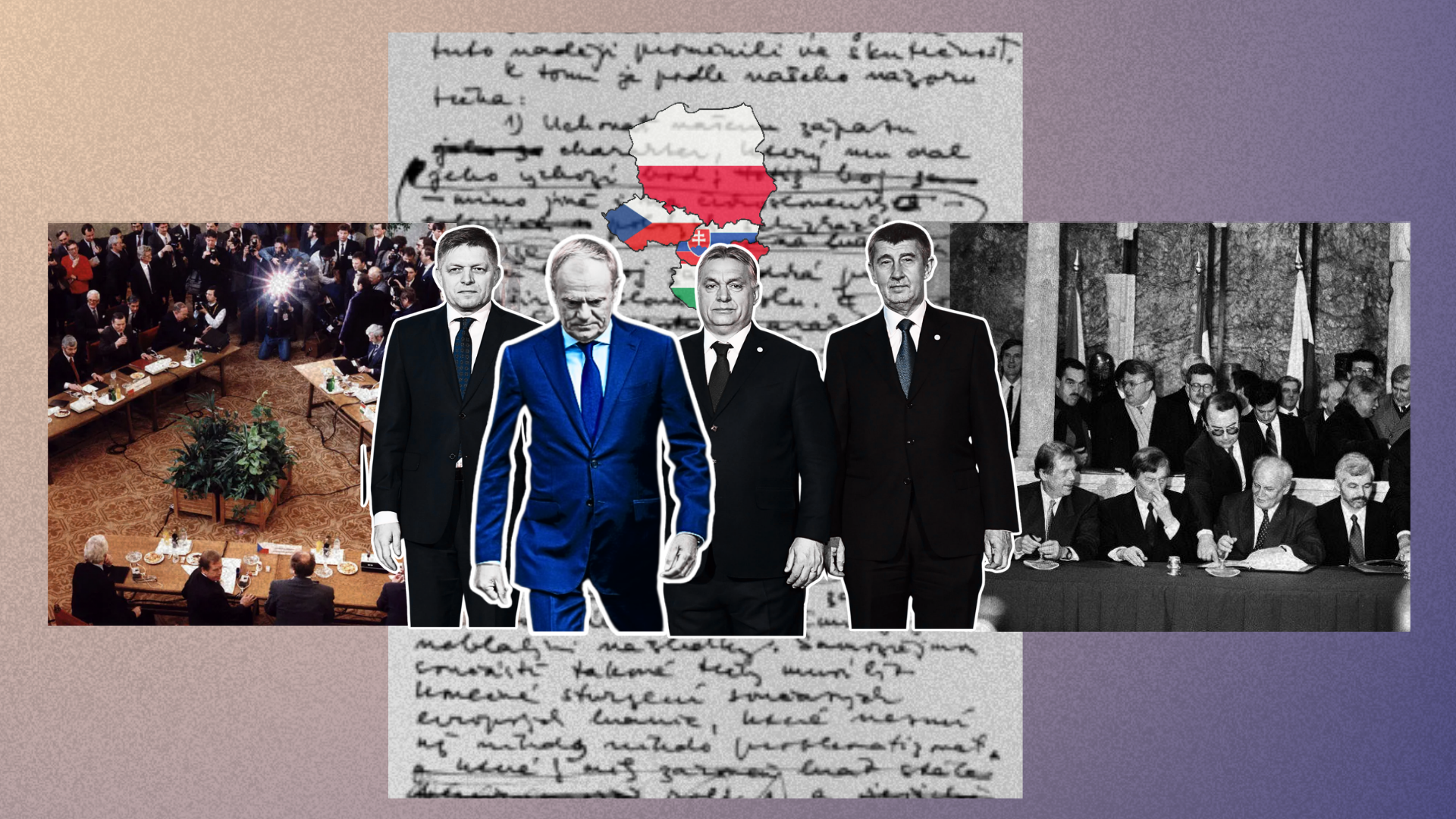
An ambitious Central European experiment, the Visegrad Group (V4) may be showing cracks, but pragmatic economic and defence cooperation still has the potential to sustain it.
When the V4 was founded in 1991, security was at its core, initially meaning breaking free from Russia’s orbit and coordinating the withdrawal of the Red Army. Another key objective was accession to the Western security system and, later, the European Union (EU). Once the latter was achieved in 2004, many predicted the V4 would lose its purpose, and to some extent, it did. Yet a set of shared development trajectories emerged, which has since united the group within the EU framework.
First, the group quietly evolved into one of Europe’s most dynamic economic clusters and a laboratory for practical European integration. From 2005 to 2015, unity prevailed as the bloc was led primarily by parties from the European Conservatives and Reformists (ECR) and the European People’s Party (EPP). During the gas crisis and energy supply shortages in 2008, the group united to build a strong coalition of interests. Thereafter, however, it became a mix of different, sometimes conflicting, values and objectives.
Today, as sharp political differences within the group over Russia, Ukraine, the rule of law and the future of the EU intensify, it is easy to focus on divisions. Yet the deeper story is one of enduring strength as the V4 countries have built interlocking economies, exported democratic know-how, developed joint defence capabilities and created a recognisable investment brand, all while navigating serious internal tensions. Their experience shows that common interests can outweigh political rifts.
Czechia’s parliamentary election in October 2025 returned Andrej Babiš’s ANO to power with a strong majority. Karol Nawrocki’s 2025 presidential victory has created uneasy cohabitation with Donald Tusk’s government in Poland. Hungary and Slovakia remain heavily dependent on Russian energy via the Druzhba pipeline, exposing ongoing vulnerability to Russia’s demands. Adding to this, support for Ukraine within the V4 has fluctuated sharply: while Poland and Czechia provide consistent aid to Kyiv, Hungary and Slovakia have adopted more restrained positions, with Budapest even framing Ukraine as an enemy.
The landscape is uncertain and challenges are growing, but the potential for change remains evident, as developments in Czechia, Poland, Hungary and Slovakia in recent months have shown. Looking ahead to the upcoming elections in Hungary, the future of regional cooperation may require revision, especially if Poland remains alone in the democratic camp.
Against the backdrop of those uncertainties, the Visegrad Fund remains a binding factor for the V4 and arguably its largest achievement. It was established in 2000 and has operated continuously since. As the only institutional expression of the group, it was designed to promote regional unity and foster relations with partners in the Western Balkans and the Eastern Partnership. Up until today the activities funded through the Fund focus on culture, education, research, youth exchanges and cross-border partnerships, having so far distributed over 150 million euros in grants to maintain a ‘bridge’, or at least a foothold, even in politically difficult times. And it is likely that the Fund’s ability to maintain this role will remain crucial for the group when looking ahead to future political constellations.
The economic foundation also remains intact. Alongside the democratic transition of the 2000s came an equally consequential economic transformation. Using the EU single market as a foundation, the four countries developed integrated supply chains, mostly in the automotive industry, pursued coordinated investment strategies in defence and energy, and created a recognisable regional brand for foreign direct investment from across the world. A region that in 1991 still operated under centrally planned economies has become one of Europe’s most dynamic manufacturing and service hubs.
The speed of convergence was remarkable. Living standards rose faster than many would have predicted in 2000. Global investors began treating the V4 as a single ‘investment brand’: a stable, skilled and cost-effective manufacturing platform located between Germany and Ukraine, which proved resilient even during political crises.
Still, energy remains the toughest area in which to make progress, carrying the legacy of security dependency. While Poland and Czechia have diversified their supplies through liquefied natural gas terminals and interconnectors, Bratislava and Budapest remain exposed to supply risks and price volatility, continuing to rely heavily on Russian oil and gas through the Druzhba pipeline. In 2025, more than 90 per cent of Hungary’s crude oil imports and around 70 per cent of Slovakia’s still came from Russia. Russia also remains the dominant supplier of pipeline gas to both countries, which together are among the EU’s largest buyers of Russian gas. National energy choices continue to divide the region and remain the most urgent area for improvement within the V4.
The group has also shown moments of genuine cooperation within the Three Seas Initiative (3SI). Joint infrastructure projects in transport, digital connectivity and energy have advanced, proving that when political will aligns, the group can deliver tangible economic security gains.
Defence-industrial cooperation offers further promise. The V4 countries have launched joint ammunition production initiatives and are exploring mutual procurement under the EU’s Security Action for Europe (SAFE) defence modernisation instrument. From the perspective of long-term resilience, coordinated purchases and shared supply chains offer an opportunity to reduce dependency on non-European suppliers and strengthen the region’s role in Europe’s wider defence-industrial base. While political rhetoric often divides them, practical projects on the ground continue, developing shared capabilities in drones, artillery and air defence. These efforts have already contributed to making Czechia, whose arms exports have increased more than sixfold since 2021, and Slovakia, whose ammunition exports doubled since 2022, some of the EU’s fastest-growing defence-industrial actors in recent years.
The V4 countries’ threat perception differs markedly from that of Western Europe. In the case of Poland and Czechia, it is closer to that of the Baltic states and Scandinavia. For much of public opinion in the region, Russia’s revisionism is not a distant theoretical risk but an immediate reality. This has placed Poland and Czechia on the opposite side from Hungary and Slovakia, which have chosen to maintain cooperation with Moscow rather than reduce their dependencies, thereby positioning themselves at odds with NATO and EU policy priorities.
The sense of urgency, combined with generally unfavourable societal views on Russia, held by around 90 per cent of Poles and about two-thirds of Czechs and Hungarians, has created a significant opportunity for the V4 countries: to use the period of heightened NATO and United States engagement in the region to modernise their armed forces and deepen their integration into the Alliance’s structures. All V4 members have so far used this window to drive investment in domestic production, stockpiles and critical supply-chain security. As a result, defence spending across the V4 continues to grow, and most new initiatives are likely to remain a durable driver of economic activity even once Russia’s war against Ukraine changes shape.
As far as the military support of Ukraine is concerned, public polling data reveal stark differences. Support for continued aid remains as high as 68 per cent in Poland and 61 per cent in Czechia, yet is moderate at 44 per cent in Slovakia and low at 29 per cent in Hungary. These divergences have clearly hampered joint action, emboldening political blockages at the European level on Ukraine aid and further sanctions on Russia.
Both Viktor Orbán and Robert Fico have increasingly scapegoated Ukraine in their domestic campaigns. Fico has framed support for Ukraine as a drain on Slovak resources, while Orbán has portrayed assistance to Kyiv as a threat to Hungarian security and repeatedly warned that backing Ukraine could draw Hungary into war.Some economic potential to mitigate these tensions remains. Practical defence-sector development and cooperation, particularly engaging Ukrainian companies and know-how in joint production and technological projects, could create shared economic incentives that transcend political rhetoric. Such collaboration would not only strengthen V4 resilience but also position the region as a constructive player in Europe’s long-term security architecture.
Despite these challenges, the V4 retains significant underlying strengths. Interlocking economic interests, a shared memory of successful transition, cultural proximity and a proven capacity for pragmatic cooperation continue to bind the four countries more tightly than momentary political differences can divide them.
The next chapter may be written under a broader European label or under the V4 banner, whether within the 3SI, B9 or another regional framework. Either way, one reality remains constant: Central Europe is stronger, safer and more prosperous when its four countries find ways to work together. In difficult times, cooperation may shift from state-centric to business-centred, focused on entrepreneurs and enterprises, or to civic-centred, driven by non-governmental organisations and institutions.
If left unchecked, differences will deepen polarisation and expose the region to hostile interference and divide-and-rule tactics. Yet if actors across the region choose to build on shared security interests and economic interdependence, the opposite may also hold true.
Democratic security comes at a price. What is yours?
Subscribe now for full access to expert analysis and policy debate on Central Europe.
Democratic Security
Interview
If Russia is the Storm, China is Climate Change – INTERVIEW
24 September 2026
Commentary
Economic Security
No Endgame in Von Der Leyen’s China Strategy
23 September 2026
Democratic Security
Those Who Do Not Learn from This War Risk Losing the Next – Radosław Sikorski
17 September 2026
Democratic Security
Survey
Unlocked
What the European Security Strategy Should Be About?
10 September 2026