Events
Think Tank
How Europe Can Build the Capacity to Act Together
2 October 2026

16 June 2025

What are we losing by keeping Ukraine out of the EU? How do we prevent that scenario?
In an online discussion, experts Paweł Purski and Ivan Us discussed the importance of and ways to maintain momentum behind Ukraine’s EU accession. Watch the video recap below:
Clear benefits from Ukrainian integration into the EU
Ivan Us highlighted two main positives of Ukrainian accession for the EU. First, that Ukraine would be the best guarantor of security for Europe – not just because it provides another barrier against Russia, but also because it could share its elite level military experience.
Second, that Ukraine and its resources could increase European autonomisation, reducing the bloc’s dependence on partners like the US. This would seriously increase the role of the EU in the global market, helping it to become a bigger player in regions like Africa and Asia.
The current US administration has realised this, Us said, pointing to its rare earth minerals deal with Ukraine, but Ukraine could also elevate other industries, like the European automobile sector.
Political cooperation and reform key to momentum
Paweł Purski presented the Polish model for Ukrainian reconstruction and recovery based on three pillars: 1) connectivity (ranging from logistics to transport to telecommunications), 2) trade, and 3) investment.
The aim of the framework, Purski explained, is to support and sustain economic activity on both sides of the border.
Purski also stressed that political and economic cooperation must come hand in hand with more reforms in Ukraine – in local government, judiciary and investment climate.
Poland is an absolute supporter of Ukrainian integration and understands that reform is difficult for a war-torn country. In fact, given the conditions, reforms made up to this point have been remarkable, Purski said.
Nonetheless, there are other countries in the EU who are not so supportive of Ukrainian accession. Reforms are the best way to rid these critics of their weapon, not just EU-mandated tick boxes of the conditionality principle, Purski said, warning that there are more states hiding behind those most vocal in their critique of Ukraine.
De-risking private investment in times of war
Us highlighted that Ukraine has been committed to EU integration since the very start of Russia’s full-scale invasion – indeed, it applied to start the process on 28 February 2022. Reforms have continued at the same time as the war effort, allowing Kyiv to maintain its pro-European track.
In addition to this promise and resolve, there are several ways to entice investment, Us says. First is additional military security, particularly air-defence systems. Second is the organisation of a system of insurance. Third is increased investment from the EU.
Us points out that investment reaps investment. Between 2004 and 2016, the countries that joined the EU in 2004 and 2007 received $700 billion from the IMF. This is especially necessary as Ukraine re-routes its market focus towards the EU – in turn losing some of its market influence elsewhere, for instance with grain exports.
Red tape risks demotivating international donors
Purski points to the Ukraine Donor Platform as an example of an institution with many positive initiatives – e.g. single project pipelines – but which can have unfavourable membership rules.
Currently, Poland is only in the process of becoming a temporary member, because the platform’s regulations don’t take into account military or humanitarian support provided to Ukraine, which are equally crucial to sustaining the country’s war effort and social resolve.
Nonetheless, Purski says, the platform will likely be one of the main bodies coordinating political direction for Ukraine’s recovery. When this message goes through, banks and financial institutions will begin to provide their instruments, credits, loans, and everything that makes Ukraine an investable country.
Purski stresses how important it is to this structure of financial and instruments available to entrepreneurs, because when trade is going well and freely, investments will follow.
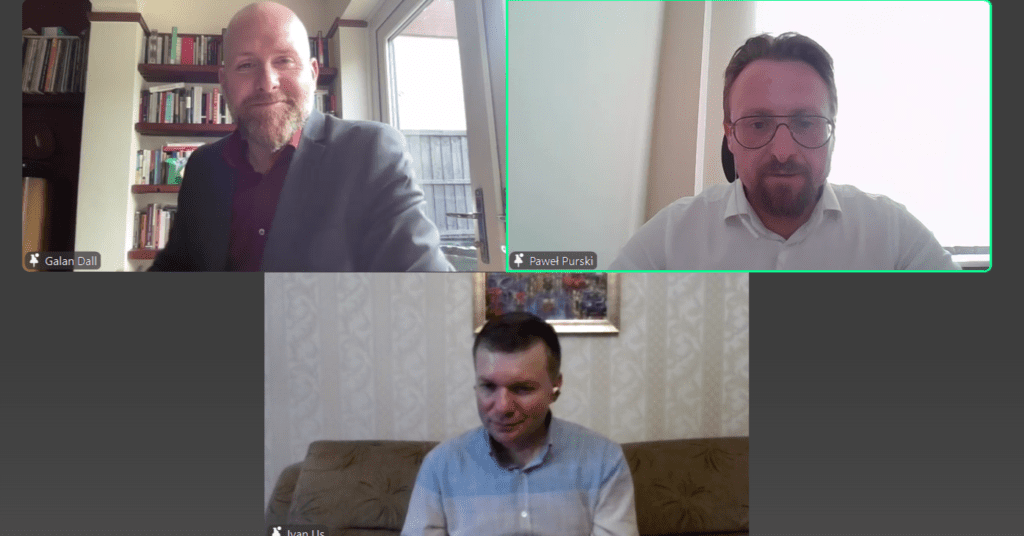
Speakers:
Paweł Purski – public affairs and international policy expert, currently serving as Counsellor at the Council for Cooperation with Ukraine in the Chancellery of the Prime Minister of Poland. His work focuses on Ukraine’s reconstruction and building partnerships across government, international organisations, and business.
Ivan Us – Economic Diplomacy Program Expert, and since 2014 he has been Senior Consultant at the Foreign Policy Center of the National Institute for Strategic Studies under the President of Ukraine in Kyiv.
The discussion was moderated by Galan Dall, Visegrad Insight Managing Editor.
Democratic security comes at a price. What is yours?
Subscribe now for full access to expert analysis and policy debate on Central Europe.
Events
Think Tank
How Europe Can Build the Capacity to Act Together
2 October 2026
Economic Security
Think Tank
How Poland Wants to Turn a Failing Train Maker into a Geoeconomic Asset
30 September 2026
Economic Security
Events
Think Tank
Europe Aligned with Iran Sanctions Long Before D-Day
8 September 2026
Events
Think Tank
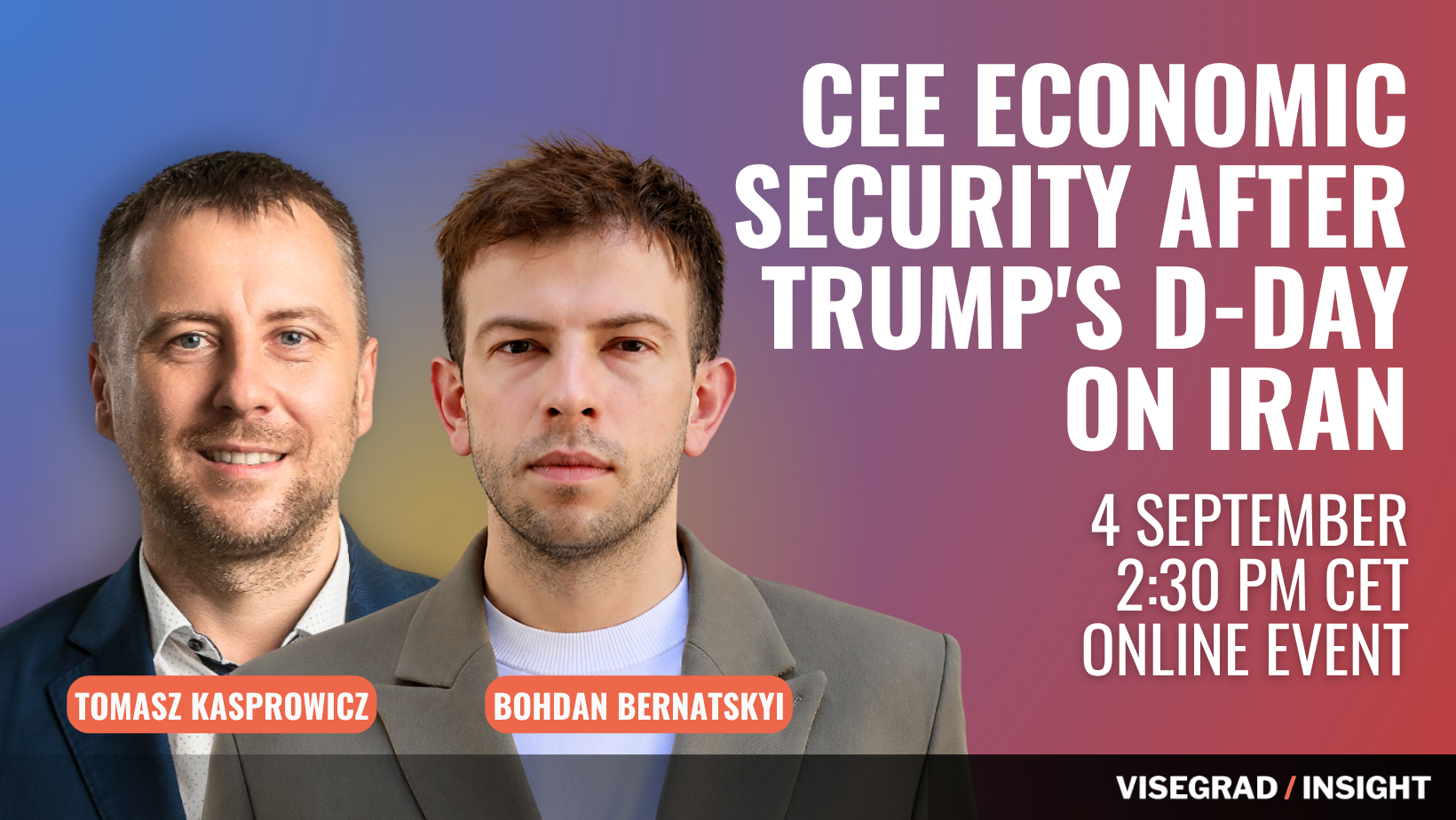
Online event: One Week After Trump’s ‘D-Day’ Against Iran – What Is There for CEE Economic Security?
1 September 2026