Analysis
Economic Security
The Western Balkans Are Ageing Before Getting Rich
9 September 2026

18 June 2026
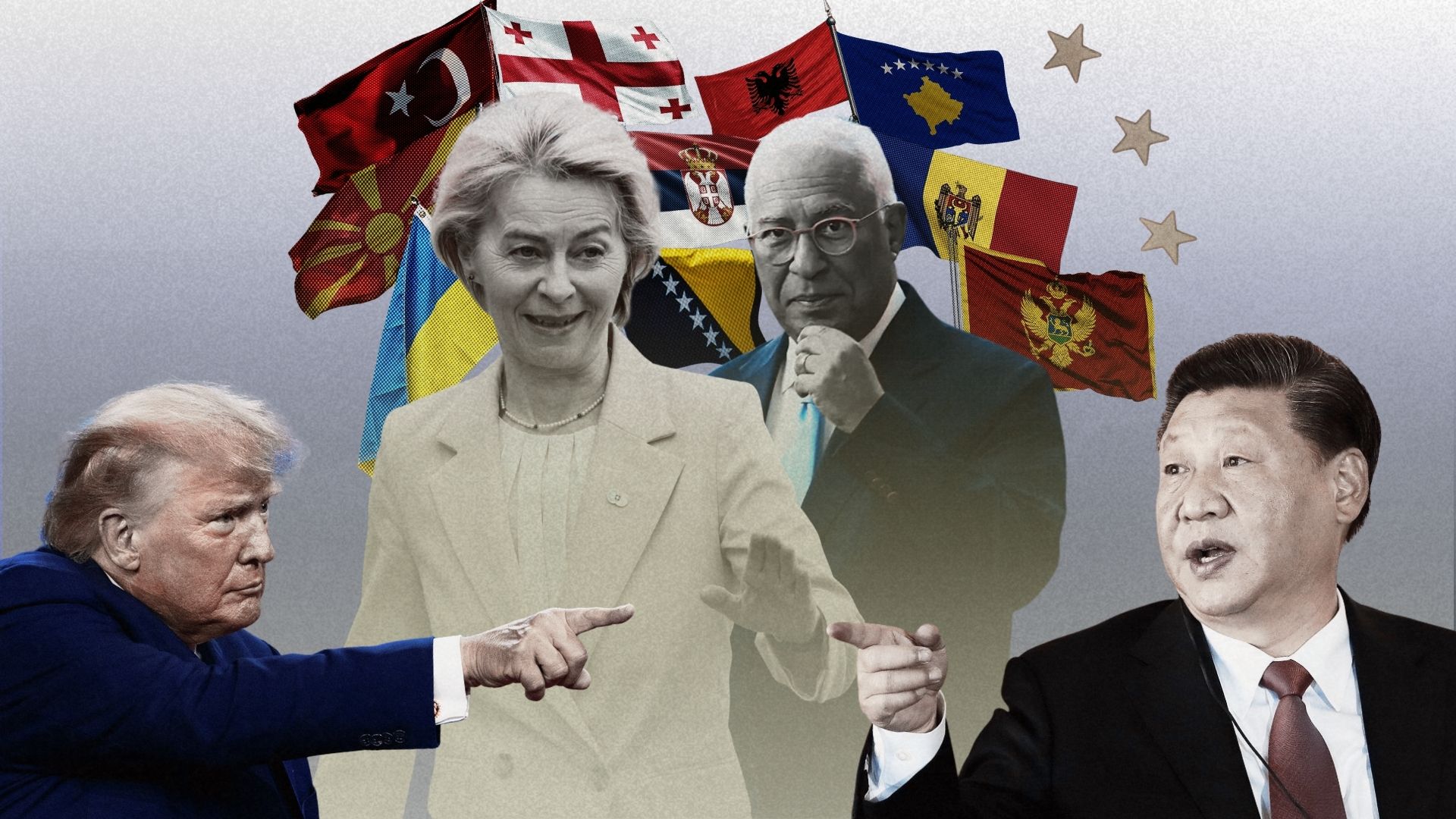
Empty promises won’t protect Europe. Without tough investment screening, ‘geopolitical alignment’ is nothing but a fashionable slogan. Candidate states must cut dangerous dependencies on hostile powers and help build the Union’s real collective strength – for their own safety and the EU’s future.
Last week the European Union opened accession negotiations on the fundamentals cluster with Ukraine and Moldova. Ursula von der Leyen called it ‘a major step forward’ and ‘an investment in our shared future’ that strengthens ‘security, resilience and global influence.’ António Costa echoed the familiar tone, framing it as a strategic anchor against instability on the EU’s borders. By now the geopolitical rationale of everything, including the enlargement, is a routine talk in Brussels. But it is also incomplete.
The official script from Berlaymont presents the next enlargement primarily as geopolitical insurance — a way to deny adversaries a zone of influence and to project stability in the east and southeast of Europe. That is good news. Such a framing, repeated since 2022, has served its purpose in shifting member-state politics and unlocking candidate status for new candidates.
Yet, it downplays the deeper logic of tackling the ‘global macroeconomic imbalances‘ that undermine Europe’s economic model through unfair competition. In our new policy report, we argue that economic security must become an inseparable track for both Brussels and candidate states to follow, as politics alone cannot build the next success story for the EU enlargement.
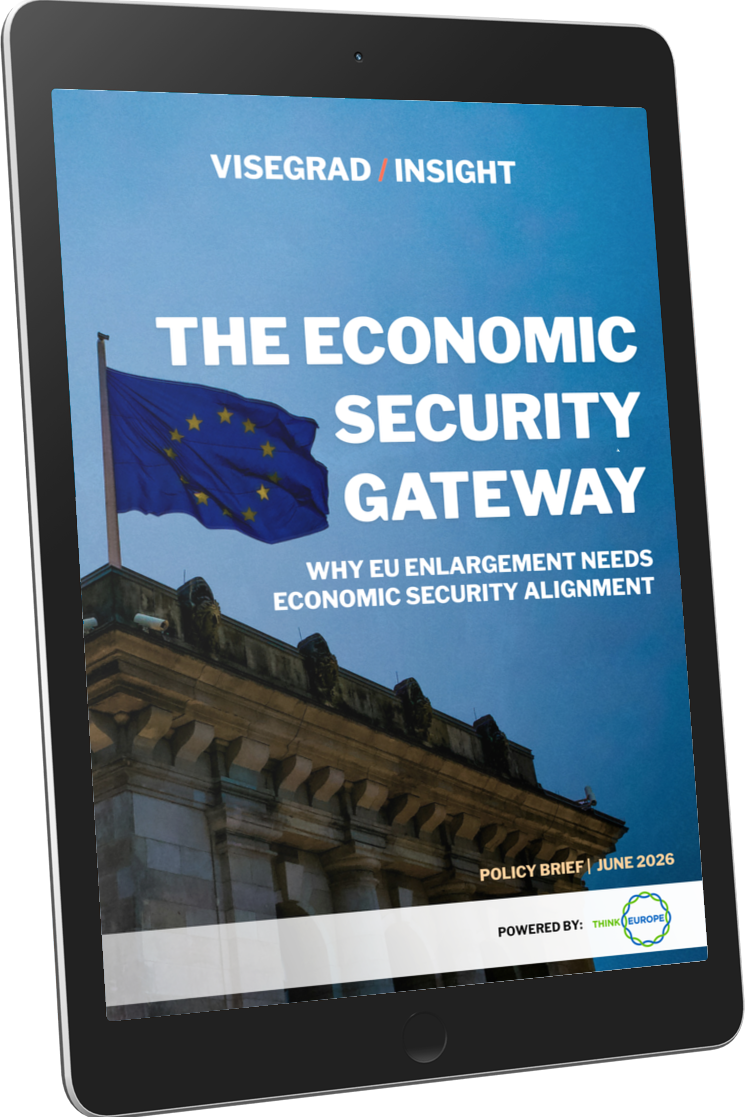
DOWNLOAD OUR NEW POLICY REPORT
What is unfolding is not merely an extension of the EU’s normative sphere that hopes to carve out from a global jungle of power politics, embodied among others by Russia, more space to cultivate the rule-of-law order. The EU desperately tries to build up a response to the global geoeconomic struggle between the incumbent hegemon – the US – and its fast-rising contender – China. This competition is waged primarily through industrial policy, supply-chain control, critical technologies and economic coercion. In that contest, both the EU and candidate countries need each other more than the geopolitical slogans admit. After all, regardless – in or out – all in Europe are part of one economic space and the European project is seen by external competitors or adversaries as a lucrative bounty until the EU realises it needs a political strategy in that domain as well.
Geoeconomics has been the name of the game for some time already. America has its Inflation Reduction Act and CHIPS and Science Act, and of course, the disruptive power of Trump’s policies. China has its state-directed dominance in manufacturing and blunt export control. Russia has been weaponising energy and infrastructure dependencies. The EU’s answer – its 2023 Economic Security Strategy and the subsequent instruments on foreign subsidies, anti-coercion, critical raw materials and outbound investment screening – is an attempt to build defensive and offensive capacity in the same domains. EU candidates, particularly Western Balkan countries, Ukraine and Moldova, sit at the intersection of these efforts as their geographical location and political alignment – or misalignment – directly affects the EU’s ability to secure the inputs, routes and industrial base it requires to compete globally or at least hold some cards for a more assertive posture.
Ukraine is a brutal illustration of this point. It possesses substantial reserves of cobalt, lithium, rare earths and other materials Brussels has designated strategic. Its defence industry, forged under fire, offers production capacity and know-how that Western European primes cannot replicate overnight, and it has already been using it as a chip for strategic positioning towards both the EU and the US. Moldova’s experience of Russian energy blackmail is equally instructive, as it shows why raw CFSP alignment on paper is insufficient if energy, transport and digital infrastructure remain exposed to hostile leverage. Western Balkan candidates bring further mineral assets and transit geography. In a world where single-country concentration above 65 per cent for any strategic material is now treated as a systemic risk by others, only the size of your political realm is what really matters.
Thus, the accession process must be adjusted accordingly. A functioning foreign direct investment (FDI) screening mechanism has become a closing benchmark for the external relations chapter under Cluster 6. It is recognition that, once inside the single market, an unscreened investment in a candidate becomes an unscreened investment inside the EU. The same logic applies to export controls, cybersecurity standards and raw-materials governance as they are no longer optional good governance add-ons. Applied jointly, they make this into a new system of mutual economic protection that candidates cannot replicate outside membership and that the EU cannot credibly extend without their participation.
The geopolitical case for enlargement assumes that political alignment will eventually produce economic resilience. The geoeconomic case reverses the sequence. It treats economic security alignment as a precondition for a credible political partnership. A candidate that remains structurally dependent on Russian gas or opaque Chinese financing cannot be a reliable partner in sanctions enforcement or technology protection, regardless of how many foreign-policy declarations it signs. Conversely, a candidate that builds screening capacity, diversifies supply chains and integrates into EU defence-industrial consortia strengthens both its own sovereignty and the EU’s collective leverage. That is exactly why the two tracks are now inseparable, and how the EU emphasis on economic security strategy creates an equal level playing field through which candidates and the EU can co-design the very rules that will govern their future interdependence.
For now candidate countries are mostly lagging behind the EU in terms of regulatory capacity, but it might always be the case. In a twist of irony, Kyiv actually outpaced EU investment screening standards. This was not a matter of checking off Brussels’ boxes, but rather a harsh necessity.
Years before the current push, defence policy preparations forced Ukraine to lock Chinese investors out of strategic industries – most notably evidenced by its high-profile blocking of Beijing’s Skyrizon from acquiring aerospace giant Motor Sich in 2021. But it does not put that practice into the law, whilst it should – with the ambition to inspire a similar approach across the block. That experience is an asset the EU would be foolish to treat as a compliance burden rather than a design input. The same applies to Moldova’s hard-won lessons on energy resilience and the Western Balkans’ mineral endowments. Co-ownership of the process is the only way to avoid repeating the mistake of previous rounds of enlargement that eventually stalled, where formal legislative alignment masked hollow implementation capacity and left new members vulnerable to external economic pressure.
Poland’s perspective is instructive, as it speaks from experience of entering the EU with a legacy of energy dependence from the EU’s fiercest enemy – Russia – that, by 2008, resulted in an energy crisis when Moscow turned off its gas taps, exerting geoeconomic pressure for the first time after 1989. Ever since, successive Polish governments have understood EU integration as the indispensable complement to hard security and have advocated for energy security policies as the pillars for further integration. Today’s Donald Tusk government emphasises making Europe itself more capable — economically, industrially, and strategically — rather than on Poland simply catching up. That instinct aligns with the geoeconomic logic we advocate for.
A larger, more integrated EU that internalises critical supply chains, pools defence-industrial demand and presents a united front against coercive statecraft does not dilute sovereignty but amplifies Member States’ capacity to have a say in a world where mid-sized European states acting alone are structurally outmatched.
Editor’s Pick: Money and the credibility of the EU accession process by Kristof Bender
The risk is that Brussels continues to speak the language of geopolitics while the substance of negotiations drifts into technical conditionality without adequate financing or political ownership of the new geoeconomic imperative. Conditionality without resources reproduces the implementation gaps of the past process that ultimately got into a cul-de-sac. But there is a promising set of tools to apply for progress. The Ukraine Facility support model – with detailed and verifiable milestones – offers a potential template. Extending that logic across the Global Europe Instrument or hard-wiring participation in instruments such as the Security Action for Europe (SAFE) into the external relations cluster related to economic security strategy alignment would close the gap.
The world that produced the 2004 enlargement no longer exists. Then, the EU could treat enlargement largely as the export of its model, with strategic benefits largely implicit. Today the model itself must be defended and updated in real time against competitors who play by hard power rules. Ukraine and Moldova’s entry into formal negotiations is therefore not the end of a geopolitical chapter but the beginning of a geoeconomic one. The candidates bring assets that the EU is in need of, while the EU offers protections and markets that the candidates cannot secure alone. If we are successful, the integration alone would become the mechanism that turns those mutual dependencies into collective strength rather than mutual vulnerabilities.
The great power competition that manifests itself primarily through economic and trade wars, at the moment, has rendered the enlargement process into a new imperative of economic statecraft. It is only fair now to demand and deliver joint alignment on investment screening, raw-materials governance, technology protection and defence-industrial cooperation from the outset. Only then does it mean that Europe as a collective is maturing up to this brutal game – that of a new geoeconomic power expansion now defining the century. The opening of the fundamentals cluster last week and the Council’s political decision about geoeconomic posturing expected this week make that choice unavoidable.
—
Zoran Nechev is a policy and advocacy fellow at Think Europe in Slovenia. Wojciech Przybylski is the editor-in-chief of Visegrad Insight and the president of the Res Publica Foundation in Poland. Zoran and Wojciech are the Europe’s Futures Initiative fellows.
Read also: Costs of Non-Enlargement — Foresight Report by Visegrad Insight and ZEIT STIFTUNG BUCERIUS.
Democratic security comes at a price. What is yours?
Subscribe now for full access to expert analysis and policy debate on Central Europe.

Analysis
Economic Security
The Western Balkans Are Ageing Before Getting Rich
9 September 2026

Economic Security
Events
Think Tank
Europe Aligned with Iran Sanctions Long Before D-Day
8 September 2026
Events
Think Tank
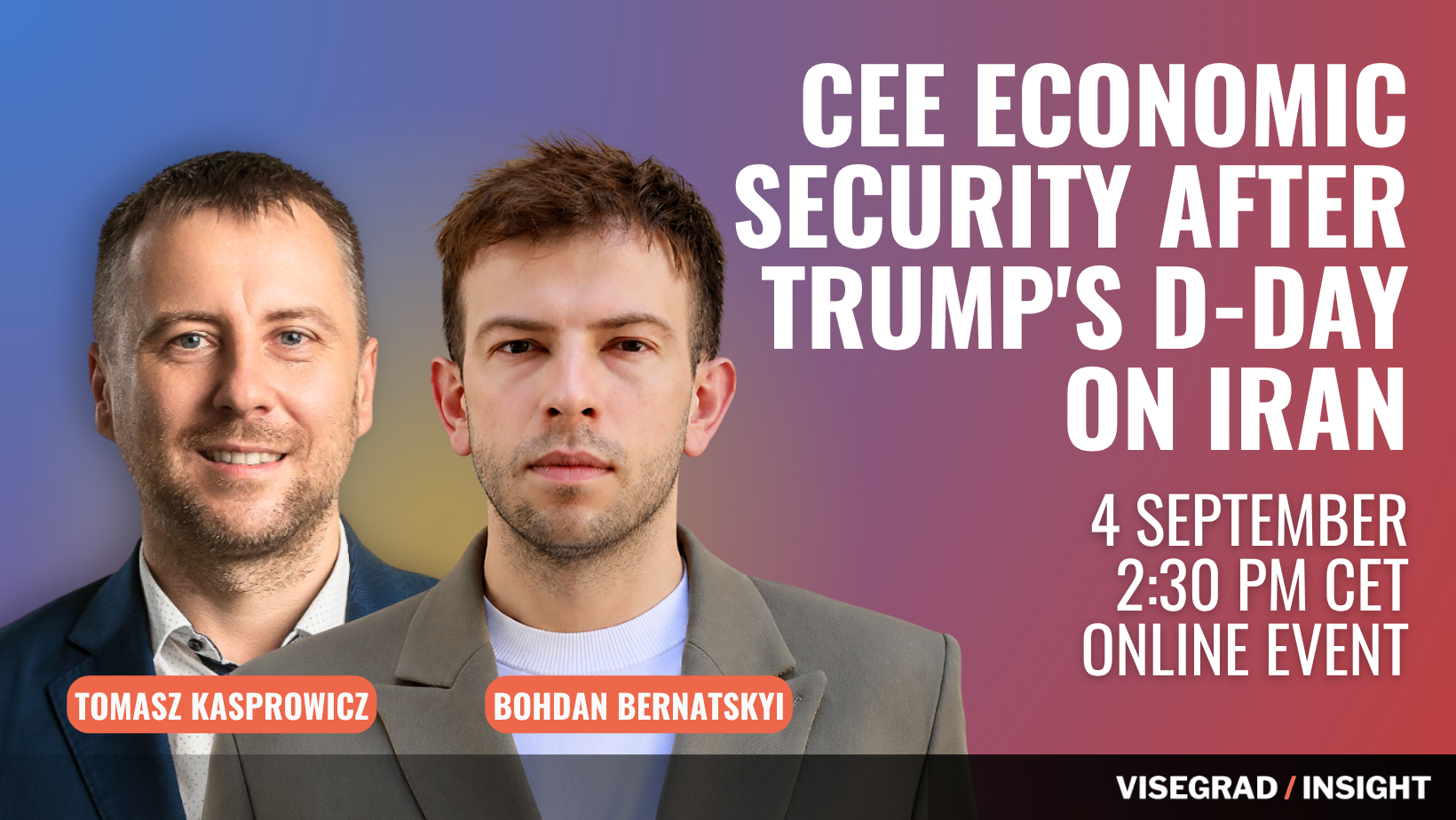
Online event: One Week After Trump’s ‘D-Day’ Against Iran – What Is There for CEE Economic Security?
1 September 2026
Events
Think Tank
European Council Has Fewer Success Stories Than Failures
28 August 2026