
Democratic Security
Those Who Do Not Learn from This War Risk Losing the Next – Radosław Sikorski
17 September 2026

29 July 2026
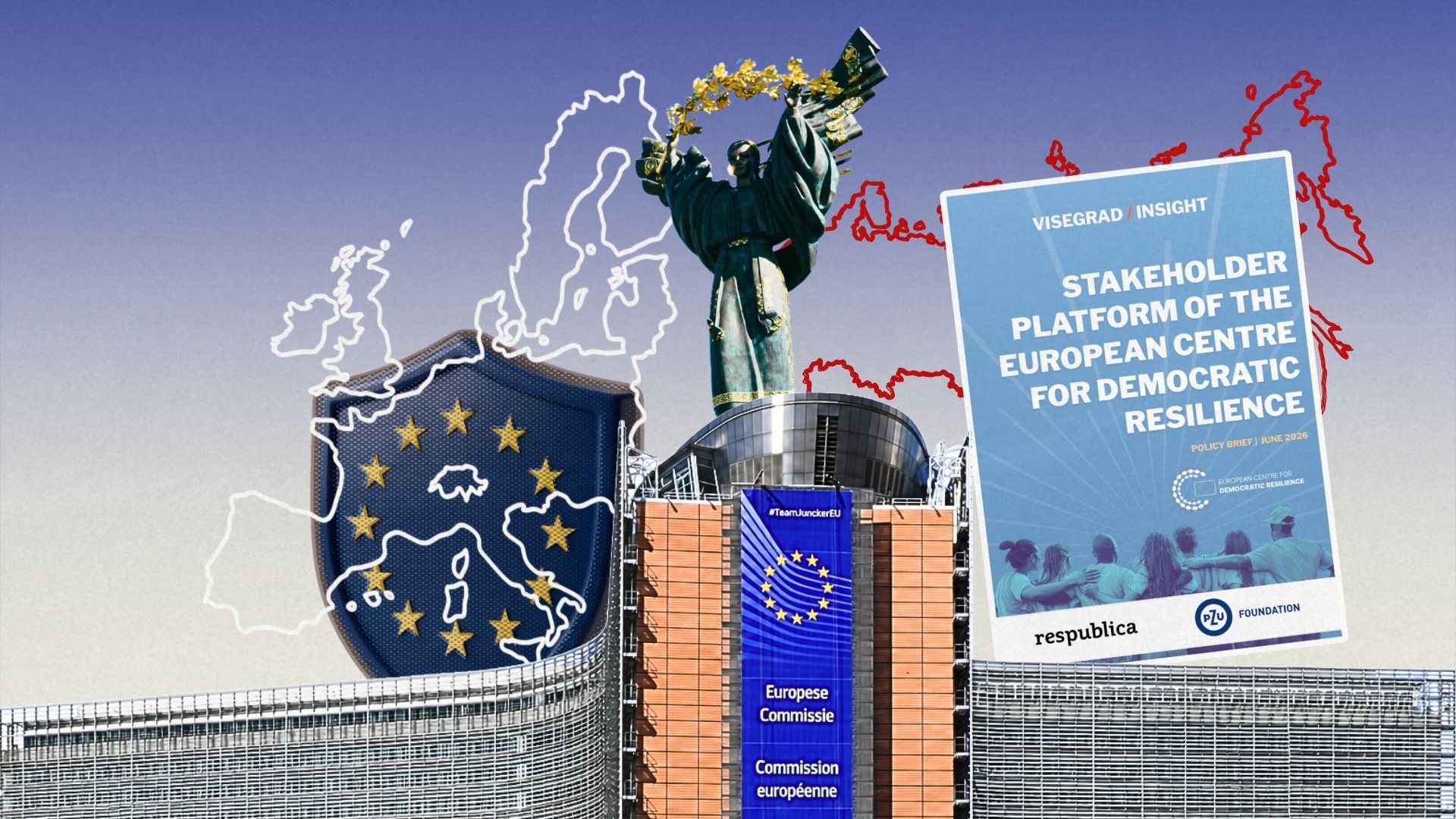
The European Centre for Democratic Resilience will only succeed if its Stakeholder Platform is built for practitioners, not for reporting purposes. Ukraine can help.
On 25 and 26 June, I was at the Permanent Representation of Poland to the EU in Brussels for the conference ‘All Hands on Deck against FIMI’. I spoke on a panel about civil society action against foreign information manipulation. For the rest of the conference, I listened. That is usually the more useful half of any policy event.
Aligned with plenary discussions and presentations, the programme involved several interactive workshops dedicated to the planned Stakeholder Platform of the European Centre for Democratic Resilience. The Centre is a new hub established at the heart of the European Democracy Shield project. It aims to strengthen Europe’s collective capacity to anticipate, detect and respond to threats to democracy. The Platform is the channel through which civil society organisations (CSOs), researchers, academia, media and practitioners are meant to feed expertise, research and field experience into that work.
The room was divided into mixed groups featuring non-governmental organisations, EU institutions and Member States administrations. Each time groups had to come up with concrete definitions, directions and solutions for the Platform’s build-up, including its mandate, composition, practicality and resources.
That exercise compressed and addressed the platform’s central questions and needs. And while Europe does not lack platforms, strategies or expert groups, it lacks a reliable route from knowledge sharing to institutional implementation.
Read the Visegrad Insight Policy Brief
Co-authored by Resilient Futures Fellows Alina Sarnatska, Dmitri Teperik and Marta Dermańska
I write plays and served as a combat medic, which is a unique set of credentials for a Brussels policy discussion. At the event, resilience was mostly discussed in the conditional: what the platform would do, whom it would gather and how it might be governed. I come from a country where many of those questions were answered in the past, under conditions nobody would choose.
There is a habit in European policy discussions of inviting Ukrainian experience to testify and rarely to decide. Our war is quoted as evidence in other people’s arguments, while Ukrainian practitioners appear on panels called ‘Lessons from Ukraine’, often after the architecture has already been agreed.
The Centre’s remit explicitly includes candidate countries and potential candidates. Ukrainian organisations, thanks to their hands-on experience that predates many current EU initiatives, should therefore sit in its working groups on information manipulation and civic preparedness from the first cycle, with the same standing as organisations from Member States. They should help define the questions.
Brussels already has a precedent worth remembering. In March 2022, European Parliament President Roberta Metsola handed the Station Europe premises to the Ukrainian civil society organisation ‘Promote Ukraine’. What began as an emergency act of solidarity became a working hub for advocacy, coordination and public events in the European quarter. Institutional access becomes civic infrastructure only when practitioners are trusted to shape and use it.
In the first months of the full-scale war, the fastest information system available to me was a chat of about 140 people from neighbouring streets and where one could search for basic and up-to-date information: which pharmacy still had insulin, whose relative in the next town had seen a column of vehicles, etc. It moved faster than any official channel.
No institution built that network. A competent institution would not have tried to replace it. It would have asked how to support and connect it without destroying the trust that made it useful.
That is the standard I would apply to the Stakeholder Platform. Measuring impact ought not count how many organisations join in its first year, but whether people return to it and can see what happened to what they contributed.
The civic infrastructure that helped Ukraine absorb the shock of February 2022 was not created in February 2022.
Ukraine’s horizontal volunteer networks work because the distance between a request and a response is short, participants are known by name and reputation, and the consequences of failure are visible. Elsewhere, institutional platforms often reverse all three: responsibility becomes diffuse, the path to a decision grows longer, and outcomes become difficult to trace.
The National Volunteer Platform was launched in March 2021, eleven months before the full-scale invasion, by the Ukrainian Volunteer Service, UNICEF and SoftServe, with the support of the Ministry of Youth and Sports. By July 2022 it connected more than 400,000 users with over 500 organisations and local initiatives. It could absorb a wartime surge because the accounts, moderation and habits of cooperation already existed.
The same goes for Learn to Discern, a media literacy programme that has also been operating in Ukraine since 2015. International Research and Exchanges Board (IREX), the programme’s pioneer, has trained more than 15,000 people, and an early evaluation reported a 24 per cent increase in participants’ ability to discern the trustworthiness of news sources. Its school-based work has since reached more than 2,500 schools and over 85,000 students. In 2024 over 76,000 people completed the national media literacy test organised by the state project ‘Filter’, five and a half times the number recorded a year earlier.
Another example that comes close to the case of the Stakeholder Platform is the Civil Society Home run by ISAR Ednannia, a public organisation founded in 1997. It is a physical and digital collaboration platform in Kyiv designed to support CSOs, foster democratic reforms and host community recovery initiatives. The Civil Society Home combines organisational development grants, a search function for service providers and tenders, training, research on the sector and opportunities to find partners. Organisations arrive with an immediate need and return because the platform helps them work.
Trust in such platforms, especially if mandated by governments, does not scale automatically, but it can be nurtured. Here, Ukraine also has a strong precedent. The DOZORRO Platform, built on top of the Prozorro public procurement system, allows civil society organisations and citizens to monitor tenders and register suspected violations. In three years, the DOZORRO community uncovered violations in more than 30,000 tenders with an estimated value of four billion dollars. Users can see whether an audit, investigation or correction followed.
Effective platforms require a clear mission, low barriers to participation, active community management, transparent contribution tracking, cross-sector collaboration, and institutional credibility.
To become an effective instrument of the EU Democracy Shield, the Stakeholder Platform should initially focus on a limited set of practical, problem-driven workstreams, bringing together EU institutions, Member States, civil society, researchers, media, private-sector experts, and local practitioners. Best practices from EU candidate countries such as Ukraine should be continuously studied and adopted where applicable.
Featured illustration uses content elements by Anna Klemenko/Pexels, EmDee/Wikimedia Commons.
Democratic security comes at a price. What is yours?
Subscribe now for full access to expert analysis and policy debate on Central Europe.
Democratic Security
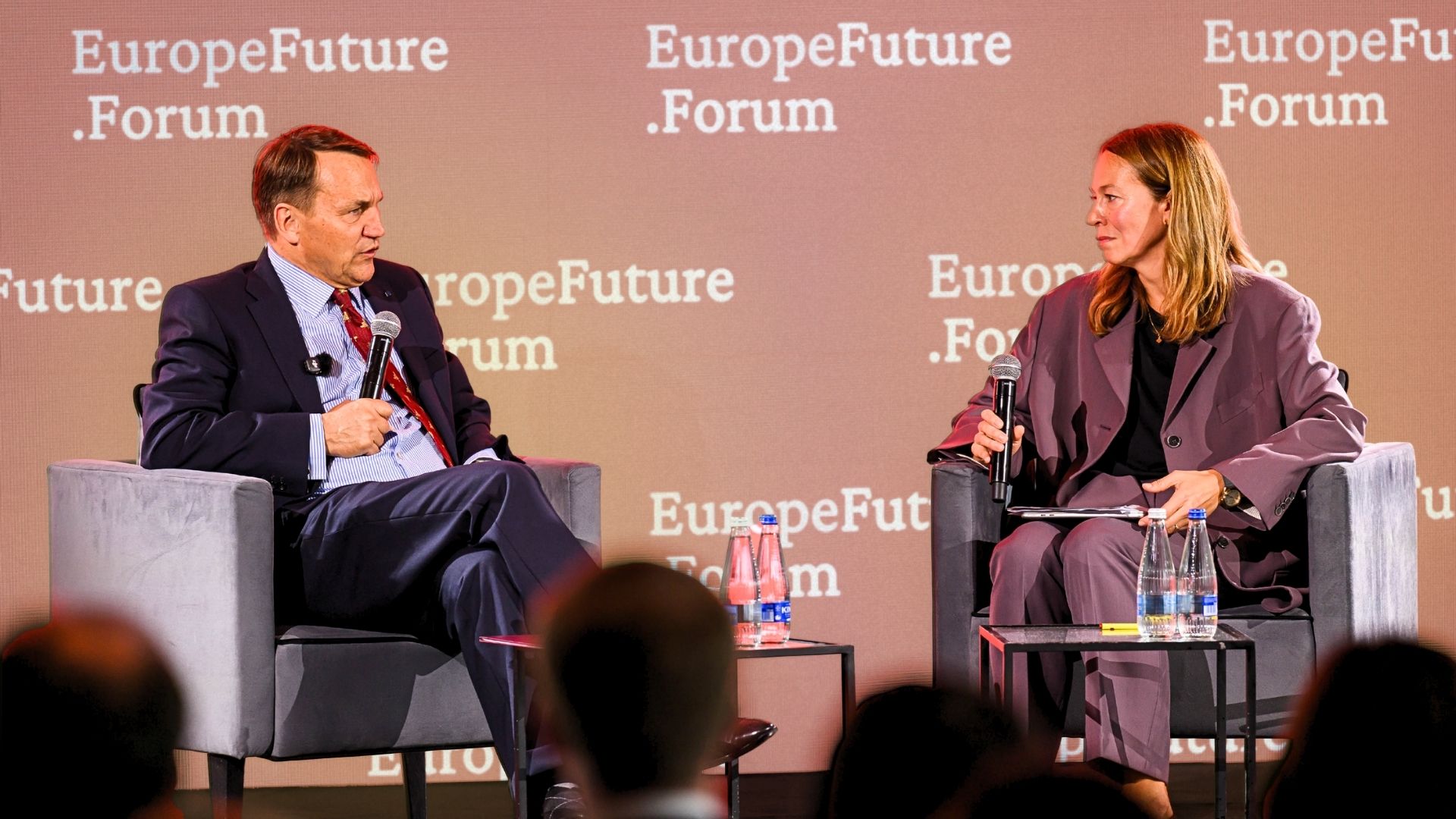
Those Who Do Not Learn from This War Risk Losing the Next – Radosław Sikorski
17 September 2026
Democratic Security
Survey
Unlocked
What the European Security Strategy Should Be About?
10 September 2026

Analysis
Democratic Security
Unlocked
A Polish Crypto Rescue Priced on Orbán Staying in Power
9 September 2026

Economic Security
Events
Think Tank
Europe Aligned with Iran Sanctions Long Before D-Day
8 September 2026