Economic Security
Events
Think Tank
Europe Aligned with Iran Sanctions Long Before D-Day
8 September 2026

3 February 2026

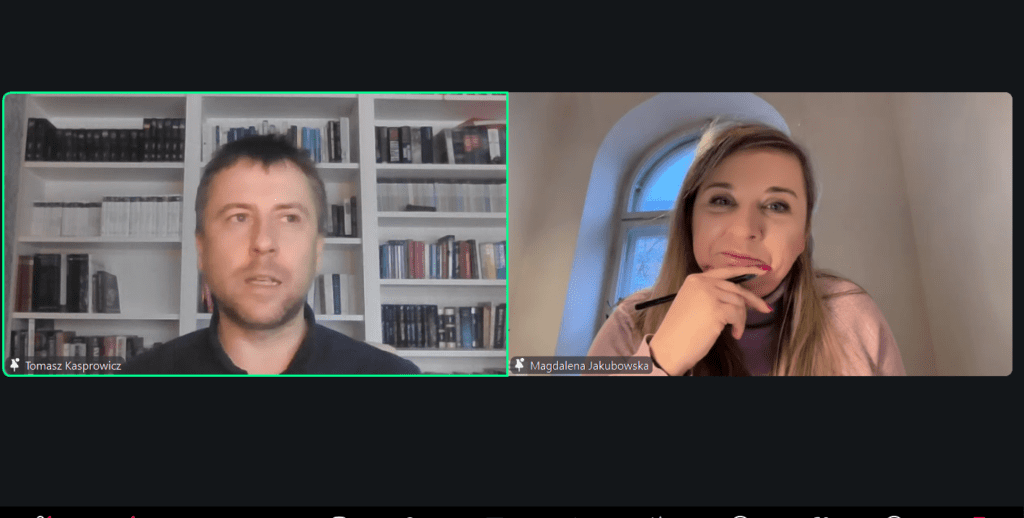
This Wednesday, Visegrad Insight hosted an online discussion on how Russia’s war economy functions, who it rewards and what could snap when the fighting stops. The discussion was chaired by Magda Jakubowska, Vicepresident of Res Publica Foundation and Editorial Director of Visegrad Insight. At the centre of the conversation was Tomasz Kasprowicz’s analysis.
Russia’s wartime economic ‘stability’ is fading. Even the doctored growth numbers are not as bright as they used to be, even if Russia’s production and manufacturing pace has not slowed down.
First, surges in production do not contribute to genuine growth because a) it is primarily focused on military equipment manufacturing or refurbishment and b) this equipment ends up as scrap lying on Ukrainian fields. By the same token, mobilisation and high casualty rates create labour force scarcity and hollow out investment in public services. Domestic demand and consumption are also decreasing.
Second, the impact of global sanctions is significant. Enterprises across key sectors of the Russian economy are struggling to obtain spare parts, equipment and know-how crucial for maintenance and repair. Not to mention innovation and technological development.
Third, Russia’s reserves are depleting as export-oriented enterprises have to sell their outputs at heavily depressed rates on a constrained market.
Russia’s current financial system resembles a pyramid scheme because the same rouble is recycled in a loop.
The state pays soldiers and bereaved families large sums, then tries to stop that cash from flooding the real economy by offering exceptionally high deposit rates, often over 20 per cent. Households put the money in banks that then use the deposits to lend back to the state, directly or via government debt. The government regains the liquidity and repeats the cycle by financing more wartime payouts. It can function while inflows continue and depositors keep trusting that they can withdraw on demand.
The moment withdrawals accelerate or new deposits slow, the loop will snap and cause an outright depression.
Russia’s war economy is unusual because it redirects significant cash towards regions that have long been treated as fiscal backwaters.
Large mobilisation-related payments and associated benefits have channelled money into peripheral towns and far-flung regions where the state historically invested little and extracted much. That sudden rise in household income reshapes behaviour – people revise what they consider ‘normal’ living standards, take on new spending commitments and develop a sharper sense that wealth exists and can be distributed.
And those expectations tend to stick.
If the war-driven inflow ever contracts, the economic shock will be both psychological and political, as remote regions that had a ‘taste’ of financial stability revert to permanent scarcity while Moscow continues to look insulated.
The most plausible pathway to the collapse is a crisis of trust that turns the system against itself.
A system built on rolling deposits into banks and back into state financing is highly sensitive to confidence shocks.
Rumours about bank stability, fear of new restrictions or visible queues can push households to withdraw, draining bank liquidity and forcing the state into emergency measures. Those measures, such as limits on access, forced conversions or sudden administrative interventions, often stabilise the numbers briefly while worsening credibility. If such stress reaches the broad population – not only the wealthy – it becomes existential for the regime because it hits basic payments, food purchases and utilities.
Facilitating such a loss of faith is a psychological warfare element that one could consider to facilitate the collapse of Russia’s economy – and its resulting defeat on the battlefield.
Democratic security comes at a price. What is yours?
Subscribe now for full access to expert analysis and policy debate on Central Europe.
Economic Security
Events
Think Tank
Europe Aligned with Iran Sanctions Long Before D-Day
8 September 2026
Events
Think Tank
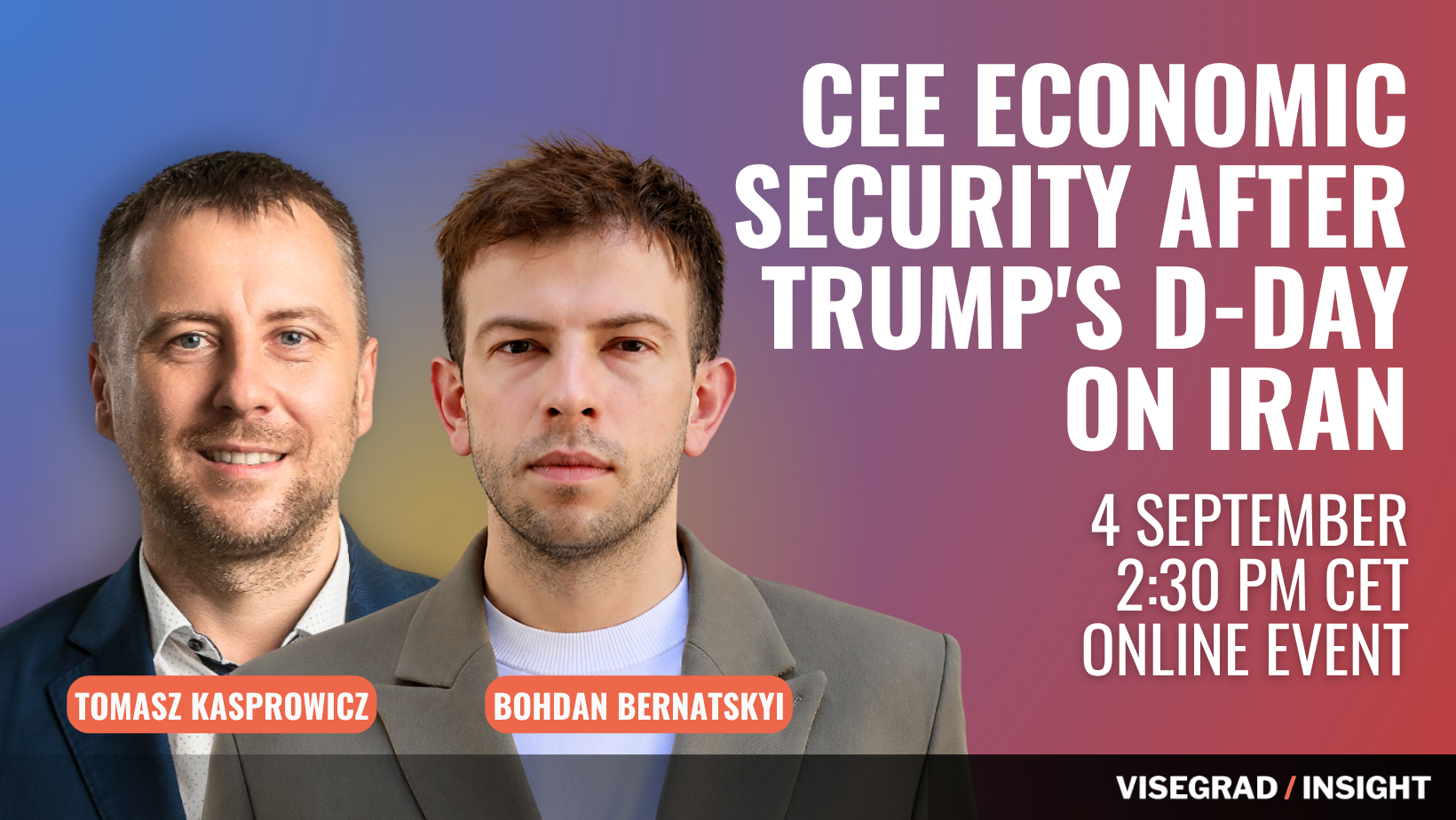
Online event: One Week After Trump’s ‘D-Day’ Against Iran – What Is There for CEE Economic Security?
1 September 2026
Events
Think Tank
European Council Has Fewer Success Stories Than Failures
28 August 2026
Commentary
Democratic Security
Think Tank
Greasy Lies. Food Crises as Fuel for Chinese and Russian Disinformation
6 August 2026