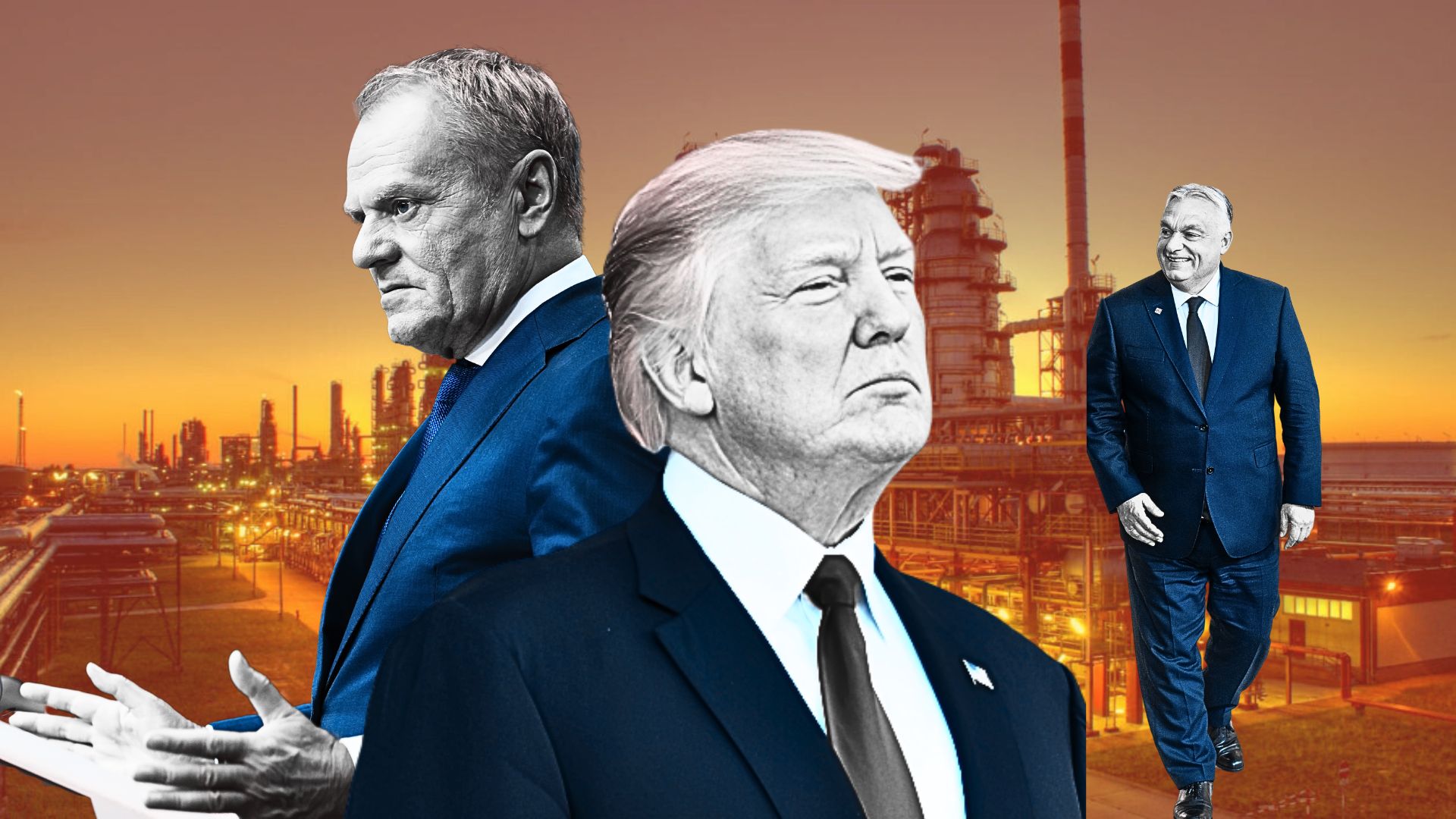
As Prime Minister Viktor Orbán prepares to visit the White House and plead for mercy, US sanctions are forcing Lukoil into a fire-sale of its European refineries. Poland’s state-owned Orlen is poised to capture Hungary’s diesel market, generating billions while hastening the EU’s de-Russification push.
Meanwhile, the V4 is fracturing into a Ukraine-sceptic bloc on multiple fronts – from agricultural imports to EU accession. Andrej Babiš’s new Czech coalition with the far-right SPD aligns Prague with Budapest and Bratislava, but Poland and Hungary are locked in a fresh row over rule-of-law and political asylum disputes.
 Russian energy assets firesale
GLOBAL/REGIONAL
- Lukoil’s firesale impacts the regional energy security landscape. Following new US and UK sanctions in mid-October, Lukoil said it would sell its entire international portfolio to Gunvor, a Swiss trader. The package covers upstream stakes in Iraq, Kazakhstan and Africa, and European downstream assets such as Bulgaria’s Burgas refinery and Romania’s Petrotel, which supply fuel to Hungary and Slovakia, among others. Gunvor, co-founded by Swedish billionaire Torbjörn Törnqvist with past Russian ties, leverages its neutrality. This sale marks the largest post-invasion transfer of Russian energy assets to Western hands, pending OFAC approvals and accelerating Moscow’s global retreat.
- Gunvor’s takeover severs Kremlin control over refineries and retail networks supplying Hungary, Slovakia, ensuring continuity while enabling non-Russian crude sourcing (e.g., Kazakh, Middle Eastern). This aligns with EU de-Russification targets and mitigates weaponisation risks with some direct regional impact.
- Europe’s far-right hiccup in the Netherlands must not be mistaken for a defeat. The recent Dutch election bolstered centrists, yet far-right anti-immigrant forces remain resilient and hardline parties could still pilot or co-pilot Europe’s largest economies by decade’s end, as we write in our recent policy foresight report.
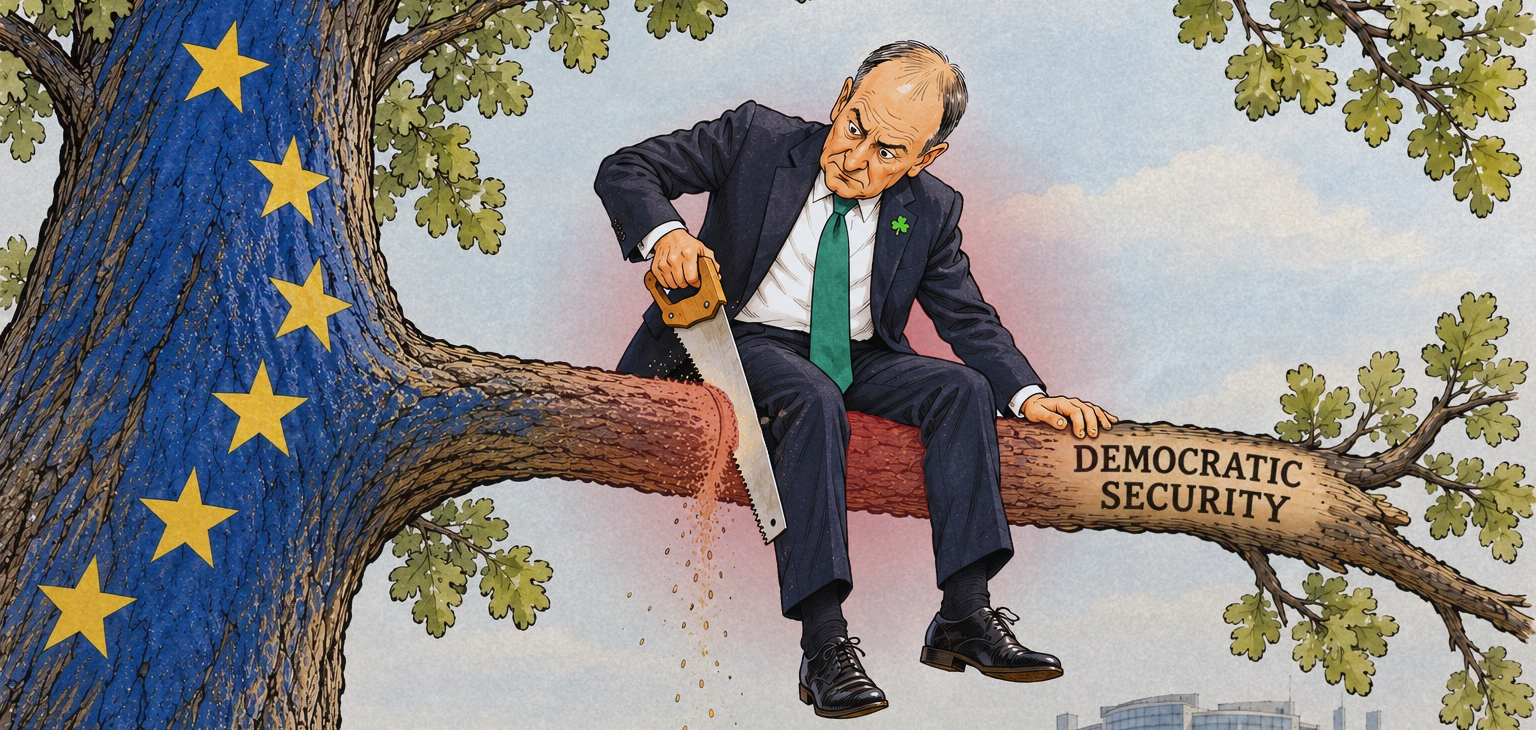
- A new foresight report by Visegrad Insight outlines electoral scenarios for Europe in the context of EU democratic security policies in the making.
- Trump announced a 10 per cent reduction in U.S. tariffs on Chinese goods during an in-person meeting with Xi Jinping in Kuala Lumpur on Thursday.
- It was their first in-person meeting since 2019.
- Agenda items included tariffs and trade, rare earth minerals, agricultural purchases and cooperation on illicit fentanyl flows.
- The United States and China have agreed to establish direct military communication channels aimed at preventing conflicts after the ASEAN Defence Ministers’ Meeting in Kuala Lumpur, wrote Pete Hegseth on X. It’s a step toward an improved bilateral military dialogue, reducing risks of miscalculations in sensitive areas like the South China Sea or Taiwan Strait, though it does not address deeper strategic rivalries.
UKRAINE
Newsletter
Weekly updates with our latest articles and the editorial commentary.


 Russian energy assets firesale