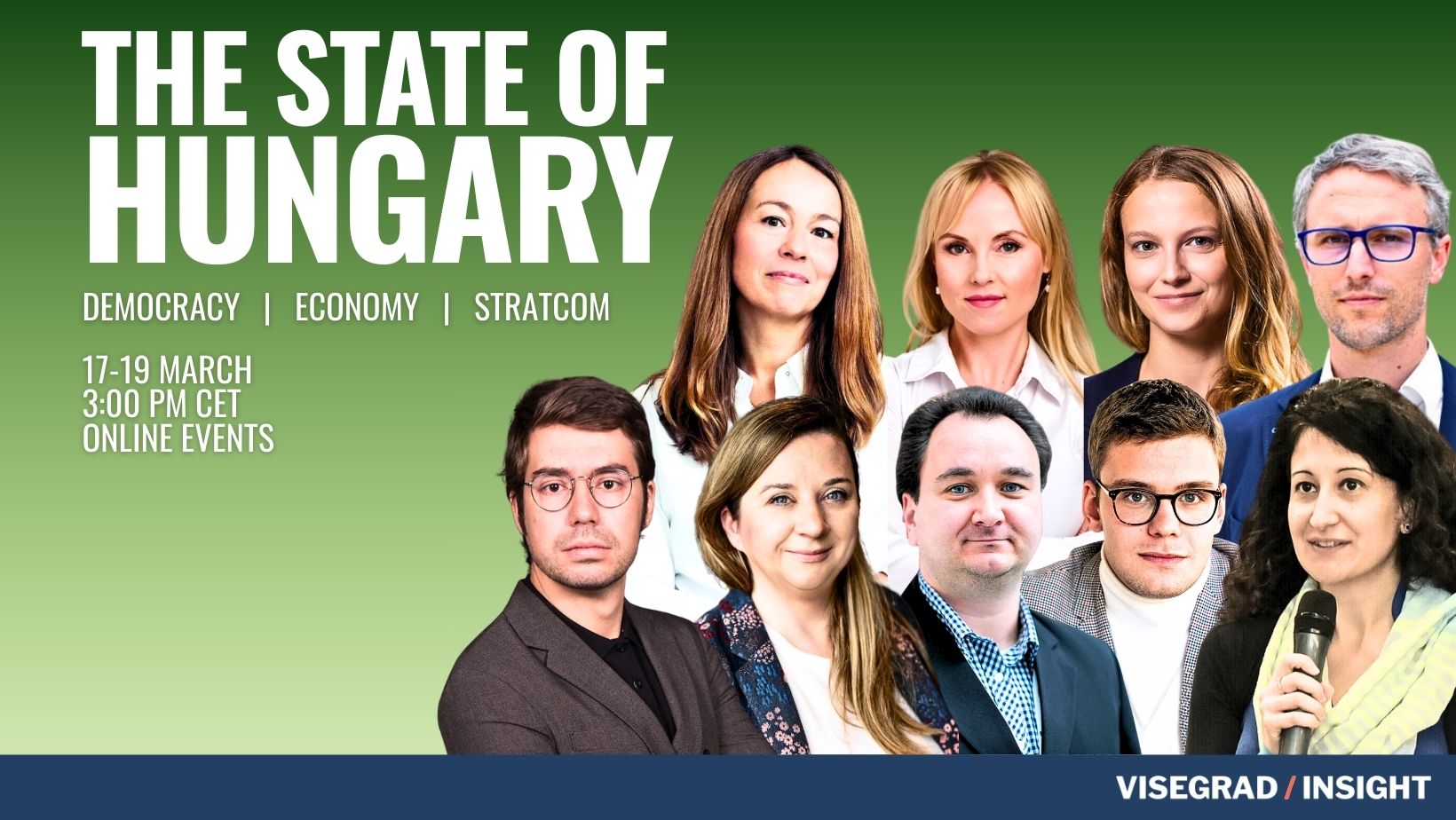
The State of Hungary brings together leading experts for three focused online panel discussions in the run-up to the April 2026 parliamentary elections.
Against the backdrop of deepening polarisation, economic pressures, the Russia-Ukraine war dynamics, and an unusually competitive opposition, the series explores critical dimensions of Hungary’s present and possible futures.
We make these discussions possible thanks to supporters like you. Subscribe now and save 40% with the discount code.
Apply the code VisegradIns-40 HERE and use the discount!
REGISTER FOR THE EVENT BY SCROLLING DOWN OR CLICKING HERE.
The State of Hungary: Democratic Security | 17 March, 3:00 PM CET / 9:00 AM ET
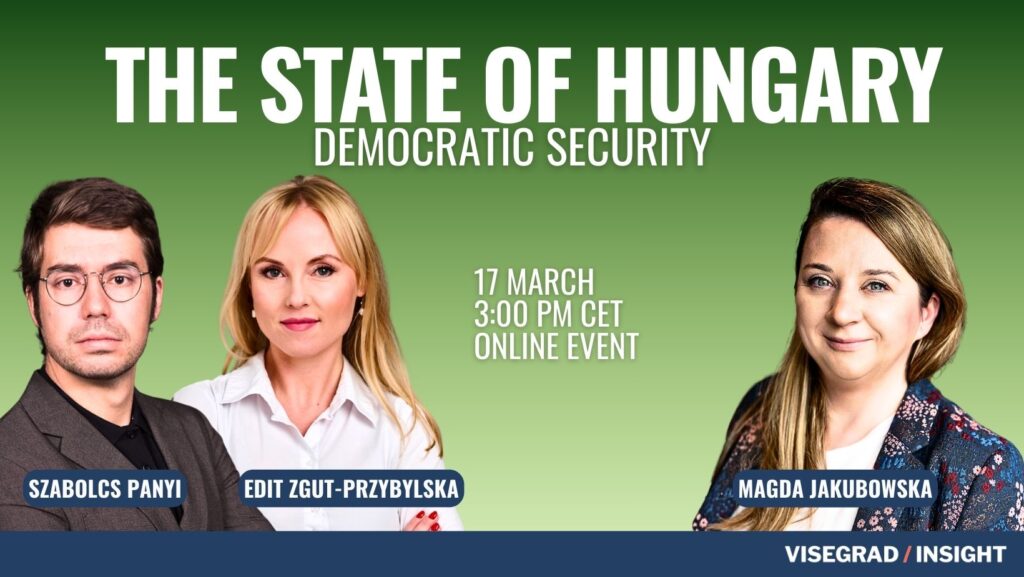
This panel will assess the state of democratic institutions, societal trust and party competition as Hungarians head to the polls. The following questions shall be discussed:
-
-
- How resilient are Hungary’s democratic institutions after 15+ years of Fidesz governance, and what signs of backsliding or recovery are visible in the pre-election period?
- To what extent has social cohesion been strained by polarisation, economic inequality and government messaging, and how might this influence voter turnout and choices?
- What role do electoral strategies, campaign financing transparency and potential irregularities play in shaping perceptions of fairness in the 2026 vote?
Speakers
-
-
- Szabolcs Panyi – VSquare’s Budapest-based lead investigative editor in charge of Central European investigations, Szabolcs Panyi is also a Hungarian investigative journalist at Direkt36. He covers national security, foreign policy, and Russian and Chinese influence. He was a European Press Prize finalist in 2018 and 2021.
- Edit Zgut-Przybylska – Assistant Professor in the Institute of Philosophy at the Polish Academy of Sciences and a Research Fellow at CEU Democracy Institute. She received her PhD in Sociology, holds an MA in Political Science and graduated as a journalist. She is a 2020/2021 Fellow at Visegrad Insight. Her research interest covers informality, populism, democratic innovations, Euroscepticism and democratic backsliding. She authored the book “Informal Power in Hungary and Poland”, forthcoming at Routledge on March 20, 2026.
Moderated by Magda Jakubowska – Vicepresident of Res Publica Foundation and Editorial Director of the Visegrad Insight. She drives EU and security strategy analysis, champions foresight in policy, and launched #WomenAreNATO to advance gender equality in defense. With experience in Poland, the U.S. & transatlantic projects, she sparks a Central European perspective to debates on Europe’s future in media and public forums.
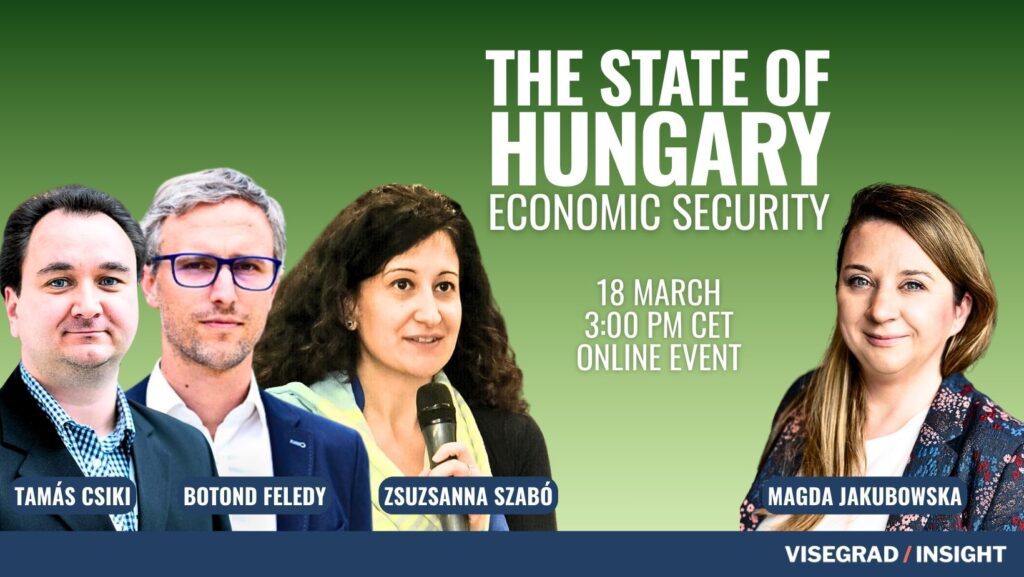
The State of Hungary: Economic security | 18 March, 3:00 PM CET / 9:00 AM ET

This session will focus on Hungary’s economic model and its vulnerabilities as the election nears:
-
-
- What are the realistic growth prospects for Hungary through 2030 under continuity versus a potential change of government?
- How have EU funds, sanctions regimes and global energy market dynamics influenced Hungary’s economic performance and policy choices in recent years?
- Which strategic economic decisions will the next government most urgently need to address to strengthen resilience and security?
Speakers
-
-
- Tamás Csiki Varga – Defence policy analyst at SV/SD Consulting, as well as senior research fellow at John Lukacs Institute for Strategy and Politics, and academic relations manager at the Defense Innovation Research Institute, all of which bind him to Budapest. He holds a PhD in Military studies, and has been conducting policy analysis and research on strategy, defence policy, modernisation and industry.
- Botond Feledy – Brussels-based geopolitical expert, the director of Red Snow Consulting and the European Leadership Programme. He focuses his research on Euro-Atlantic security issues. He was named one of the #NewEurope100 in 2017. He is a co-founder of the EU Negotiation Moot simulation game, an alumnus of the IVLP of the US State Department, and a former Marshall Memorial Fellow of the GMF. He studied at Sciences Po Bordeaux, Université Paris II, Freie Universität Berlin, and ELTE Budapest.
- Zsuzsanna Szabó – Independent Energy – Foreign Policy Journalist and Expert based in scenic Norway, specialises in foreign policy and European energy markets, possessing ten years of experience in these fields. As a Visegrad Insight Fellow, which preceded her time at S&P Global, involved in focusing on analyses of how geopolitical events influenced the Central and Eastern European energy markets.
Moderated by Magda Jakubowska – Vicepresident of Res Publica Foundation and Editorial Director of the Visegrad Insight. She drives EU and security strategy analysis, champions foresight in policy, and launched #WomenAreNATO to advance gender equality in defense. With experience in Poland, the U.S. & transatlantic projects, she sparks a Central European perspective to debates on Europe’s future in media and public forums.
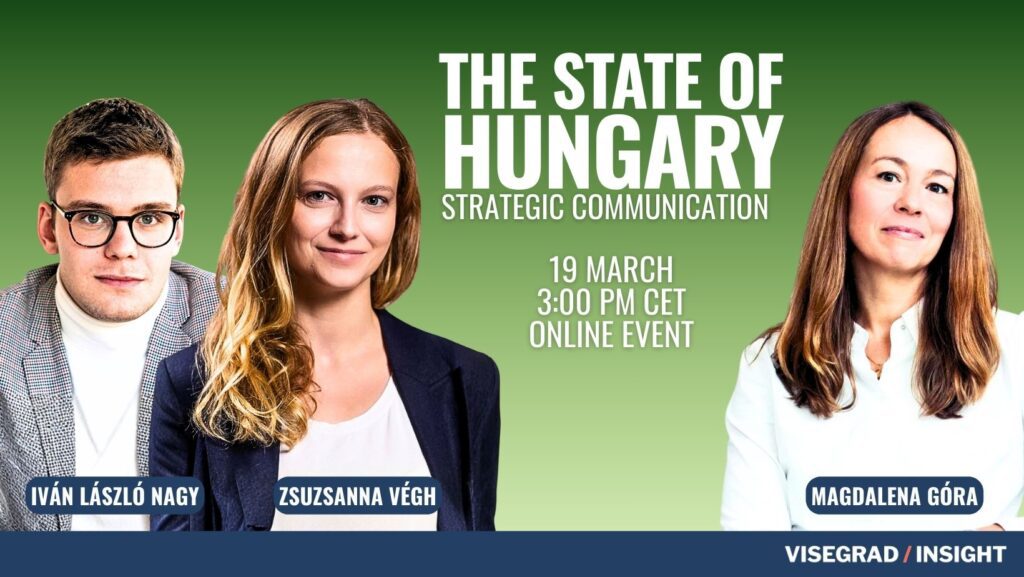
The State of Hungary: Strategic communications | 18 March, 3:00 PM CET / 9:00 AM ET
This discussion will examine how information, messaging and media shape political realities in Hungary before, during and after the elections:
-
-
- How have the main political camps framed their campaign messaging around core themes such as peace vs. war, national sovereignty, EU relations, and anti-corruption?
- Which narratives are gaining traction among undecided voters and how might they shift in the final weeks before April 12?
- How is the broader European and transatlantic information environment responding to Hungary’s evolving political and media landscape, and what changes might follow the vote?
Speakers
-
-
- Ivan L. Nagy – 2022/2023 Marcin Król Fellow at Visegrad Insight. He currently works for the Columbia Journalism Review in New York. Prior to his move to the US, he was an analyst, opinion writer and the head of podcasts at HVG. His work focuses primarily on democratic security and right-wing populism in the CEE region. Ivan is a graduate of Columbia Journalism School’s MA programme.
- Zsuzsanna Végh – programme officer at the German Marshall Fund of the United States. Her analytical focus is on Central and Eastern Europe, especially the foreign and EU policies of the Visegrád countries, the state of democracy, and the role and impact of the populist radical right in the region. She has been an associate researcher at the European Council on Foreign Relations and authored reports for Freedom House’s flagship project, Nations in Transit, on her native Hungary.
Moderated by Magdalena Góra – Res Publica Foundation Advisory Board Member. Associate Professor (political science) at the Institute of European Studies of the Jagiellonian University, primarily concentrating her work on democracy challenges in the European Union after enlargement, the crisis of representative democracy, the external relations of the European Union and democratic practices in EU’s close neighborhood.
Register by filling out the form:
Your Central European Intelligence
Democratic security comes at a price. What is yours?
Subscribe now for full access to expert analysis and policy debate on Central Europe.
Newsletter
Weekly updates with our latest articles and the editorial commentary.