Think Tank
Visegrad Insight is Hiring!
14 October 2026

15 October 2026
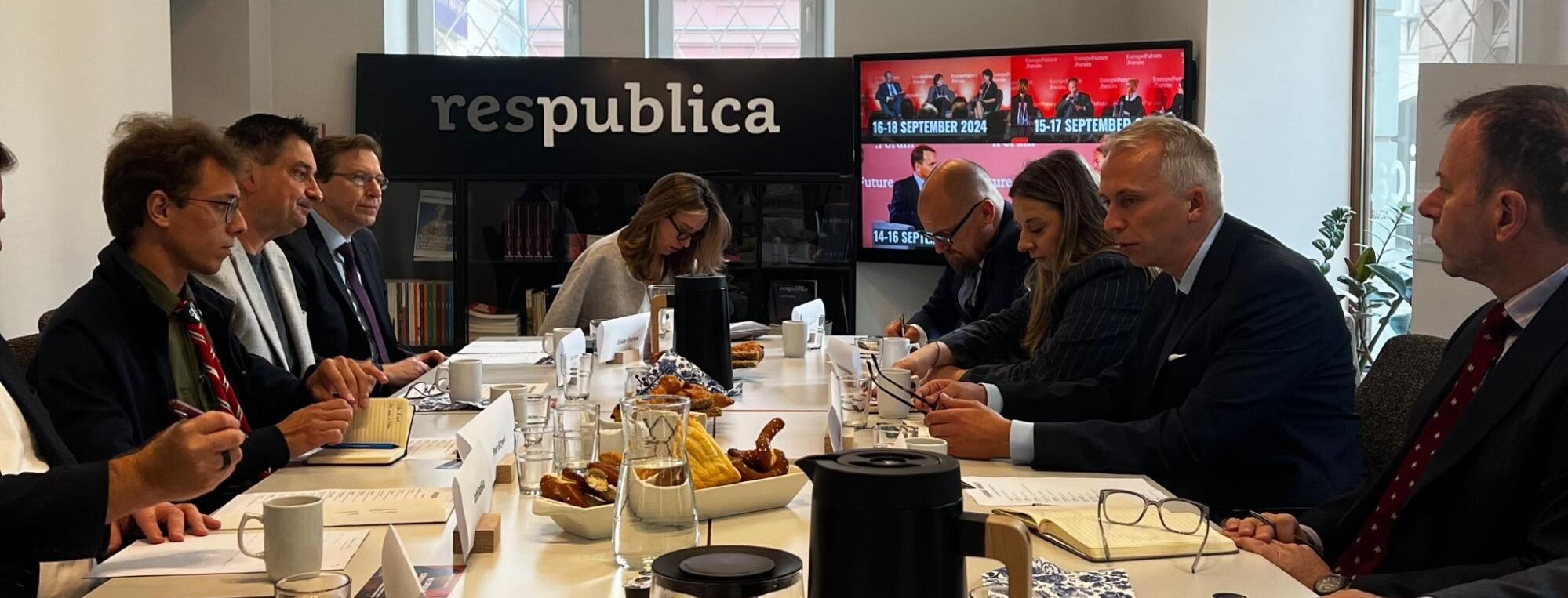
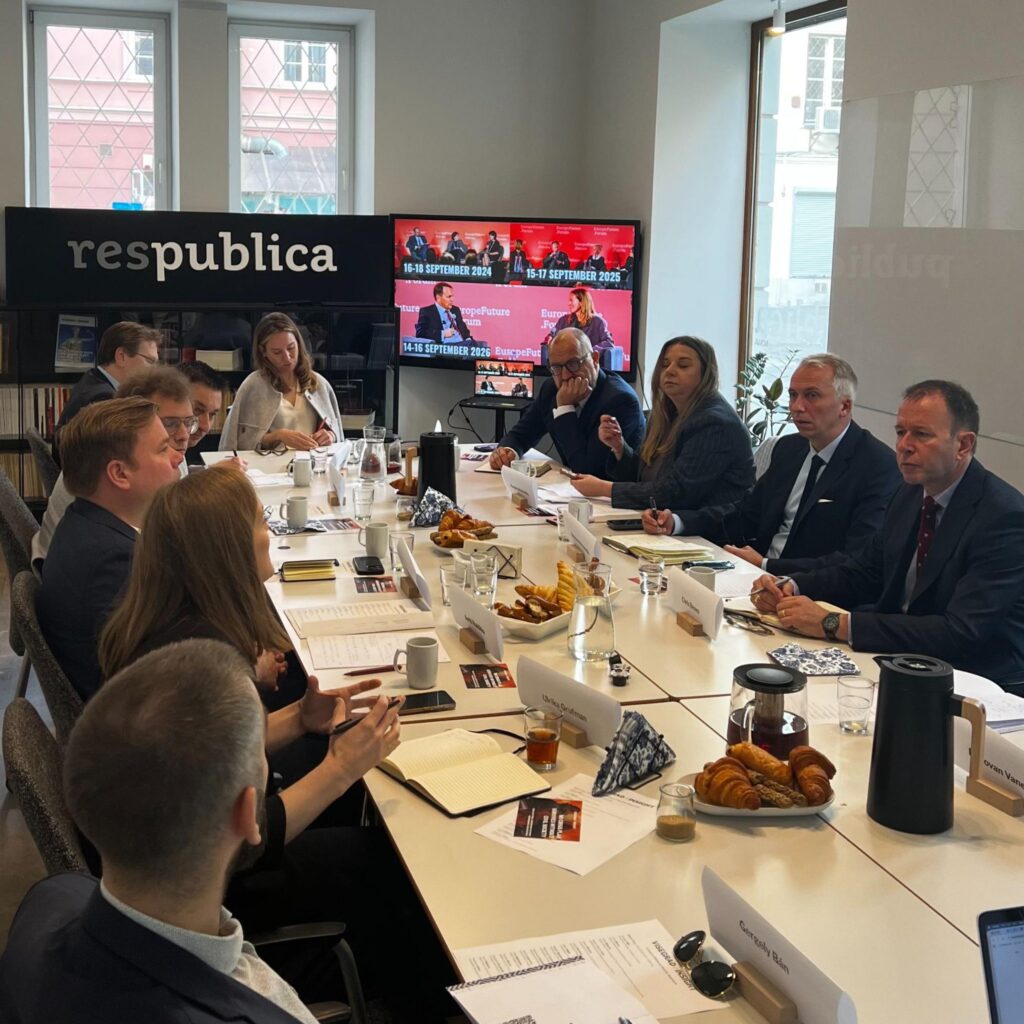
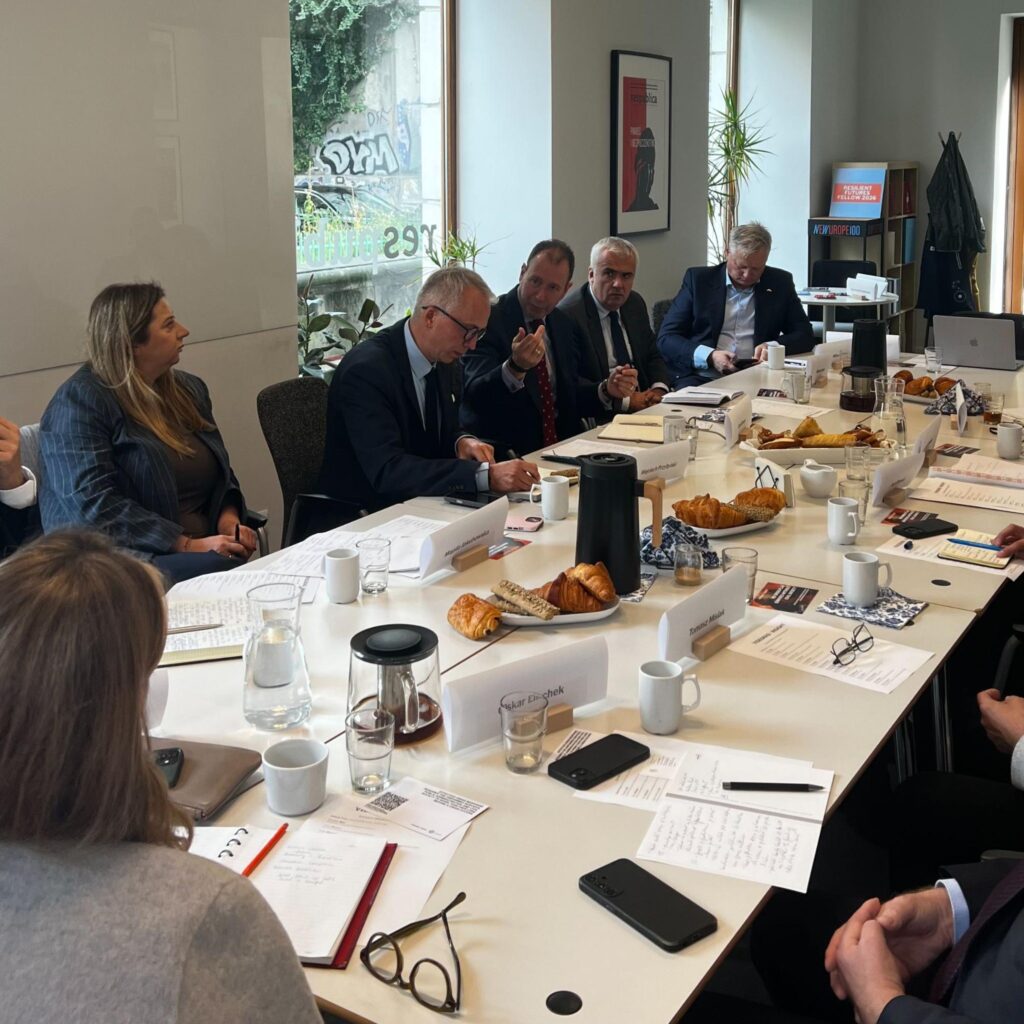
The breakfast brought together diplomats, representatives of non-governmental organisations, civil protection practitioners and business leaders. They discussed whether Europe, and Poland in particular, can build a whole-of-society approach to security that goes beyond military preparedness, and what the region’s most successful cases suggest it should contain.
Wojciech Przybylski, editor-in-chief of Visegrad Insight, opened with key takeaways from three recent meetings with practitioners – his study trip on Finland’s comprehensive security model, a foresight session from the Europe Future Forum 2026 and a simulation exercise for civil society actors, run with the German Marshall Fund and supported by Global Affairs Canada. Here are the key aspects that drove the discussion:
– Although Finland is widely seen as Europe’s benchmark for total defence, the country’s practitioners from the armed forces, the National Emergency Supply Agency and the economic ministries openly debate whether the country is prepared enough and whether the model could be copied anywhere else in Europe;
– Part of Finnish preparedness is a legacy of the Winter War and Cold War planning, and there are risks of treating it as sufficient while the battlefield in Ukraine tests both its assumptions and its range;
– The central challenge is sharing national resources in wartime. Total defence assumes that all resources are pooled, and the military will want to claim immediately. A long war, however, requires the state, the economy and society to keep functioning so that people can go on living in the country instead of leaving it. Finnish agencies are therefore drawing up procedures and scenarios for negotiating between military and civilian needs;
– To prepare for this, public institutions are rightfully bringing the business community and identifying critical industry sectors into planning early. Those responsible for supply also warned that once strategic reserves are released there will be no more stockpiling. Planners will then have to ‘remove the box’ instead of thinking outside it.
Finland’s self-questioning was echoed around the table, particularly by participants whose civil protection systems were built on the Finnish template with fewer resources and less time. Given how brutally Russia has treated civilians in Ukraine, they now face the question of what to do with the part of the population that is not fighting and how to adjust planning assumptions quickly enough.
Distance no longer offers protection either. In Canada, the belief that three oceans kept threats away is fading, and external economic shocks have widened the sense of threat to include economic preparedness. This echoes the Finnish warning that preparedness depends on the economy as much as on the military.
Lithuania, which presented its total defence concept in June, shows where the gap lies. Its planning language centres on resistance once foreign troops are on the ground and leaves little room for resilience built in advance. This raises the question of what happens before a crisis and who keeps the country running in that phase.
Part of the answer lies with business, and the Nordic countries offer a clear lesson for Central and Eastern Europe. Large companies there already employ civil defence officers, train their staff and stay in close contact with state authorities. Attention is now turning to small and medium-sized enterprises, which receive crisis guidance alongside households. In Lithuania, as in Finland, initiatives ask employers to pledge that they will release staff for training and keep their jobs open as a normal contribution to national defence.
Poland’s experience in 2022 showed what society, supported by the active participation of business, can mobilise before the state reacts. Governments, therefore, should actively plan to channel this energy in the first phase of a crisis.
The same speed matters in defence innovation. Ukraine has become a sandbox where both sides change tactics, communication and hardware every two to three weeks, and start-ups that learn on the ground adapt faster than state-owned defence companies.
Whole-of-society defence could be represented as a stool with three legs, namely government as a whole, society and industry. The third leg, government, faces a problem of time – border fortifications take years to build, require access to private land and only buy time. Ukraine’s experience since 2022 has shown that every village must be protected, so decision makers need ways to shorten the time between warning and orders. Coalition formats such as the Joint Expeditionary Force allow groups of like-minded states to act before all 32 allies reach consensus. Tabletop exercises and war-gaming can prepare politicians for fast decisions and should be used more widely in foreign ministries and civilian institutions.
The view around the table was that Europe may not yet be preparing for the right crisis. The gaps identified point in the same direction. Resources must be shared between the military and a society that keeps functioning through a long war, business must be part of planning before a crisis begins and governments must decide faster than consensus among allies allows. These gaps are shared across the region, which is why the phrase brought back from Finland applies to all of it – no country is an island.
Democratic security comes at a price. What is yours?
Subscribe now for full access to expert analysis and policy debate on Central Europe.
Think Tank
Visegrad Insight is Hiring!
14 October 2026
Events
Think Tank
How Europe Can Build the Capacity to Act Together
2 October 2026
Economic Security
Think Tank
How Poland Wants to Turn a Failing Train Maker into a Geoeconomic Asset
30 September 2026
Economic Security
Events
Think Tank
Europe Aligned with Iran Sanctions Long Before D-Day
8 September 2026