Analysis
Economic Security
Serbia’s Balancing Act Is Running Out of Time
24 October 2026

8 September 2026
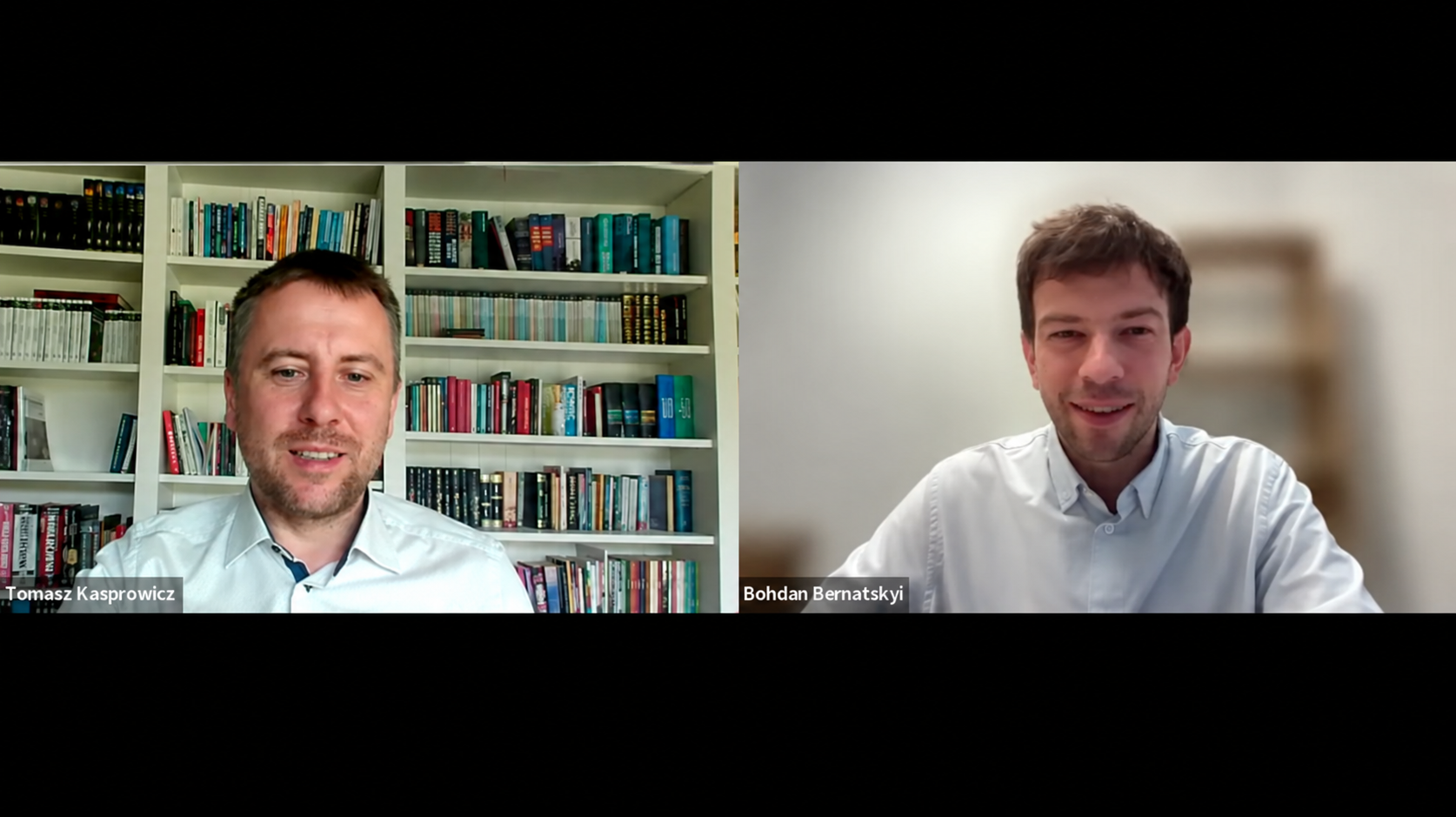
One week after US Treasury Secretary Scott Bessent announced an economic ‘D-Day’ against Tehran, Visegrad Insight invited sanctions lawyer Bohdan Bernatskyi to read the package line by line and examine the possible consequences for Europe’s economic security.
Scroll down to watch the recorded part of the discussion.
Opening the discussion, Tomasz Kasprowicz described Operation Epic Fury – the joint US-Israeli campaign launched against Iran on 28 February 2026 – as furious but not particularly epic in its results. Six months on, the confrontation has produced no durable settlement and has created a wider set of economic problems, including higher global oil prices.
The past two weeks, he noted, were particularly humiliating for the US, as Tehran suspended official talks and indicated that it would wait for the next US president before resuming them. The ‘D-Day’ sanctions package that followed was imposed unilaterally, on the wager that Iran would fold economically, or, more precisely, that its trade partners would, forcing Tehran back to the table.
Three elements are the most important in the design of the new measures, Berntskyi opened. First, Washington banned payments to the Iranian maritime administration in exchange for safe passage through the Strait of Hormuz. Second, licences that had permitted narrow forms of cooperation, including dollar payments for cultural, educational and sporting activities, have been withdrawn. Third, the Office of Foreign Assets Control (OFAC) issued a determination covering five sectors of the Iranian economy, namely digital assets, technology, gold, aviation and shipping. Companies operating in those sectors are now at risk of secondary sanctions even if they never deal with a specifically blacklisted Iranian person or company. ‘It is now close to impossible to deal with Iran without violating sanctions’, Bernatskyi said.
Three groups in Europe carry the exposure created by the American ‘D-Day’. Humanitarian organisations, which were already operating under constant threat of violating US measures before the package landed, come first. Despite their principal purpose being to reach vulnerable groups inside Iran, continuing that work has become considerably more dangerous.
Shipping follows. Bernatskyi noted that several Greek companies were designated in the D-Day package for supporting Iranian oil shipments through insurance or technical assistance, and stressed that OFAC draws no distinction between EU-based and non-EU-based companies where it has reason to believe prohibited activity has taken place. Sanctioning EU companies is not terra incognita.
The third exposure is due diligence. Companies dealing with counterparts in the United Arab Emirates and Hong Kong carry the heaviest burden, because most of the grey zones through which Iran has tried to evade sanctions sit in those two jurisdictions, with Turkish and at times Indian companies also appearing in oil shipping chains. European operators now need stronger safeguards when engaging with them.
The EU could announce its own D-Day on Iran at little cost, Bernatskyi argued, because much of the substance is already in force. Brussels reworked and strengthened its Iran sanctions regime after September 2025, though the change passed largely unnoticed because EU sanctions policy is driven by the Russia agenda. Prohibitions had previously covered mainly nuclear goods, missile-relevant equipment, drone production and telecommunications. They have since been widened to the maritime and shipping sectors, to goods used in oil and gas production and to basic military and industrial items. ‘Brussels, therefore, politically speaking, aligned sanctions with its US counterpart even before D-Day’, he concluded.
Bernatskyi closed on the effect of the war on Donald Trump’s domestic position. The current administration has not settled on a stable balance between pressure and negotiation, and the campaign has already cost the US heavily. With midterm elections only two months away, Trump is likely to press for visible outcomes, whatever their effect on Iranian behaviour.
The off-the-record part of the discussion continued with participants.
Bohdan Bernatskyi – Future of Ukraine Fellow at Visegrad Insight and Researcher at the Danish Institute for International Studies and Vilnius University. His professional expertise lies in sanctions and transitional justice, including authoring reforms to Ukraine’s sanctions infrastructure aimed at aligning it with EU best practices.
Tomasz Kasprowicz – Editor-in-Chief of Res Publica Nowa, PhD in Finance, specialising in risk management, from Southern Illinois University. An academic lecturer with experience across three continents.
Democratic security comes at a price. What is yours?
Subscribe now for full access to expert analysis and policy debate on Central Europe.
Analysis
Economic Security
Serbia’s Balancing Act Is Running Out of Time
24 October 2026
Events
Think Tank
Is Europe Preparing for the Right Crisis? Lessons from Finland and the Eastern Flank
15 October 2026

Think Tank
Visegrad Insight is Hiring!
14 October 2026

Economic Security
Interview
Once Inside, Montenegro Will Be Enlargement’s Strongest Advocate – INTERVIEW
13 October 2026