Think Tank
Visegrad Insight is hiring!
14 October 2026

28 August 2026
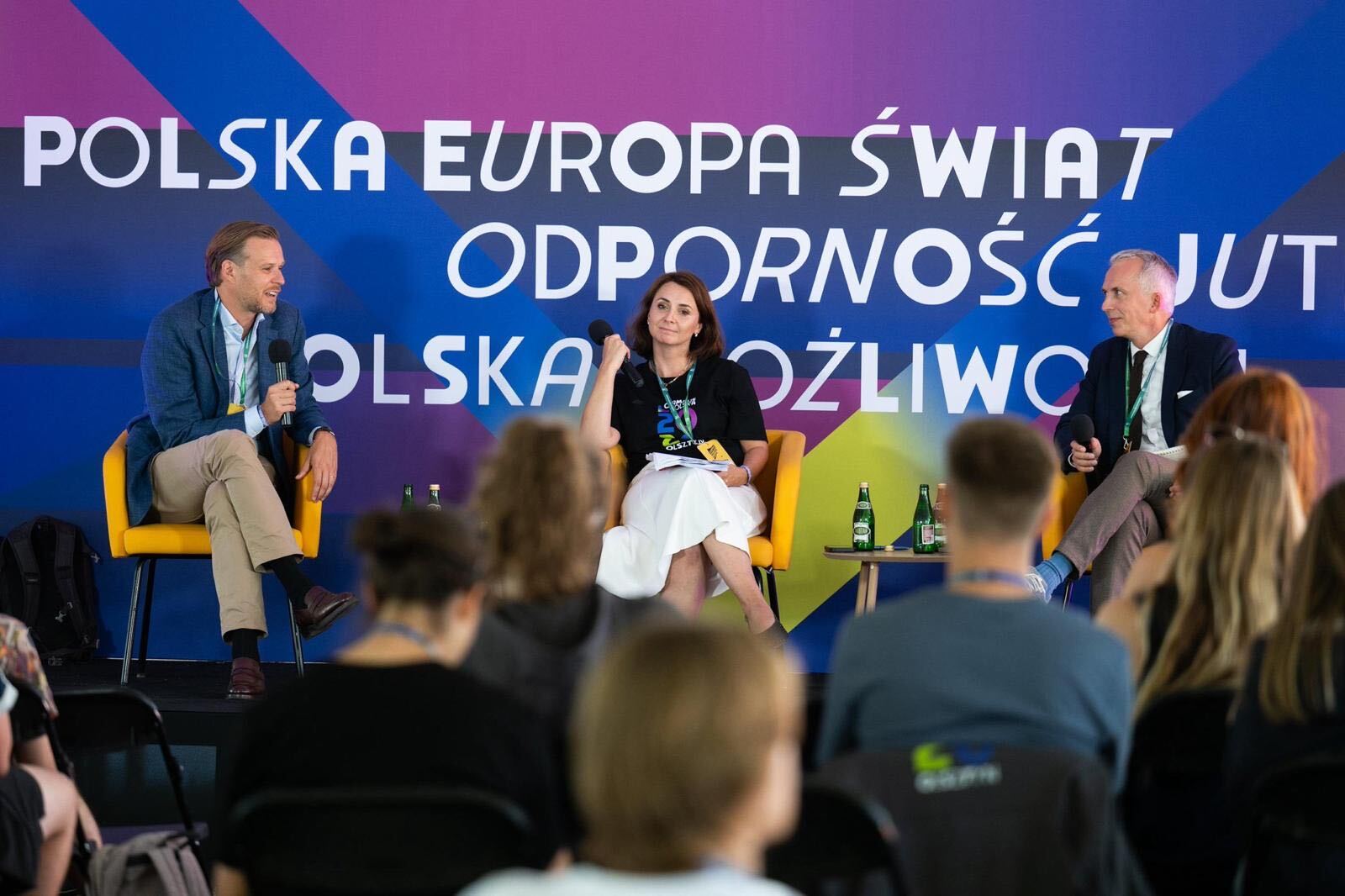
Former Lithuanian foreign minister and a Polish MEP on where power in Europe actually sits and what role smaller states play in the game of geostrategy.
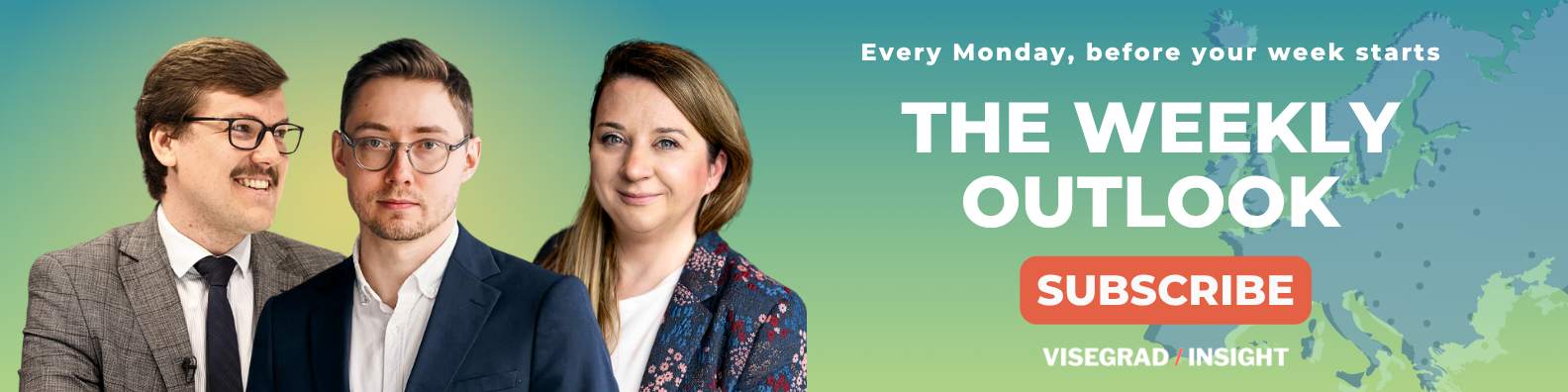
Who sets the direction of Europe? Is it the European Commission and Parliament, or do national governments play a more important role?
This was the opening question raised by Wojciech Przybylski to the Campus Poland youth audience in Olsztyn this Thursday. To set the stage, a forced vote before the panel discussion with Former Lithuanian foreign minister Gabrielius Landsbergis and MEP Kamila Gasiuk-Pihowicz had put governments on a pedestal.
Against this backdrop, Landsbergis did not defend the winning side. ‘It is an impossible job for the countries to be in charge’, he said. Twenty-seven governments with different histories, sizes and interests cannot generate a common position on their own, which is why the room needs someone willing to set the agenda and absorb the political cost of doing so. ‘We lack leadership. We lack somebody willing to pay the price at the European level’, he said. Asked how far the largest capitals will move to reach a compromise, his answer was blunt. ‘Unfortunately, not very far. And that’s why quite a lot of decisions in Europe are stuck’.
Read the full transcript of the panel discussion
‘It’s easier to say where we succeeded’, Landsbergis advanced, referring to the four months following Russia’s full-scale invasion of Ukraine in February 2022. Back then, the EU imposed its harshest sanctions on Russia, built financial support for Ukraine and used the European Peace Facility to pay for weapons deliveries for the first time.
But the verdict on what followed was harsher than the praise. ‘We did not create a system’, Landsbergis said. ‘It was a fleeting moment’. Europe demonstrated a capacity it has not since institutionalised.
Where do the Parliament and the Commission stand in the game of power, then? Przybylski put this question to Gasiuk-Pihowicz. ‘We are gaining our power year after year’. Her account of where systematic influence actually accumulates was procedural. The Commission holds the right of initiative and its power ends when draft laws leave the building. Two co-legislators must then adopt an identical text, and roughly 80 per cent of files pass the Council by qualified majority, requiring 15 of 27 states representing at least 65 per cent of the EU’s population. The consequence, in her telling, is that nothing is ever banked. ‘Majority doesn’t exist. We have to build it every time in every file’. Asked where power sits, she named neither the plenary chamber nor a Brussels office, but ‘a phone and the list of names in it’.
An interesting precedent drove the discussion further. In 2021 China severed its diplomatic relations with Lithuania after the Baltic state, home to just 2.9 million people, allowed Taiwan to establish a representative office on its territory.
The retaliation was immediate, Landsbergis said, claiming that ‘overnight, all our trade with China was stopped’, referring to the deletion of Lithuania from Chinese customs systems, the invalidation of diplomatic identity documents and car plates, and the disappearance of the Lithuanian embassy from Chinese digital maps, which happened in December 2021.
Brussels responded with a phone call. A senior European official called Landsbergis days later and told him to back down, because Europe was not ready to support Lithuania against China. Landsbergis asked whether the call was the first the official had made on the subject. It was. His reply was the line the room remembered. ‘How surprising! You choose the smallest country in Europe, and you try to call them and break their arm. While with the power that you have, representing 450 million Europeans, you could be calling China and forcing them to back down’. Support eventually came, he said, after American involvement helped bring the larger member states behind Vilnius, and the episode fed into the European instruments now available for handling economic coercion.
Gasiuk-Pihowicz treated the case as a solidarity test rather than a bilateral dispute. Beijing’s pressure on Taiwan is a European security question because of Taiwan’s weight in semiconductors, artificial intelligence and supply chains, and the principle at stake is simple. A third country should not punish a member state for a sovereign decision.
The questions from the floor opened the door and drove the discussion towards concrete scenarios and proposals.
Do smaller states still have the leverage? If so, how relevant is the current veto system?
On leverage, Landsbergis was unsentimental. ‘The coercion is real. The pressures are real. The use of levers is very real’. His answer to it was that pressure only produces the outcome the strong expect if the weak agree to supply it, and he used Ukraine’s survival beyond the three days that were allotted to it at the beginning of the full-scale invasion.
On the veto, both speakers converged on the same obstacle from opposite directions. Gasiuk-Pihowicz refused to open a treaty change, calling it ‘like opening Pandora’s box’ at a moment when the EU needs to concentrate on defence, energy prices, competitiveness and cutting regulatory burden. Landsbergis accepted the diagnosis while rejecting the comfort. Fixing the veto is necessary and would take five to 10 years, and the threats do not run on that timetable. ‘They’re not going to wait for us to fix our problem in ten years’.
His alternative was coalition building inside the EU rather than reform of it. Landsbergis cited the Nordic agreement on a single stock market as evidence that smaller states will trade slivers of sovereignty among themselves rather than wait for Brussels, and argued that a Nordic-Baltic grouping with Poland attached could do the same in defence. Poland, in his account, is the plausible gravity centre, and Lithuania would follow it.
Gasiuk-Pihowicz closed the crisis as a method. The EU is in permanent crisis, and its best ideas have arrived in crises rather than between them. ‘Europe is not built in the moments of comfort. It is built in moments of crisis’.
Democratic security comes at a price. What is yours?
Subscribe now for full access to expert analysis and policy debate on Central Europe.
Think Tank
Visegrad Insight is hiring!
14 October 2026
Events
Think Tank
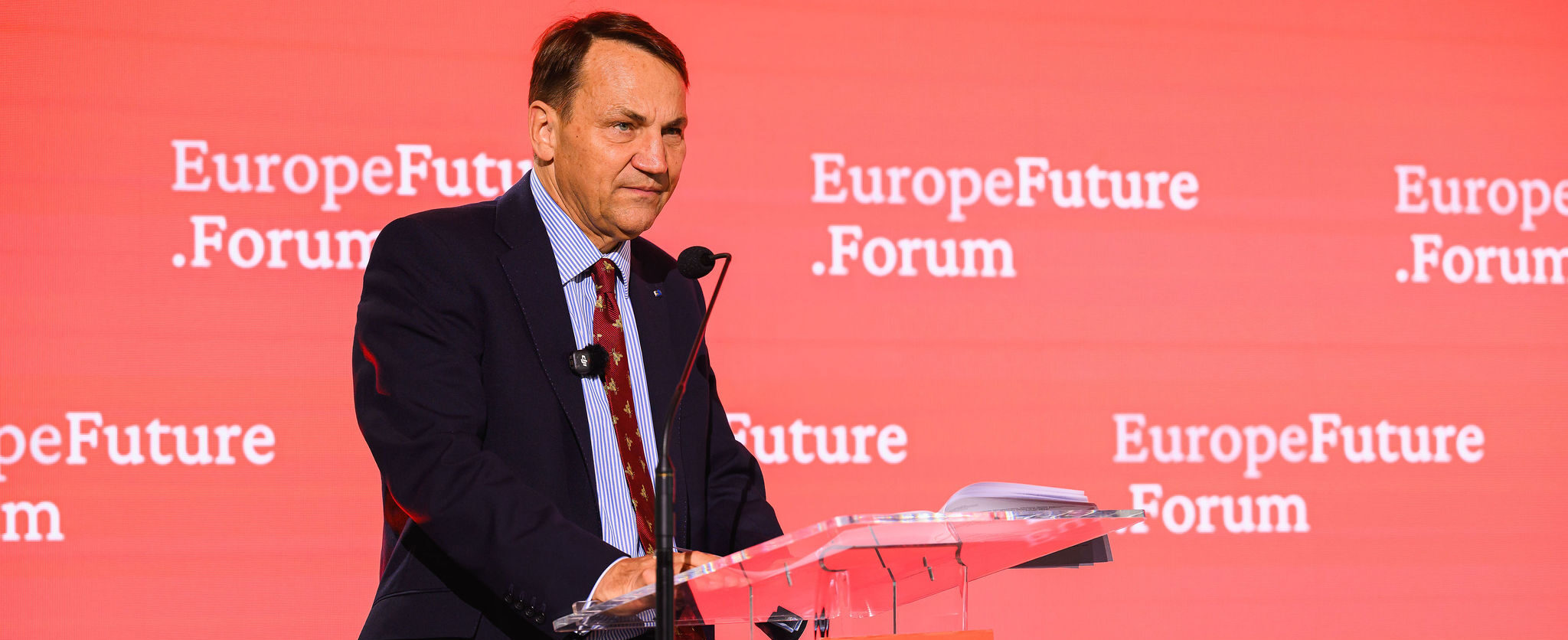
How Europe Can Build the Capacity to Act Together
2 October 2026
Economic Security
Think Tank
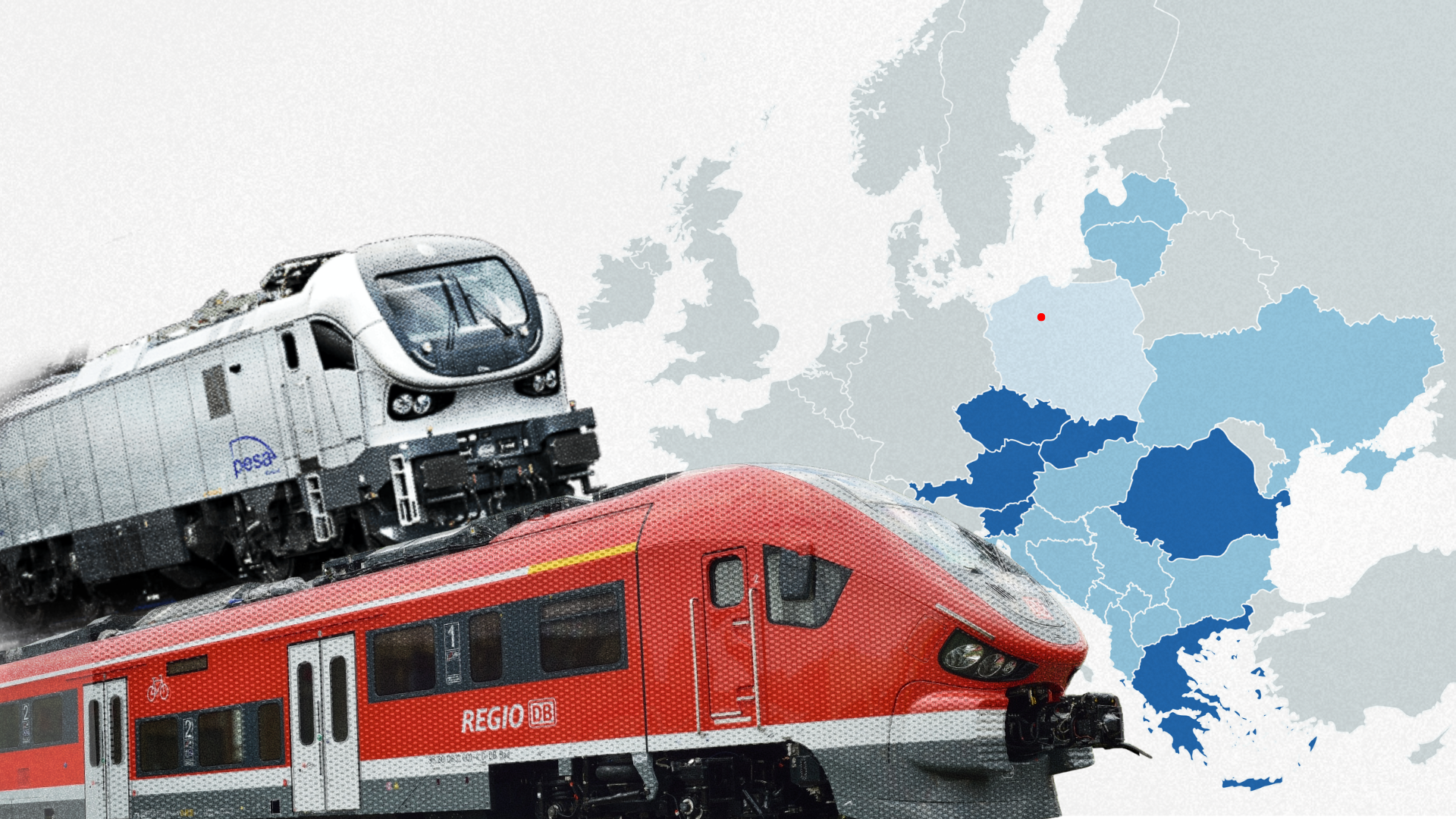
How Poland Wants to Turn a Failing Train Maker into a Geoeconomic Asset
30 September 2026
Economic Security
Events
Think Tank
Europe Aligned with Iran Sanctions Long Before D-Day
8 September 2026