Commentary
Democratic Security
Central Europe’s AI Rollout Needs a Public Error Register
20 August 2026

4 March 2026

When Slovak independent daily Denník N announced in mid-February that it acquired the Brussels-based online outlet EUobserver, the news came as a surprise – for a good reason. It is an exceptional story that contrasts with MAGA-aligned Paramount taking over control of Warner Bros. and Polish liberal flagship TVN with it.

Click on the banner to join our online event
The Denník N and EUobserver deal comes in the shade of a potentially more consequential acquisition of Warner Bros. by Paramount Skydance – controlled by the billionaire Ellison family – which could impact Warner Bros. ’ Polish channels, seen as a major liberal bastion of Polish media.
Although still subject to regulatory procedures, the Warner Bros. blockbuster deal immediately raised questions over financial stability and political motivations behind the acquisition, which could reverberate in Central Europe if hopes of a greater conservative push from Donald Trump’s local cheerleaders materialise.
By contrast, Denník N, which is owned roughly 80 per cent by its journalists, stands out as a rare success story: a newsroom-led pushback against oligarchic and political pressure in Slovakia that has also delivered financial stability. The expansion to Brussels brings Denník N onto the European Union (EU) main stage in yet unseen ways.
‘The purchase of EUobserver by Denník N is a rare – and possibly unprecedented – case of an independent Central European news organisation taking control of an established Western European outlet’, Professor of Digital Political Communication at European University Viadrina Frankfurt (Oder) Václav Štětka told Visegrad Insight.
It is ‘certainly the first such acquisition involving a Brussels-based publication’, Štětka added, pointing out that ‘ever since 1989, the direction of media investments used to be almost exclusively from West to East’, and that any previous transborder expansion by Central and Eastern European (CEE) media companies ‘usually took place within the region, or extended to the Western Balkans’.
Štětka’s words were echoed by Péter Erdélyi, Founding Director of the Centre for Sustainable Media platform, who said that the move heralded how ‘Denník N has been incredibly successful’.
Erdélyi highlighted for Visegrad Insight that with the EUobserver acquisition, which will team up Denník N with Brussels-based staff, this success is even more visible.
‘They develop their own technology, they have a war chest, they have money to spend on an acquisition’, Erdélyi said, noting that Denník N’s success is not just about preserving journalistic quality but also the ability to generate revenue in the media business environment shaped by the rapidly changing digital environment and the collusion of illiberal politics with monopoly business interests.
Denník N was founded by a group of journalists in 2014 in response to increasing involvement of Slovak oligarchic groups in the media, including the targeting of daily SME by Penta investment group, whose founders were then widely reported in connection with the Gorilla – Slovakia’s largest corruption scandal.
Denník N has been in print since 2015 and quickly became the leading voice of Slovak journalism. At the same time, it also represents a successful model of the new subscription-based business operations in independent journalism.
It has boasted of 70-80,000 subscribers in recent years, an operational profit of 1.2 million euros in 2023 and more than 100 published book titles by the same year. In the last election year of 2023 – which brought strongman Robert Fico and his populist Smer party back to power – Denník N was also among the top four news websites covering the elections.
‘For us [intellectuals] Denník N has been a beacon of hope in difficult times’, Slovak-Hungarian political scientist at Bratislava’s Comenius University Zsolt Gál told Visegrad Insight.
‘You can buy everything, but not this’ Gál explained the significance of Denník N for the country’s liberal-minded population, adding that ‘oligarchs linked to Fico or Orbán are capable of buying nearly anything, but there are some last bastions’, and that ‘Denník N is a backstop’.
Similarly, Erdélyi pointed out that Denník N’s success is all the more remarkable for being able to establish itself in the CEE conditions.
‘I think that in some larger markets, even mediocrity is sometimes good enough’, Erdélyi told Visegrad Insight, highlighting that ‘in a country like Slovakia, mediocrity is not good enough for anything. You either are very good or you don’t exist’.
CEE countries are small markets, Erdélyi continued, explaining that ‘people don’t have a ton of disposable income and there is political interference’, conditions which push successful publishers to be ‘really innovative and really smart’.
Denník N’s Chief Digital Officer and one of its founding journalists Tomáš Bella told Visegrad Insight ‘with a presence in Slovakia, Czechia and Hungary, Denník N has learned how to focus on readers and survive in a hostile environment’.
Denník N inspired the establishment of Czech Deník N, which was founded through a crowdfunding campaign in 2018, just a few years after Penta and local oligarchs such as Andrej Babiš and Daniel Křetínský had come to dominate the Czech media market.
Denník N maintains a 28 per cent share in the Deník N publishing and offers Denník N content in Hungarian, which finds readership among Slovakia’s sizeable Hungarian minority. This positions Denník N as an outlet with insight into another two countries in the region.
EUobserver’s Editor-in-Chief Elena Sánchez Nicolás, whose team will remain in place, praised ‘the partnership’ with Denník N as ‘timely both politically and journalistically’, pointing out that leaders such as Fico in Slovakia, Orbán in Hungary, Babiš in Czechia and the looming possible return of Janez Janša in Slovenia ‘have an impact on EU dynamics’.
Indeed, recent examples from Central European countries where political parties and companies controlled by oligarchs tried to capture, or succeeded at submerging the media market under their control, show that it is a combination of innovation and keeping a critical attitude which enabled the online streaming platforms such as Hungarian Partizán and Polish Kanał Zero to rise.
Both YouTube-based channels benefited from the rise of the digital environment, including the growing popularity of the platform and managed to combine aspects of entertainment with critical reporting on the practices of behemoth parties in their countries – Orbán’s Fidesz in Hungary and Prawo i Sprawiedliwość (Law and Justice) in Poland.
‘Partizán has an advantage of being online’, Gál highlighted, adding that during the Covid pandemic online environment proliferated further with ‘even older generation learning to work with online tools more’, and that appearance of online outlets such as Partizán, established in 2018 and expanding to live daily broadcasts in 2020, caught Orbán’s circles off guard as ‘online environment is more difficult to control’.
‘‘Orbán’s circles, at first, did not know how to respond, as until then it seemed that the advantage of money and power is unbeatable’, Gál continued, adding that the Fidesz domination also managed to scare off many advertisers from outlets giving room to opposition voices.
Erdélyi also told Visegrad Insight that from his experience many Polish publishers ‘still carry the weight of the print’ and the associated difficulties with the cost of it and contrasted it with the situation in Hungary, where ‘no local independent outlet has print because all the print has been captured by the government’.
Polish reputable daily Rzeczpospolita combines the print and digital versions and after withstanding PiS-government-backed bid it was recently a subject of a major media deal between the Polish Society for the Promotion of Entrepreneurship (PTWP) and a Dutch fund supporting independent media Pluralis B.V.
Edelyi explains that ‘the political pressure actually ‘helped’ people to innovate, noting that all the successful local outlets in Hungary are super digital, super lean, newsletter-based, really cutting-edge journalism, product and delivery’.
In contrast, Gál thinks Denník N’s story is unique in Central Europe and that it also benefited from the Slovak environment, where Slovaks have developed a tradition of resisting authoritarian tendencies already since the 1990s era of the nationalist populist leader Vladimír Mečiar and where media today are not as tightly controlled compared to Hungary.
Moreover, most of Slovakia’s population has been paying for online content since already before the pandemic.
Bella explains that subscriptions have become a trend not just in Central Europe, noting that ‘in the past decade, more and more publishers have been moving from a business model focused on advertising toward one relying on reader revenue (subscriptions)’.
However, he added that while ‘this was a smart strategic move for many publishers in the West, in CEE it was often a pure necessity, as advertising markets are frequently distorted by governments using advertising as a way to punish or reward media outlets based on how friendly they are toward them’.
Besides technological and business innovations, Denník N also teams up with EUobserver at a time when the CEE is far from the only EU region where populists rallying voters under a national conservative agenda found their base.
Sánchez Nicolás also highlighted for Visegrad Insight that besides the ‘strong technological expertise in the subscription model arena’ Denník N brings ‘regional knowledge and credibility, while the cooperation can amplify important stories in both directions, from Brussels to Central Europe and vice versa’.
When asked about the impact of the partnership on the news reporting on CEE and Brussels, Štětka was quick to respond that it has ‘the potential to increase both the volume and the depth of coverage of the CEE in EUObserver, making the region more visible to an English-speaking audience’.
‘This is especially significant at a time when major news organisations are cutting budgets for international reporting, resulting in reduced coverage of CEE available to Western audiences’, Štětka added and pointed out that policymakers and officials working in Brussels ‘form a significant part of the outlet’s readership’.
Bella also confirmed to Visegrad Insight that teaming up with EUObserver could enhance the regional coverage in Brussels, while the Slovak readership will have a more direct access to Brussels reporting.
‘This combination should allow us not only to strengthen and grow EUObserver, but also to bring new perspectives to readers across Europe’ Bella said, giving an example of plans ‘to strengthen EUObserver’s coverage of security and defence, an area where we believe Western Europe would benefit from Central European voices being heard more clearly’.
Indeed, such bridging of existing gaps in reporting in the EU’s metropolis and Central Europe comes at a time when the Slovak Prime Minister Robert Fico adopted a more aggressive tone towards the EU, while at the same time stepping up contacts with the Trump Administration.
During the recent online discussion hosted by Visegrad Insight, Michal Vašečka of the Bratislava Policy Institute observed that the EU is under unprecedented pressure from nationalist groups across the bloc, systematically working on dismantling the EU.
‘If such efforts were in place in all 52 states in the US like there are in the EU, the US would probably cease to exist’, Vašečka said before concluding the metaphor on an optimist note: ‘but the EU is still around’.
Denník N is not the only Slovak quality outlet which has signalled a push to bring Brussels and news reporting from Visegrad countries closer to each other. As part of online news outlet Euractiv.sk‘s transformation to euBrief.sk, it announced a closer collaboration with SME, the country’s other major quality print daily.
A similar focus Slovak quality dailies DenníkN and SME are turning towards bridging the reporting gaps between Brussels and CEE has also long been pursued by illiberal actors through their growing links to the cross-border media.
The example of Euronews, which evolved from the EU-backed international outlet to one giving room to autocrats such as Orbán, Serbia’s Aleksandar Vučić, or Azerbaijan’s Ilham Aliyev, shows how the power of the private capital remains a highly potent instrument to shape the media content as well as the size and focus of news reporting not just in the hands of Orbán-linked oligarchs.
Gál pointed out the example of the largest Slovak commercial television station Markíza, which is part of the Czech PPF-owned Central European Media Enterprises (CME).
Although Markíza doesn’t ‘dare to broadcast Russian propaganda as is happening in Hungary in the government-affiliated media’, Gál observed, adding that ‘we all suspect that there are agreements between Fico’s government and the owners and editorial staff and that they help each other’.
Gál made the observation in reference to the scandals of scaling down news reporting and staff changes at Markíza’s editorial room, which led to the launching of online video news outlet 360ka run by Michal Kovačič who left Markíza protesting against the changes in the television’s editorial room.
An even more consequential acquisition than that of CME by PPF can be the above-mentioned Paramount’s bidding war to take over Warner Bros.
Paramount’s owner David Elisson and his family’s ties to Donald Trump have driven fears that the Warner Bros. subsidiaries, which include Polish television channels TVN and TVN7, would come under pressure to take more conservative positions and could be accompanied by job shedding and reduction of content production carried out for economic reasons.
In the intercontinental media battles in which the future of the EU is at stake, the case of Slovak Denník N‘s evolution in the changing media landscape exposed to political and oligarchic pressures stands out all the more.
Bella concluded that ‘we hope that not many Western countries will have to go through the same experience, of having governments pushing their countries toward authoritarianism and closer to Russia’, the undeclared headquarters of the national conservative turn.
However, Bella added, ‘this experience has also taught us how to be lean, effective and very attentive to readers, which we believe will be an asset in our English-language activities as well’.
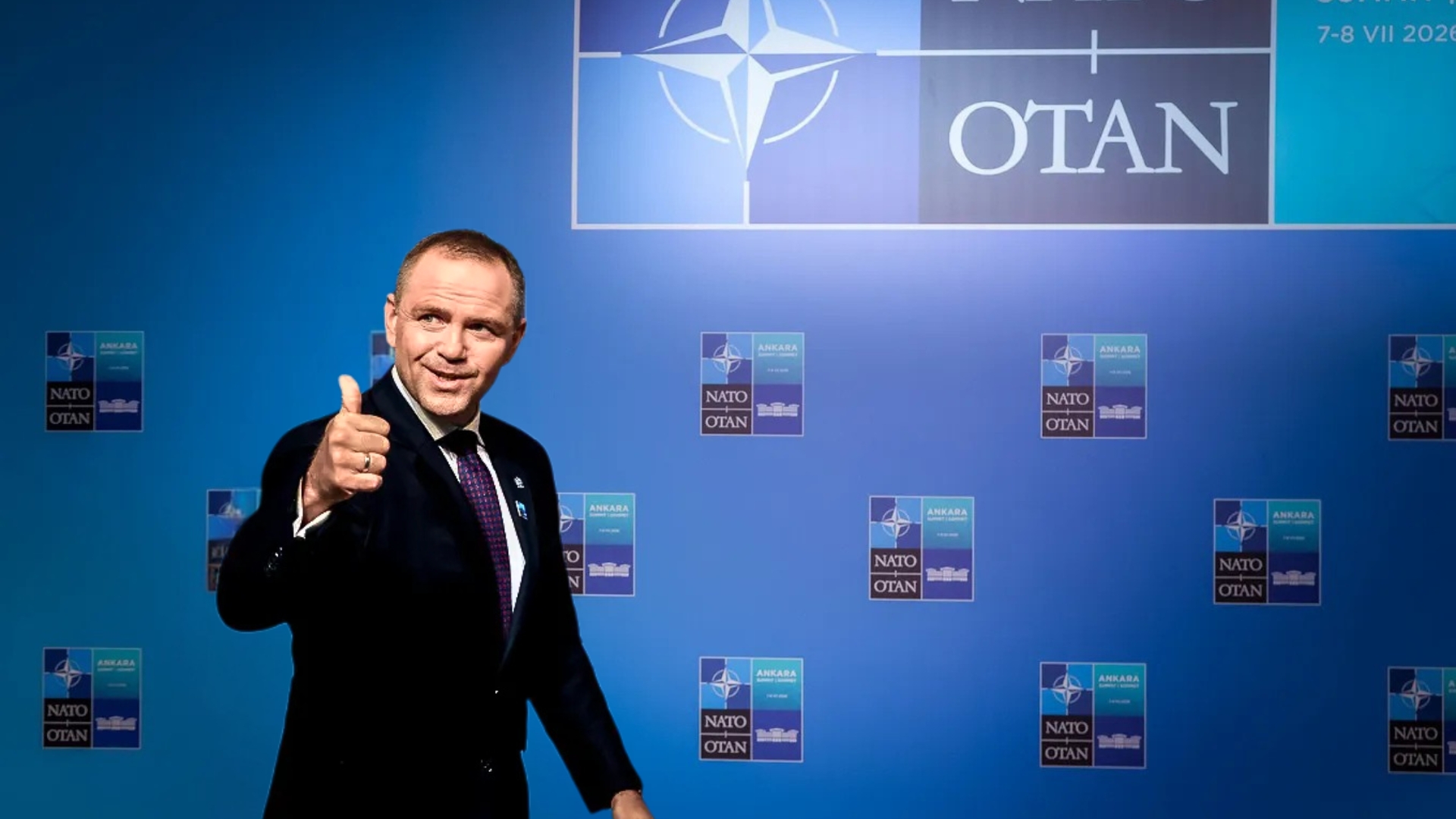
Featured illustration uses content elements by Arne Müseler, Kyle Grillot/Bloomberg, Tomáš Benedikovič/DennikN.
Democratic security comes at a price. What is yours?
Subscribe now for full access to expert analysis and policy debate on Central Europe.
Commentary
Democratic Security
Central Europe’s AI Rollout Needs a Public Error Register
20 August 2026
Commentary
Democratic Security
Sex Workers’ Case for Democratic Security in CEE
19 August 2026
Commentary
Democratic Security
Péter Magyar’s 100 Days in Office
17 August 2026
Analysis
Democratic Security
Nawrocki Is Crouching for the 2027 Interregnum
10 August 2026