As news of a Budapest summit between Donald Trump and Vladimir Putin stir global anticipation, the Washington Post credits American strength for bringing Russia to the negotiating table.
Yet, the prospect of such talks evokes a chilling echo of Soviet-era salami tactics mastered by Moscow agents in control of Hungary after 1956 – slice by slice, concessions are won, and power is eroded. In Budapest, Putin may score diplomatic points, Hungary’s Viktor Orbán might bask in the spotlight, but Trump risks dismantling U.S. influence with each hollow promise from the top adversary – Mr Putin. Europe, scarred by the memory of Neville Chamberlain’s 1938 Munich folly, knows all too well the peril of leaders who mistake appeasement for peace, lacking the resolve to endure.
Good or bad – Tomahawk diplomacy brings results
- The Washington Post writes that US Tomahawk diplomacy pushed Putin to call for peace talks. A threat to supply Ukraine with advanced Tomahawk missiles compelled the Russian President to initiate a telephone call with the US President, proposing peace negotiations and a summit in Budapest.
- Editors portray Moscow’s outreach as a reluctant necessity, driven by the prospect of enhanced military support shifting the balance in Ukraine’s favour. It cautions, however, that US President Trump’s tendency to hastily proclaim a diplomatic triumph risks undermining the process.
- Further media reports of the talks between leaders show that Trump leaned into Putin’s narrative after Friday’s phone call and said that Russia won ‘certain property’, pressing Zelenskyy ‘If (Putin) wants it, he will destroy you.’
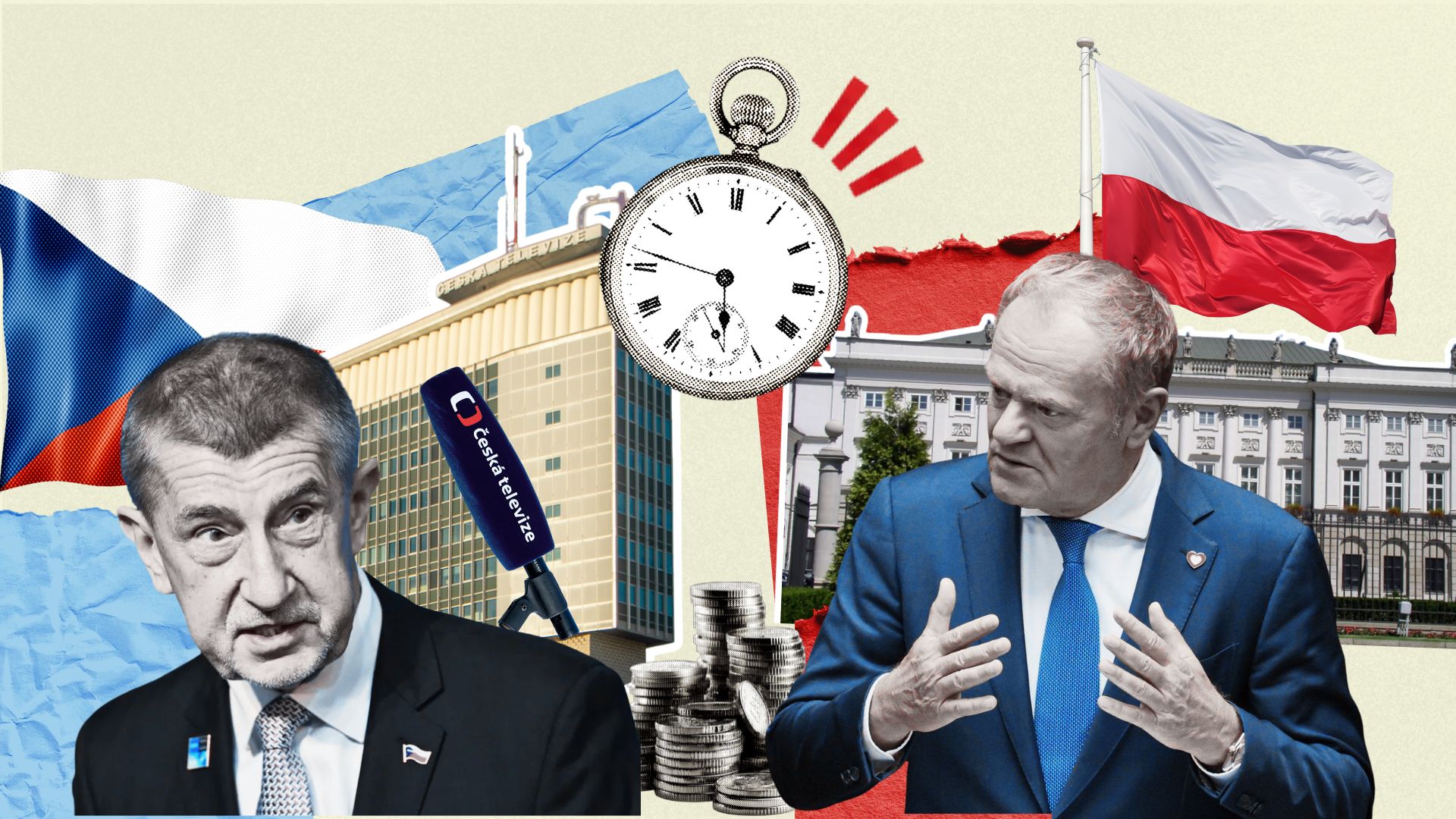
- Poland’s Prime Minister Donald Tusk’s X response: ‘None of us should put pressure on Zelensky when it comes to territorial concessions. We should all put pressure on Russia to stop its aggression. Appeasement never was a road to a just and lasting peace.’
- Last Friday the European Union (EU) proposed using a 140 billion euro loan, backed by Russia’s frozen central bank assets held at Euroclear, to purchase U.S. weapons for Ukraine, aiming to maintain Washington’s support for Kyiv amid concerns over a potential U.S.-Russia détente, Financial Times reports.
- We have noted Belgian opposition to this concept a week earlier.
- Also on Friday, Kaja Kallas, Henna Virkkunen, and Andrius Kubilius unveiled the EU Defence Readiness Roadmap 2030, commissioned at the March and June 2025 summits. It sets binding targets for drones, air defence and 40 per cent joint procurement by 2027, aligning with NATO and leveraging Ukraine’s expertise.
- The same day, trialogue talks secured a 1.5 billion euro deal for the European Defence Industry Programme (EDIP), despite earlier budget disputes.
- With formal EDIP approval pending and member states tasked with leading ‘coalitions of the willing’ by December, Europe’s 2030 readiness hinges on swift national buy-in. ‘Danger will not disappear even if the war in Ukraine ends,’ Kallas warned.
- Eastern Europe’s security will continue to be the focal point in Brussels at the EU Foreign Affairs Council in Luxembourg on 20 October. EU foreign ministers, chaired by High Representative Kaja Kallas, will discuss Russia’s ongoing aggression against Ukraine (with a brief video address by Ukraine’s foreign minister) and then turn to EU-Indo-Pacific relations and the latest developments in the Middle East.
- On the same day, EU energy ministers will meet to advance the REPowerEU plan to phase out Russian gas and oil imports, and to debate clean-energy electrification and energy security (including support for Ukraine and Moldova’s resilience.
- The Multiannual Financial Framework (MFF) for 2028-2034 will be discussed alongside the hearings on the Article 7 procedure concerning Hungary at the EU General Affairs Council on 21 October.
- Ministers of European Affairs will also continue preparations for the October European Council and discuss the Commission’s upcoming proposal on the European Democracy Shield.
- Competitiveness, defence, housing and migration will be the centre of the European Council meeting on 23 October. Zelensky is expected to address the European leaders virtually.
- A poll this week found a majority of Germans – 54% – support a return to the conscription system, with support strongest among those over the age of 60.
- Apple announces renewable investments in CEE. The company’s renewable energy investments in Poland and Romania, totalling over 139 MW in solar and wind capacity, are set to inject significant financing into local economies, fostering job creation and supporting thriving regional development.
- By targeting high-carbon grids in Central and Eastern Europe, these projects will enhance energy security and accelerate the transition to clean power, reducing reliance on fossil fuels and bolstering long-term economic resilience.
- Poland’s Silk Road lands in Gdansk. China is expanding its logistics footprint in Eastern Europe through the Northern Sea Route (NSR), an Arctic shortcut that reduces typical Asia-Europe transit times by some 30 per cent.
- The Istanbul Bridge cargo ship, which arrived in the Polish port on 18 October, signals Sino-Russian ambitions related to global warming in the Arctic and complicates further the geostrategic landscape for European and American allies. The Sea Legend Line company plans to establish regular summer services by 2026 and expand into Eastern European hubs to mitigate Suez Canal disruptions.
- Civil society leaders chatter on vigilance regarding the Hungarian spying scandal in Brussels. Alina Mungiu-Pippidi (Director, ERCAS) views the allegations as indicative of broader undue influence and hypocrisy in EU institutions, urging external investigations to screen HR records and expose all foreign actors (e.g., Chinese, Russian). Safeguarding the rule of law should prevent normalisation of espionage, she wrote on LinkedIn.
- Similarly, Nick Aiossa (Director, Transparency International) condemns Viktor Orbán’s disregard for the EU rule of law, demanding a European Parliament inquiry committee for swift accountability to protect institutional integrity.
- Others criticise the EU’s double standard in handling ‘family spies’ from members like Hungary versus external threats, arguing it endangers democratic security through compromised decisions on budgets and defence, and advocate for measures like persona non grata declarations, criminal probes, and financial conditionality.
UKRAINE
- Ukraine’s deputy prime minister said Hungary’s leader centers reelection on opposing Ukraine’s EU bid due to the bloc’s potential ‘destablisation’. In his interview with POLITICO, Kachka calls opposition ‘painful but surmountable, expecting resolution at the December EU leaders’ meeting after reform talks.’
- On Monday, ministers in the Foreign Affairs Council will also discuss the Russian aggression against Ukraine, after an informal exchange of views with the Minister of Foreign Affairs of Ukraine, Andrii Sybiha, who will join the meeting in person.
- Expect increased barrage of Ukrainian cities, energy and logistics networks ahead of the potential US-Russian talks in Budapest. A typical display of Russian force to prepare high ground for diplomatic talks regarding a country it attacks.
- The Verkhovna Rada will convene to approve a 90-day extension of martial law and general mobilisation, from 5 November 2025 through early February 2026. This would mark the 17th such extension since 2022.
No one wants to exit the Brussels club
CZECHIA
Newsletter
Weekly updates with our latest articles and the editorial commentary.