Events
Think Tank
Is Europe Preparing for the Right Crisis? Lessons from Finland and the Eastern Flank
15 October 2026

16 July 2026
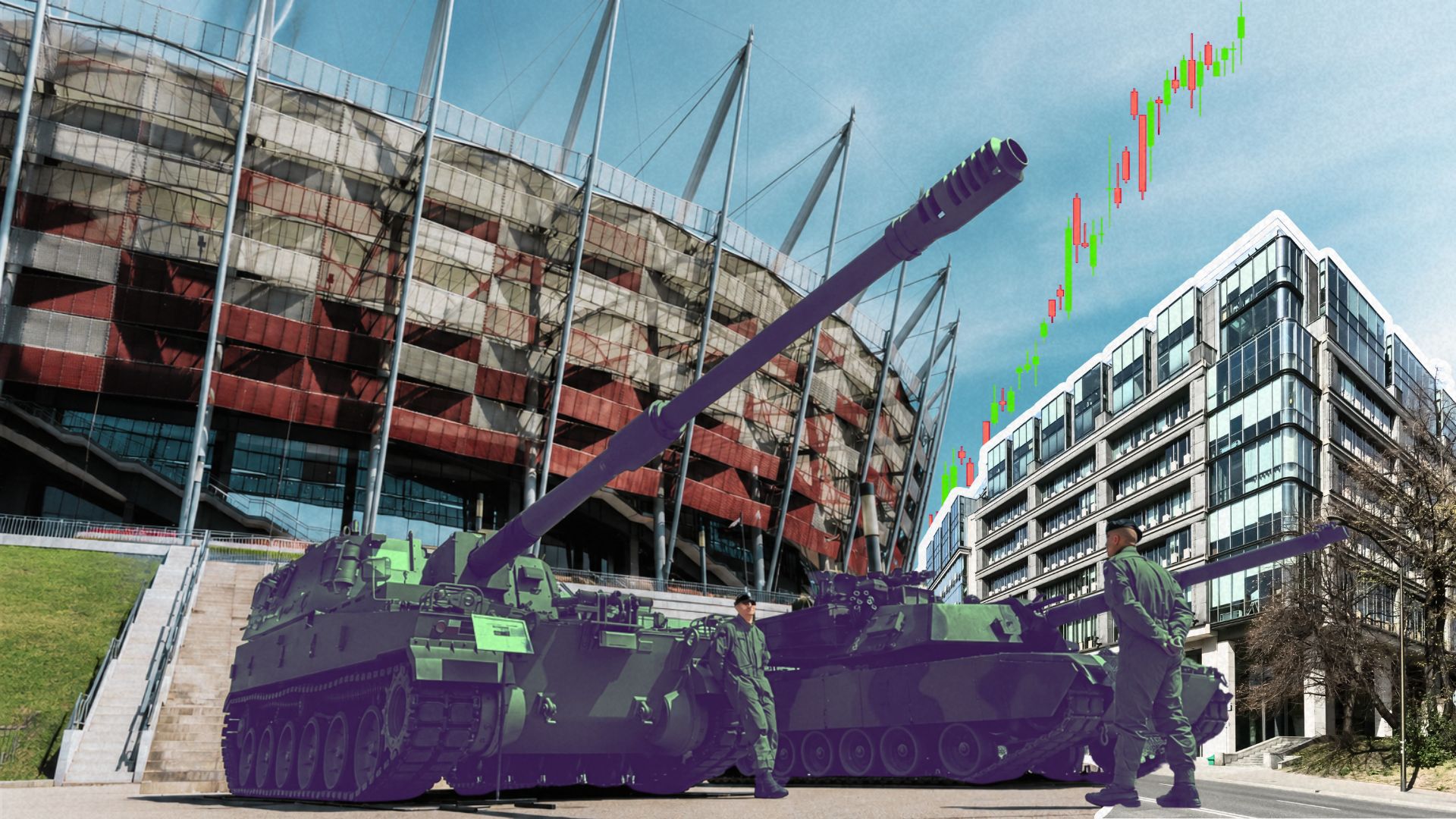
Poland has public funds, intellectual capital, and the biggest active capital market in the CEE region. Is it enough to fund growing defence needs?

There is a growing venture ecosystem and fintech companies willing to invest in security portfolios. What is missing is a model that connects these elements into a working system for financing defence and dual‑use technologies.
As defence spending accelerates in the fifth year of war next door, NATO’s eastern flank is becoming the alliance’s main focus. Poland plays a central role and expects to channel almost one‑third of the EU’s SAFE instrument, worth 150 billion euros, into its defence industry.
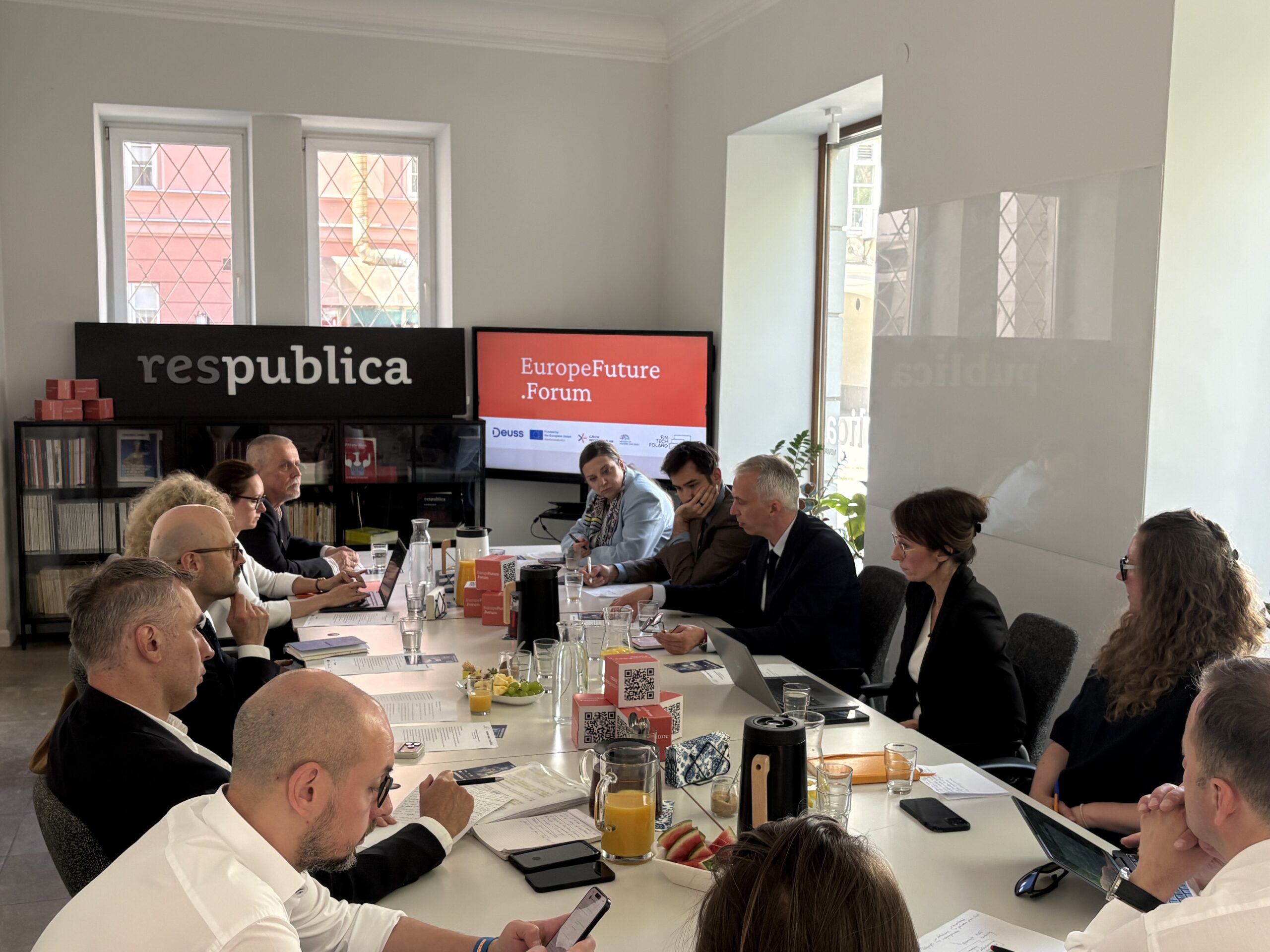
On 23 June 2026, representatives of Poland’s Ministry of Finance, Ministry of Foreign Affairs, Ministry of Digital Affairs, FinTech Poland, Future Finance Poland, NASK, PKO Bank Polski and the Warsaw Stock Exchange met at the Visegrad Insight office to explore how Poland could turn today’s funding window into a lasting security finance model.
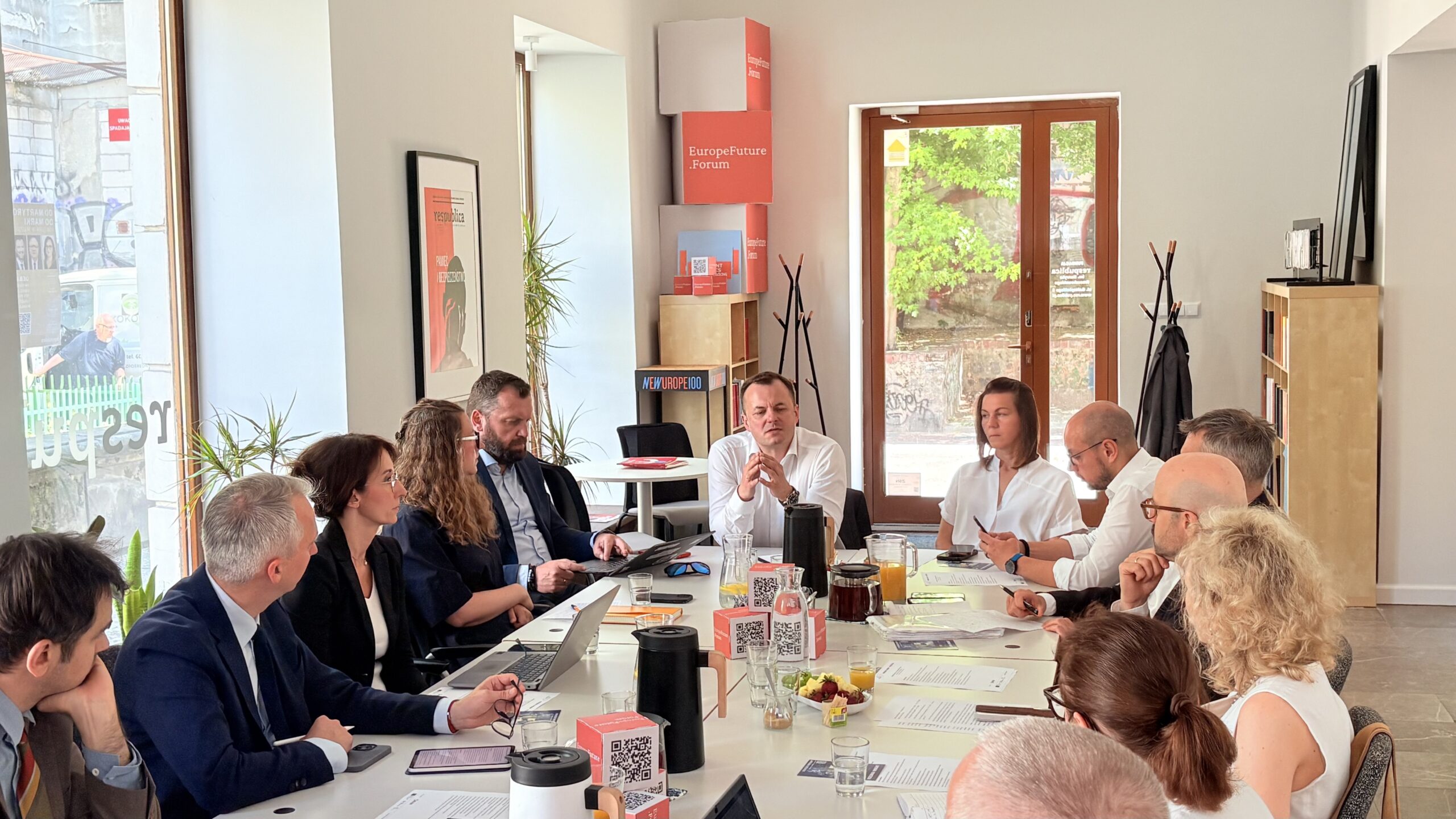
The question that drove the discussion was how to combine existing tools – public procurement, capital markets, development funds, private investors and European instruments – into one operating model that turns CEE and Poland in particular into a hub where capital meets defence modernisation demand.
With record defence spending and the allocation of EU loans towards defence modernisation, Warsaw’s financial community is paying closer attention to security, asking where new firms will actually find a home. This was the first premise that participants agreed upon: if Warsaw and other regional bourses can position themselves as natural listing venues for defence and dual‑use firms, supporting them through volatile growth, they become the place where SAFE‑backed orders and private capital meet, instead of watching those firms move to London or New York once they reach scale.
The second theme – financing models – went to the core question of how capital is structured and how well it matches what companies in this sector need. Today’s system is built around long contracts and vendor loans for entities like the Polish Armaments Group (PGZ). Yet smaller, higher‑risk technology firms with irregular income and a higher failure rate need instruments designed with that profile in mind.
The third focal point of the discussion stayed close to the daily reality of entrepreneurs: high certification costs, overlapping national programmes and almost no funding for demonstrations abroad – all the practical frictions that stop promising CEE companies from scaling even when they have the technology and interest from potential clients.
Not all defence funding behaves in the same way. Large state-linked contractors such as PGZ usually rely on long-term state contracts and vendor financing, where banks or state institutions lend against a signed order and expect repayment as equipment is delivered. By contrast, dual‑use and deep‑tech startups sell new technologies with no guaranteed buyer, unpredictable cash flows and higher failure rates. Treating these firms as if they were simply smaller PGZ suppliers ignores this difference.
For this reason, the stock market and traditional equity instruments – selling shares and related share-based products – alone are not enough. What is needed in this regard is a broader set of solutions from quasi‑equity instruments for small and medium technology firms, specialised funds, bonds (including those issued under fund umbrellas) to direct instruments available to individual clients.
The main constraint of today’s market is demand, not capital. The latter appears when predictable demand and stable paths to commercialisation exist, especially when created by the state. Even a well‑funded private technology company competing with large entities like PGZ will not attract lasting investor interest if it lacks a concrete customer in the form of the Armaments Agency, the Ministry of National Defence or a reliable civilian buyer for dual‑use tools.
The innovation revolution, which Ukraine has gone through as it defends itself from Russian aggression, has turned innovation into a matter of survival, compressing the cycle between an idea and battlefield deployment from years to weeks. This pace shows how far Europe’s procurement systems, operating in peacetime conditions with its year‑long preparatory phases and multi‑year horizons, lag behind contemporary war.
Participants have highlighted that, learning from Ukraine’s experience, the bottleneck is no longer just technology, but the ability to organise software, data and command systems at the operational level, integrating thousands of devices into coherent networks. These are capabilities that many European armies, including Poland’s, simply do not yet have – and, as speakers at our event admitted, often lack even a clear idea of where such command-software ‘brains’ should sit institutionally.
A change in mindset is needed on the side of the contracting authority. Procurement orders must not only buy equipment, but also safeguard the development capacity of the firms that produce it. This means frameworks that assume rapid iteration, allow experimental deployments and tolerate controlled failure, taking inspiration from Ukraine’s habit of testing and modifying systems in live conditions.
To be successful amid regional threats, Poland and other CEE countries could learn from the best practices of NATO’s Defence Innovation Accelerator (DIANA). These include sector selection, independent technology assessment, structured cooperation with the state on the demand side and capital patient enough to avoid a forced quick exit.
Our interlocutors agreed that the most underrated barriers appear long before any IPO or SAFE-backed contract: getting a product through formal testing, sector-specific certification and approvals from regulators. For companies working in AI, cybersecurity or dual-use software, the cost of entering the compliance system can be prohibitive before a product ever reaches a customer. The problem multiplies across the region, where the same product can face different registration frameworks in every jurisdiction in which it seeks to operate.
Another barrier is internationalisation, with the absence of funding for foreign demonstrations being the clearest symptom of it. Without such funding, CEE technology companies, especially small startups, have no way to prove themselves abroad, let alone build institutional ties and win contracts that would justify the next round of investment.
The state cannot and should not fully finance the defence sector. Discipline and ambition have to come from private capital and from the companies themselves.
What the state could and should do is threefold.
First, send clear and predictable demand signals. The market does not expect full government financing but rather guidance in selecting strategic sectors for investment.
Second, enact a more collaborative and inclusive model for enterprises.
Support the costs of certification, testing, and participation in regulatory sandboxes, especially for companies developing AI, cybersecurity and dual-use solutions.
Third, remove specific bottlenecks that prevent capital, expertise and technology from being combined into one operating model. Launch a market for debt and quasi-equity instruments for smaller and medium-sized technology companies, including bond-based solutions targeted at individual investors or managed under the umbrella of funds.
With a clear architecture in place, Poland’s SAFE funds, higher defence spending and local capital can flow into new defence and dual‑use technologies, rather than reproducing the structures that have held the CEE region back.
Featured illustration uses content elements by Defence24.pl, Adrian Grycuk.
Democratic security comes at a price. What is yours?
Subscribe now for full access to expert analysis and policy debate on Central Europe.
Events
Think Tank
Is Europe Preparing for the Right Crisis? Lessons from Finland and the Eastern Flank
15 October 2026
Think Tank
Visegrad Insight is Hiring!
14 October 2026

Economic Security
Interview
Once Inside, Montenegro Will Be Enlargement’s Strongest Advocate – INTERVIEW
13 October 2026
Events
Think Tank
How Europe Can Build the Capacity to Act Together
2 October 2026