Belarus Border Tunnels Are Not Like Gaza – But Tactics Adapt

Lukashenka’s hybrid warfare is unlike anything we see in the Middle East

6 March 2026

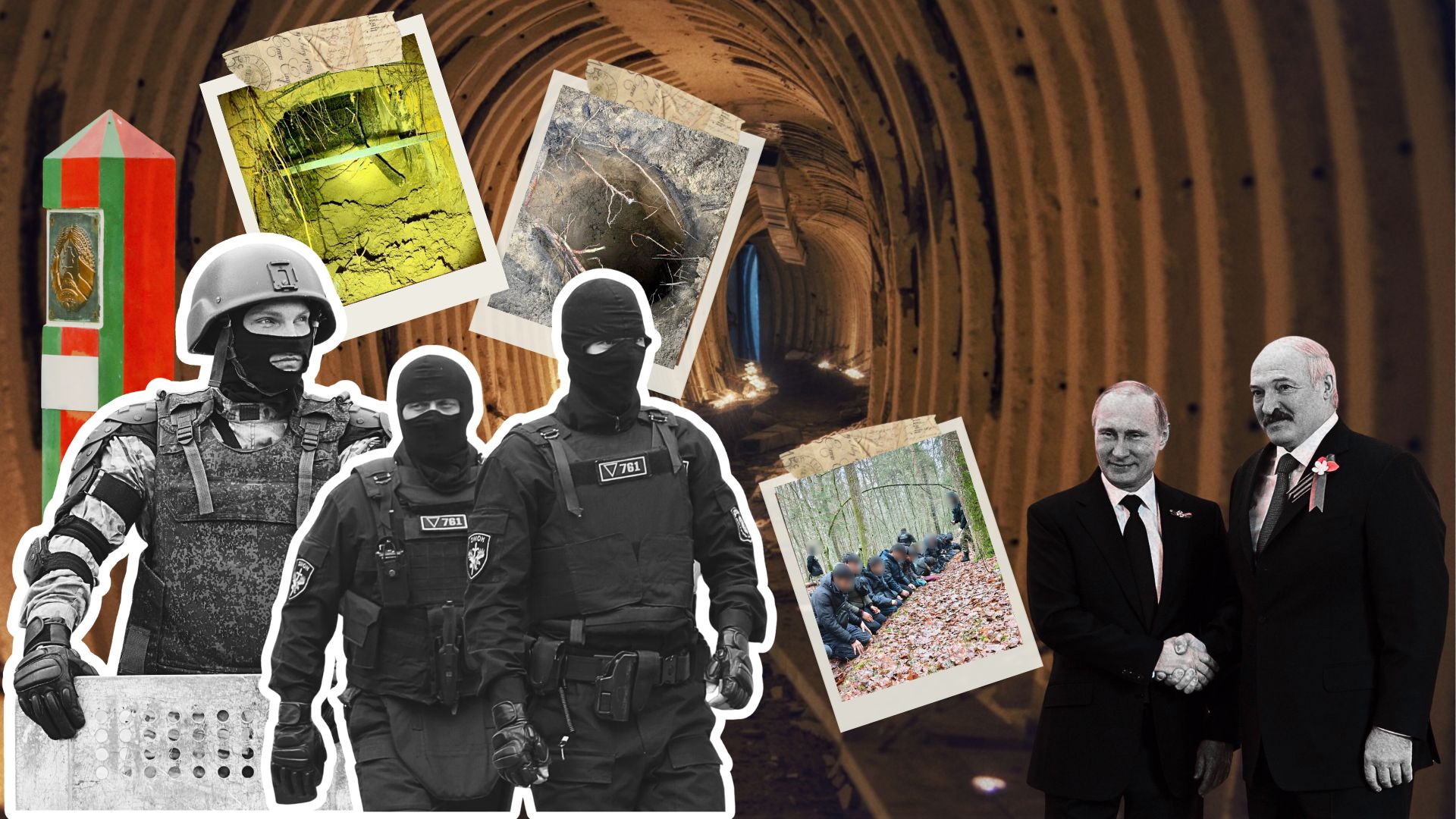
Tunnels discovered by Poland are a new dimension of security challenge on the Belarus border. Another is the information space that overblows the issue by linking it to Iran-sponsored tactics.

Poland has spent years and billions of zlotys trying to seal its eastern frontier with Belarus. Now it even plans to mine the border after withdrawing from the Ottawa Convention. Yet Belarus adapted, deploying tunnels beneath the dense Polish–Belarusian forest that look like Hamas’s handiwork — and require none of it. Because of Minsk’s ability to do this on its own, we are in a dramatically different situation, says Kacper Rękawek. Are we?

On 20 February 2026 Poland formally withdrew from the 1997 Ottawa Convention banning the production, stockpiling and use of anti-personnel landmines. It was the last of the five NATO states bordering the Union State of Belarus and Russia to take this step. Parts of the Białowieża Forest, long a focal point of the migration crisis orchestrated by Aliaksandr Lukashenka, have now revealed a different kind of risk – underground border tunnels. The Telegraph reported that they share features with those used by militants in the Middle East.
Subscribe

Democratic security comes at a price. What is yours? By subscribing or donating now gain access to analysis, forecasts and scenarios by leading analysts and reporters who monitor democratic risks and develop policy debate from Central Europe on Central Europe.

MonthlyVAT included

€6/month

See all details

  • Full access to articles and all reports in PDF
  • Weekly outlook on democratic security in CEE delivered by e-mail
  • Weekly newsletter with essential highlights
  • Invitations to all Visegrad Insight events online and offline

AnnualVAT included

€60/year

See all details

  • Individual subscribers only. Check our CORPORATE OFFER below
  • Almost 17% discount (12 EUR off monthly cost if paid annually)
  • Full access to articles and all reports in PDF
  • Weekly outlook on democratic security in CEE delivered by e-mail
  • Weekly newsletter with essential highlights
  • Invitations to all Visegrad Insight events online and offline

Institutional

GO TO CHECKOUT

See all details

  • Access to all articles for your team
  • Access to all Reports for your team
  • Every Monday a Weekly Outlook with an update on key developments in Central Europe delivered by e-mail
  • Every Thursday a newsletter with the most important highlights and invitations
  • Personal invitations to Visegrad Insight Events
  • Foresight, policy, and risk analysis reports (on-demand)

I am a representative of an institution/business. Is there a corporate offer?

The annual subscription for up to ten institutional users: EUR 999
GO TO CHECKOUT

For a tailor-made offer email us: contact@visegradinsight.eu 

  • Access to all articles for your team
  • Access to all Reports for your team
  • Every Monday a Weekly Outlook with an update on key developments in Central Europe delivered by e-mail
  • Every Thursday a newsletter with the most important highlights and invitations
  • Personal invitations to Visegrad Insight Events
  • Foresight, policy, and risk analysis reports (on-demand)

Intelligence prepared by a group of Visegrad Insight Fellows from all across

Can I receive an invoice?

Yes. You will receive a receipt immediately after purchase and a VAT invoice upon request. The subscription amount includes tax. In case of a donation, there is no tax.

Are my credit card details safe?

Yes. The payment is processed by STRIPE www.stripe.com entrusted also by Amazon, Zoom, Booking.com and used by other global NGOs and businesses in the world. We do not store your credit card details.

How modify or cancel my subscription?

At any moment you can manage your subscription and account details. Sign in to modify or cancel.

Vitali Matyshau

Vitali Matyshau is a 2026 Junior Fellow at Visegrad Insight. He is a Belarusian civic activist and researcher. Vitali was a recipient of the StAR Scholarship in Norway, where he obtained a Master’s degree in International Relations from NMBU. His research focuses on economic security and civil society in Belarus and Central and Eastern Europe.

Newsletter

Weekly updates with our latest articles and the editorial commentary.