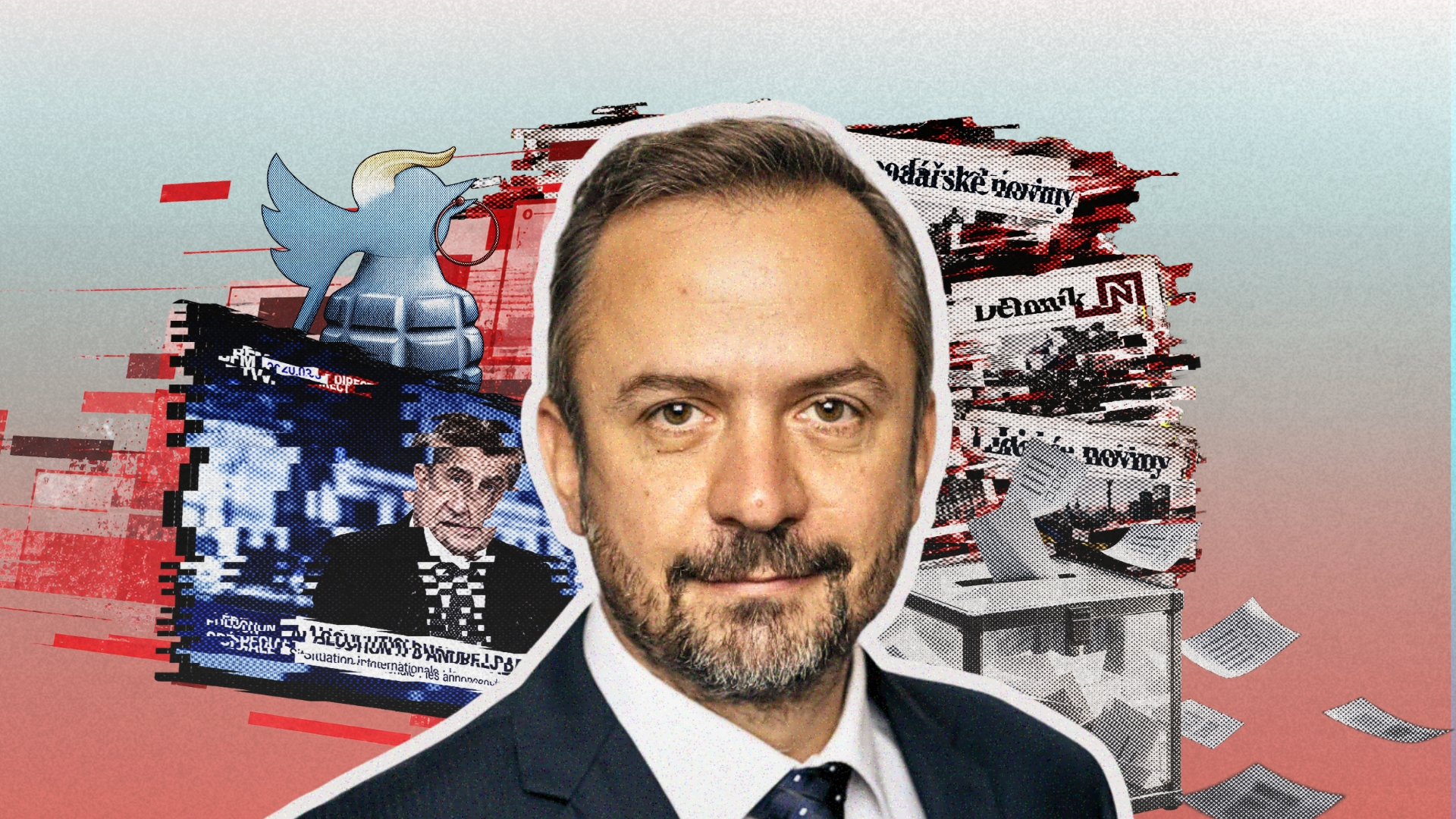
Is Central Europe Losing the Information War?

Czech MP on why inability to correct mistakes erodes political accountability

22 October 2026

Fighting fake news alone will not protect Central and Eastern European democracies. Credible ways to check competing claims can help greatly. Is the region doing enough?

Democracies do not need citizens to agree. They do not even need citizens to read the same news, support the same parties or share the same political worldview. They need something more fundamental. Citizens must remain capable of realising that they might be wrong.

It sounds obvious, but it is becoming increasingly difficult. Citizens of today’s democracies are exposed to false information, as they always have been. Propaganda, rumours, political manipulation and conspiracy theories are nothing new. What is new is the scale, speed and fragmentation of the information environment and the possibility that citizens will lose both access to reliable information and the mechanisms through which competing claims can be verified and corrected. It is precisely at this point that the information problem becomes a democratic one.
Subscription Required

Subscribe

Democratic security comes at a price. What is yours? By subscribing or donating now gain access to analysis, forecasts and scenarios by leading analysts and reporters who monitor democratic risks and develop policy debate from Central Europe on Central Europe.

MonthlyVAT included

€6/month

See all details

  • Full access to articles and all reports in PDF
  • Weekly outlook on democratic security in CEE delivered by e-mail
  • Weekly newsletter with essential highlights
  • Invitations to all Visegrad Insight events online and offline

AnnualVAT included

€60/year

See all details

  • Individual subscribers only. Check our CORPORATE OFFER below
  • Almost 17% discount (12 EUR off monthly cost if paid annually)
  • Full access to articles and all reports in PDF
  • Weekly outlook on democratic security in CEE delivered by e-mail
  • Weekly newsletter with essential highlights
  • Invitations to all Visegrad Insight events online and offline

Institutional

GO TO CHECKOUT

See all details

  • Access to all articles for your team
  • Access to all Reports for your team
  • Every Monday a Weekly Outlook with an update on key developments in Central Europe delivered by e-mail
  • Every Thursday a newsletter with the most important highlights and invitations
  • Personal invitations to Visegrad Insight Events
  • Foresight, policy, and risk analysis reports (on-demand)

I am a representative of an institution/business. Is there a corporate offer?

The annual subscription for up to ten institutional users: EUR 999
GO TO CHECKOUT

For a tailor-made offer email us: contact@visegradinsight.eu 

  • Access to all articles for your team
  • Access to all Reports for your team
  • Every Monday a Weekly Outlook with an update on key developments in Central Europe delivered by e-mail
  • Every Thursday a newsletter with the most important highlights and invitations
  • Personal invitations to Visegrad Insight Events
  • Foresight, policy, and risk analysis reports (on-demand)

Intelligence prepared by a group of Visegrad Insight Fellows from all across

Can I receive an invoice?

Yes. You will receive a receipt immediately after purchase and a VAT invoice upon request. The subscription amount includes tax. In case of a donation, there is no tax.

Are my credit card details safe?

Yes. The payment is processed by STRIPE www.stripe.com entrusted also by Amazon, Zoom, Booking.com and used by other global NGOs and businesses in the world. We do not store your credit card details.

How modify or cancel my subscription?

At any moment you can manage your subscription and account details. Sign in to modify or cancel.

Already a member? Log in here
Marek Ženíšek

Marek Ženíšek is a Czech member of parliament and vice-president of TOP 09. He previously served as chairman of the Foreign Affairs Committee of the Czech Parliament and as Minister for Science, Research and Innovation. His research focuses on democratisation, democratic backsliding, political information and geopolitics, with a particular interest in Central and Eastern Europe and Taiwan.

Newsletter

Weekly updates with our latest articles and the editorial commentary.