Democratic Security
Those Who Do Not Learn from This War Risk Losing the Next – Radosław Sikorski
17 September 2026

18 December 2025

Five years from now, will the ambitious European project defend and solidify democracies, or devolve into a contested arena for nationalist agendas, unified only by a fragile single market?
Interview by Małgorzata Wołczyńska with Wojciech Przybylski, editor-in-chief and Magdalena Jakubowska, editorial director at Visegrad Insight on the future of Europe.
Małgorzata Wołczyńska: Foresight on European Values and Democratic Security is a project through which you show what the future of Europe may look like. There are several scenarios, from strongly pessimistic to those that carry some hope. How have you built them?
Wojciech Przybylski: We deal with strategic foresight, meaning the assessment of trends and the creation of perspectives a few years ahead, in order to better prepare for upcoming changes, and so that not only policymakers, but also leaders of civil society (including business), can be better prepared for uncertain futures. We want them to know what risks are connected with their plans as organisations and simply as voters.
The strategic foresight in European affairs is a method that gained in importance especially after Brexit, which surprised many and showed how important it is to anticipate unexpected scenarios and prepare for them.
Over the past three years, this project has run exercises with leaders from Central and Eastern Europe, capturing their well-grounded expertise and testing it against emerging risks – from war and power politics to democratic backsliding
Magdalena Jakubowska: Our approach is practical. We create scenarios to find solutions that will help mitigate negative phenomena and strengthen resilience against such. Thanks to such a perspective, the EU can, in advance, adopt effective policies, for example, towards external interference in election campaigns, as was the case with Romania or Moldova.
Małgorzata Wołczyńska: How is foresight different from a standard forecast that simply says, ‘it could go this or that way’…?
Wojciech Przybylski: Forecasts work in the short term, and foresight allows you to set your mind on a longer perspective. We deal with plausible futures at least three years ahead and take into account several possible paths. In the military and business domains we are using such methods to anticipate risks and opportunities in uncertain situations like conflicts or cutting-edge technological competition. It helps to project the development of necessary capabilities well in advance.
This way we recognise what scenarios to expect and what we can do to make the preferred one more likely. In the European policy such an approach is especially important because decisions are made for a long time, for example in the case of planning the budget for research and development, so they require anticipating effects many years ahead.
Magdalena Jakubowska: Foresight works best when it is created by the stakeholders themselves, not by external experts imposing ready-made visions and solutions. The method is based on identifying trends and threats, scenario workshops, testing the consequences of different options and translating this into feasible recommendations, especially on democracy and security. Our work therefore focuses on two goals: improving democracy and strengthening security. We also show what may happen when one of them is neglected.
Małgorzata Wołczyńska: Why choose precisely these goals?
Wojciech Przybylski: We are dealing with breakthrough decisions of historical significance, for example when the EU makes decisions about military aid for Ukraine or stabilising neighbouring regions. European institutions now have tools at their disposal to implement military objectives that in fact decide about life and death and therefore at the same time must be strongly anchored in a hierarchy of democratic values. Without the context of freedom and democratic commitments, investing exclusively in hard power, we would create in Europe only a breeding ground for nationalism.
Magdalena Jakubowska: And on the other hand, the conditions of peace are set by the one who has military strength, not the one who merely carries lofty slogans on banners. That is why it is so important that hard power and democracy go hand in hand. The EU must combine the development of military capabilities with the protection of democratic foundations so that power serves peace, not domination or the escalation of conflicts. The EU’s strategic military autonomy, supported by a unified approach to security and strong democratic institutions, is key to stabilising the region and protecting citizens.
Małgorzata Wołczyńska: How do you then respond to accusations of being unnecessarily ‘hawkish’ or even militaristic?
Wojciech Przybylski: Military security rests on two pillars, hard military resources and the soft will of a democratic community, which historically always wants peaceful solutions unless it must defend itself against aggression. The societal will to resist aggressors relies strongly on freedom of media, an active civil society, as well as public trust in institutions that cultivate values like dignity, the rule of law and freedom in general.
By strengthening this soft side of our security system, we also increase the cost of possible aggression and minimise the risk of escalation of conflict. It is an investment in peace, not an alarm campaign.
The example of Ukraine resisting Russia shows how much the strength of community and the will to fight for freedom can achieve, even if the country under attack is smaller and weaker than the invader.

Małgorzata Wołczyńska: You create scenarios for the future of Europe and indicate what needs to be taken care of, gathering voices from Central and Eastern Europe. Why do you concentrate on this region specifically, since the topic concerns the whole continent?
Wojciech Przybylski: Our region has knowledge and experiences that are unique for the rest of Europe. The head of the European Commission, Ursula von der Leyen, herself admitted that the EU should have listened more to what Central and Eastern European countries were saying about Russia and taken decisive actions earlier.
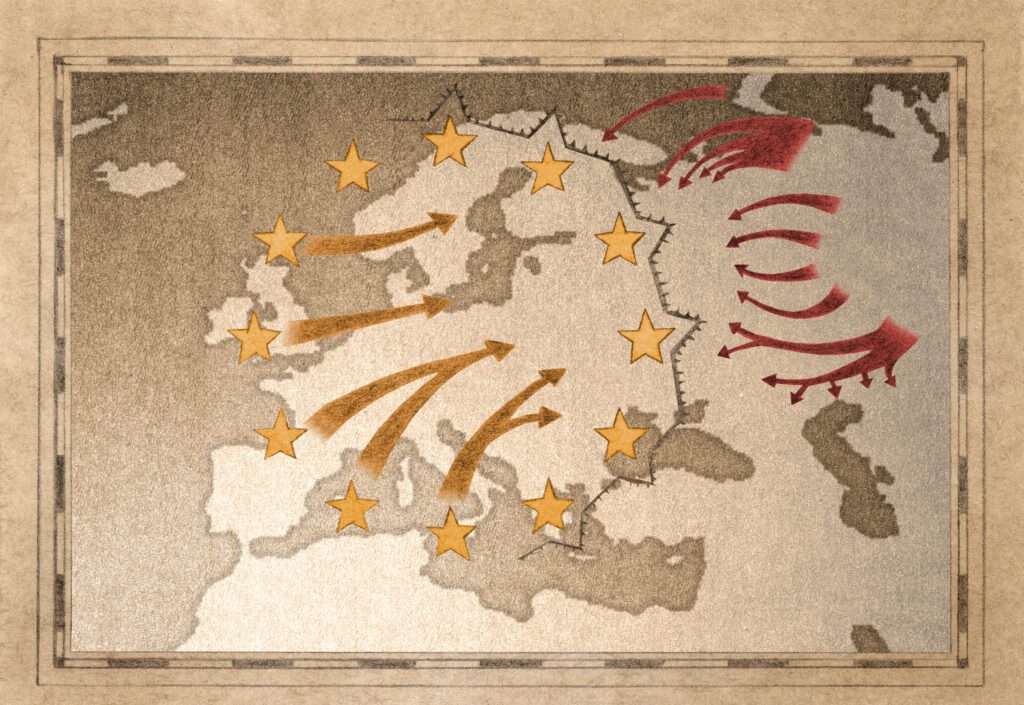
Through our project we amplify the voices of the region in other EU capitals and the institutions in Brussels. This approach shifts the perception of CEE countries from a merely reactive blocking minority (like Orbán’s Visegrad Four used to be) to a group of agenda-setters that shape a more resilient and risk-aware future of the Union. The Polish-Baltic-Nordic push for the Security Union is an example activity that contributes to this paradigm shift.
Magdalena Jakubowska: Central and Eastern Europe includes front-line countries facing an aggressive Russia, shaped by a distinct historical memory and post-communist experience. This definitely shapes our approach to security.
Viewing this part of Europe as ‘junior partners’ will come at a high cost to the rest, as the conflict stemming from Russia’s aggression against Ukraine – something we in Poland and the Baltic states warned about extensively – is already demonstrating. Hence, insights from CEE countries must be taken into account when planning future EU enlargements, including for Ukraine and Moldova, because they will affect our region.
Małgorzata Wołczyńska: Given this context, what is the current European Union strategy for our security and defence, particularly as it relates to strengthening democracy?
Wojciech Przybylski: So, a really big hurdle coming up is negotiating the new EU budget for 2028–2034 – that’s the Union’s long-term spending plan.
The current plan suggests giving member states more freedom with bigger ‘national envelopes’, meaning they get more say in how they spend the money.
But here is the kicker: this structure actually risks too much centralisation, and that’s a serious, maybe even overlooked, danger. Real resilience comes from having plenty of self-sufficient, capable players, not relying on just one central HQ. It is ironic, but giving countries more spending freedom might actually undermine the groundwork we need for true resilience.
A key part of the new budget is the EU Agora programme, which is supposed to really boost communication, culture, and shared values, partly by giving cash to civil society groups. We have not worked out how to hand out this money yet, though.
It is quite important that this funding actually gets to those on the ground defending democracy, especially those in CEE, instead of just ending up with the usual crowd of Brussels-based bureaucrats.
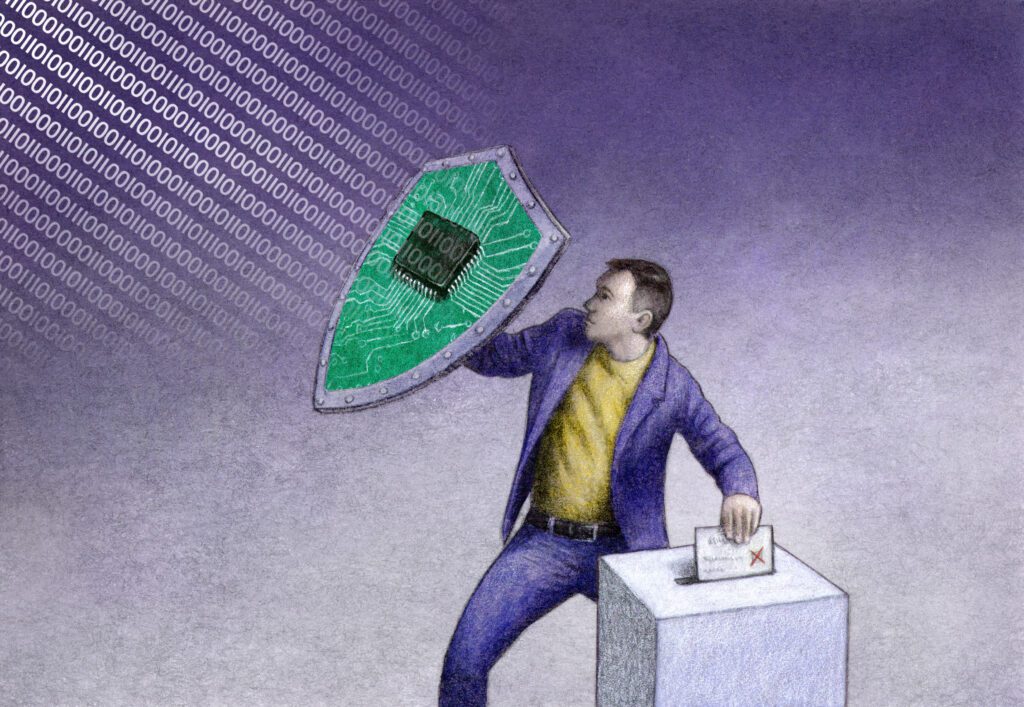
The European Unuin DemocracyShield is the second key element. It is a strategy aimed at protecting elections and public discussion from foreign manipulation and information interference (FIMI). This protection is needed because of documented interferences, such as those recently observed in the Romanian and Moldovan elections.
The Shield should improve coordination of actions across the entire Union against disinformation and strengthen resilience to manipulation by learning from one another, exchanging experiences, and supporting media and organisations. There is, however, a risk that, for instance, unfortunate provisions could centralise certain operations protecting the electoral process. This would make it harder for power to change hands, not only for hostile forces but also for the opposition, which goes against the principles of democracy.
Magdalena Jakubowska: Also at stake is a strategy for civil society, the first in the history of the EU, which is meant to directly strengthen social organisations, from small communities and local initiatives to watchdogs guarding transparency. The role of these organisations is fundamental from the point of view of democratic security and resilience.
Such organisations provide independent spaces that hostile forces cannot easily capture, while also mobilising quickly and reconfiguring when crises demand cooperation to protect life and health.
We saw this after the outbreak of the full-scale war in Ukraine, it was Polish civil society, not institutions, that took on the main burden of helping over two million refugees.
It matters to us that the EU realises that bottom-up civic activity is invaluable. From the point of view of civil and military defence, educating civic attitudes is a foundation that must be genuinely strengthened and promoted.
Wojciech Przybylski: And as for EU policies, also on the table is the EU Preparedness Union strategy, published in March and inspired among other things by Finland, which implements the concept of ‘total defence’, assuming the involvement of the whole society and all sectors of the state in preparing for a crisis or war.
This EU strategy provides for preparing people, organisations and systems for various threats, for example military or humanitarian, but taking into account the specificity of particular member states, their conditions and capabilities. In this strategy special emphasis is placed on the ability to respond in advance. And here we return to the idea of strategic foresight (outlined in the Annex to the strategy), because the Strategy assumes that the standard in EU states should be strategic foresight, so that we can listen to voices coming from different countries and anticipate potential threats or challenges and be able to prepare for them well in advance.
Małgorzata Wołczyńska: So Europe’s future depends on what final shape these policies take and how they are implemented. So what can it look like?
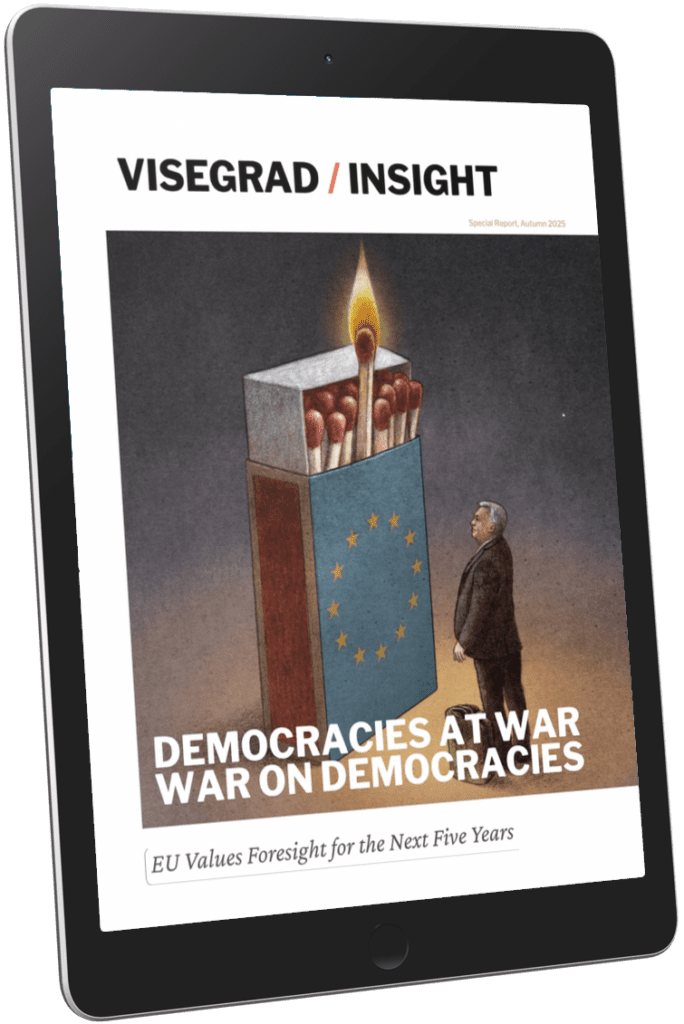
Wojciech Przybylski: In our recent EU Values Foresight report ‘Democracy at War, War on Democracies‘ we present four alternative scenarios.
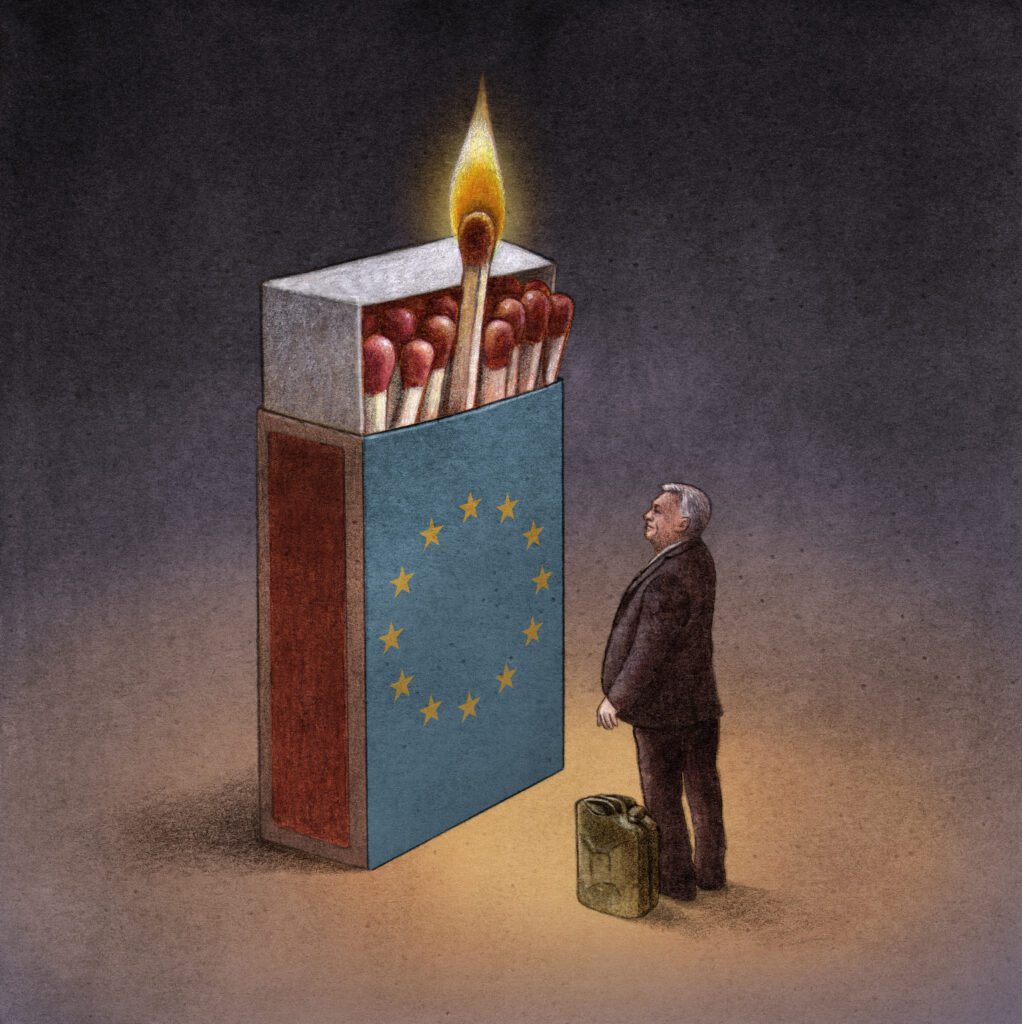
The first scenario assumes that ‘sovereigntists’ like Orbán who want the EU countries to withdraw from the common European institutional framework come to the fore. Dismantling the EU framework reduces Europe to the level of a mere free market, which is an unfinished business anyway. Such a prospect is not an abstract idea. It has been outlined in the ‘Great Reset’ policy proposal by the Mathias Corvinus Collegium (MCC), a think tank financed by Viktor Orbán’s government. The Orbán faction wants to win elections across the EU to take over the European institutions and then initiate something like ‘Brexit from within’.
The second scenario foresees an unstable status quo. The mainstream political forces supporting a strong EU hold the fort, but it is a survival strategy focused on the here and now. Therefore, an inherent instability is built into this perspective. Yet, it might turn out to be necessary in order to stay afloat in difficult times and repel ongoing attacks from Russia.
In the third scenario mainstream parties decide to turn right and take over the narrative of nationalists. Liberal and Christian-democratic parties win, but by mainstreaming the radicals, they hollow out the ambitions of the EU projects and undermine civil society, and therefore the democratic security of the Union. It is a short-lived victory because, in practice, it prepares the ground for the arrival of the far right in the medium term. Such a change of narrative drains the European project of its meaning and turns EU institutions into a political shell.
Magdalena Jakubowska: The last, fourth scenario assumes a pause in military actions in Ukraine and the arrival of a time of peace, fragile and uncertain, but opening new possibilities. In such a situation, if the mainstream pro-European forces remain in power, governments will face a challenge: how to continue justifying high spending on defence and strengthening resilience when societies stop feeling a direct threat.
This moment of geopolitical relaxation can, however, become an opportunity to define a new ambition for the Union and give its policy new momentum, also through the next phase of enlargement, which will strengthen the EU’s position and the security of the whole region. This is an ambitious but real scenario provided that the time of relative calm is used for big political change and the admission of new member states, which will genuinely push the European project forward.
Małgorzata Wołczyńska: What should we do to get as close as possible to this last scenario, then?
Wojciech Przybylski: For the fourth scenario to come true, besides strictly military aspects of the challenge, Europe must finally begin to consider civil society as seriously as Russia does. Moscow considers civil society as the key element of the Western security infrastructure, on a par with the army. The Russian kill lists targeting Ukrainian local officials, journalists, and activists, which came to light in 2022, demonstrate that Europe’s primary adversary views those who embody the ‘democratic will’ as the very obstacle to a hostile takeover of European nations.
It is therefore obvious that in European policy the civil society and its leaders must be considered as the key element of security infrastructure. It means that they also need to be identified, financed and included in a broader strategy for democratic security of Europe. The EU cannot afford to treat civil society as an add-on. But the heads of these organisations also need to step up. As they do their public work, they must recognise and deal with the security situation they partly influence.
Magdalena Jakubowska: In practice this means the consistent implementation of the European Democratic Shield, the EU strategy for civil society and standards for fighting disinformation, with money directed not only to organisations based in Brussels but above all to organisations, media and local governments ‘on the brink’ of war and authoritarianism, including in candidate countries. Only then can high defence spending be maintained as an element of defending values, not an abstract cost.
One must also build political support for enlargement that actually strengthens the security of the whole Union instead of weakening it. It is crucial that decision-makers receive the message about what really matters.

Małgorzata Wołczyńska: And which scenario, in your view, has the greatest chance of being realised? Where will we be after 2029?
Wojciech Przybylski: The bottom line is, wherever this all goes, things are getting decided, and we in Central Europe, specifically Poland, will come out better than before. For instance, the nationalist influence, especially from guys like Viktor Orbán, might cool off after the Hungarian elections in 2026. Europe really needs to quickly figure out a solid plan and the right tools for managing things effectively, especially with the Ukraine situation possibly turning into a frozen conflict. The world stage is super competitive right now, with priorities all over the place and the rules changing constantly. Plus, Europe can’t just count on the US to always take the lead on pushing democratic freedoms and sticking to international deals like it used to.
Magdalena Jakubowska: Even if Europe decides to pursue this fourth, positive scenario, it is not yet fully ready for all the challenges connected with it. This is the most important conclusion from our foresight and a warning signal that must not be ignored when talking about the future of Europe.
Democratic security comes at a price. What is yours?
Subscribe now for full access to expert analysis and policy debate on Central Europe.
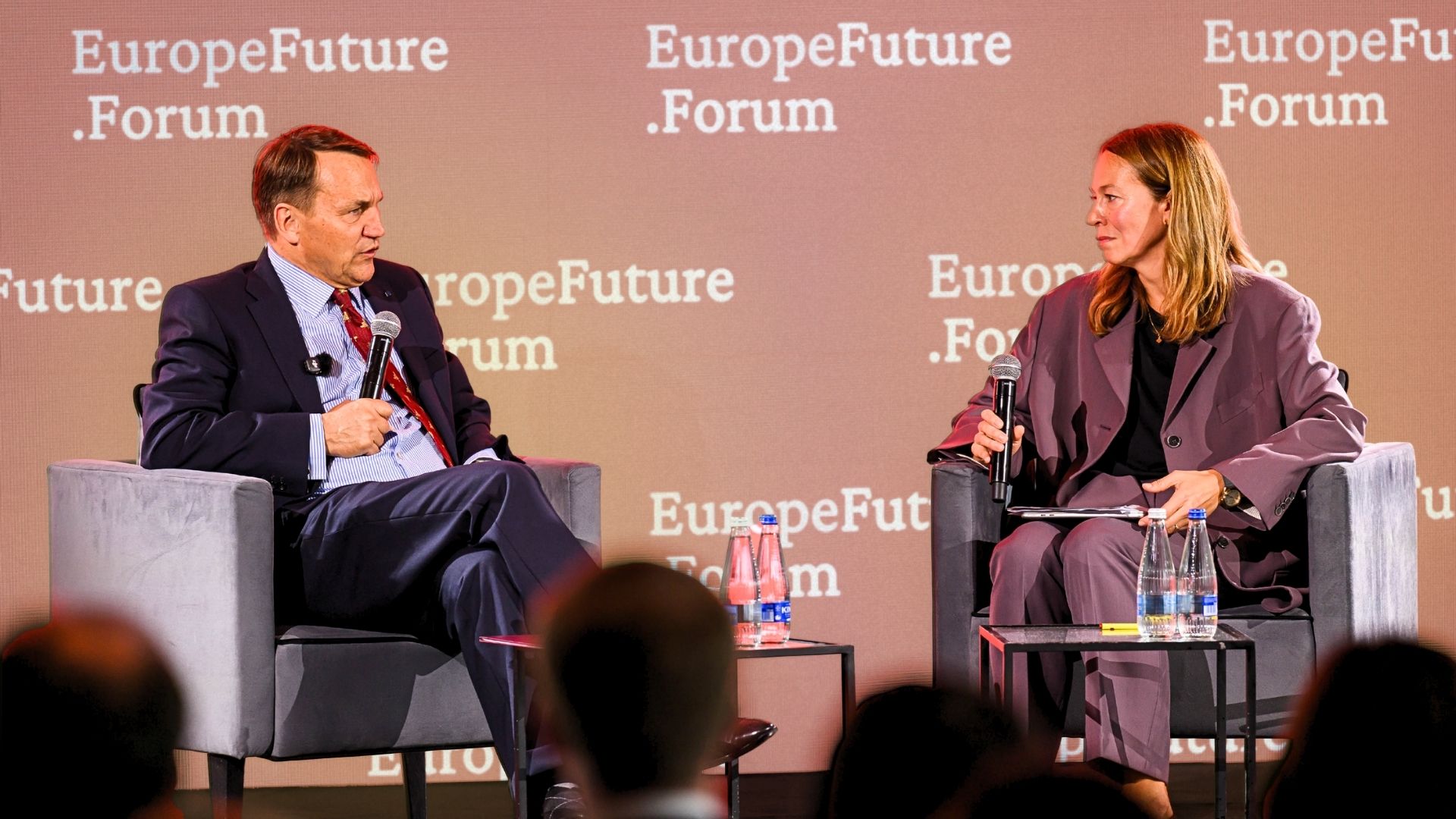
Democratic Security
Those Who Do Not Learn from This War Risk Losing the Next – Radosław Sikorski
17 September 2026
Democratic Security
Survey
Unlocked
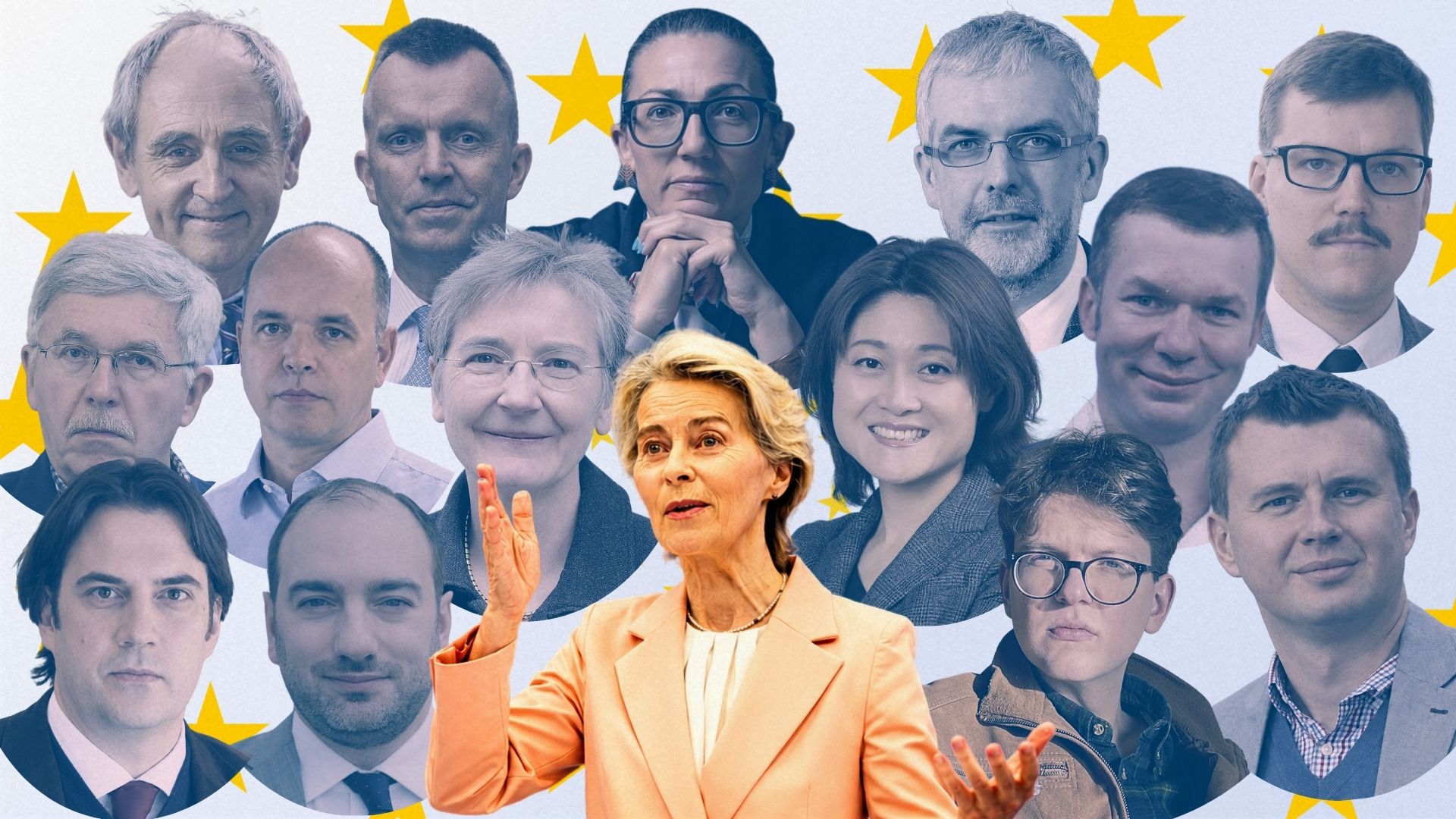
What the European Security Strategy Should Be About?
10 September 2026
Analysis
Democratic Security
Unlocked
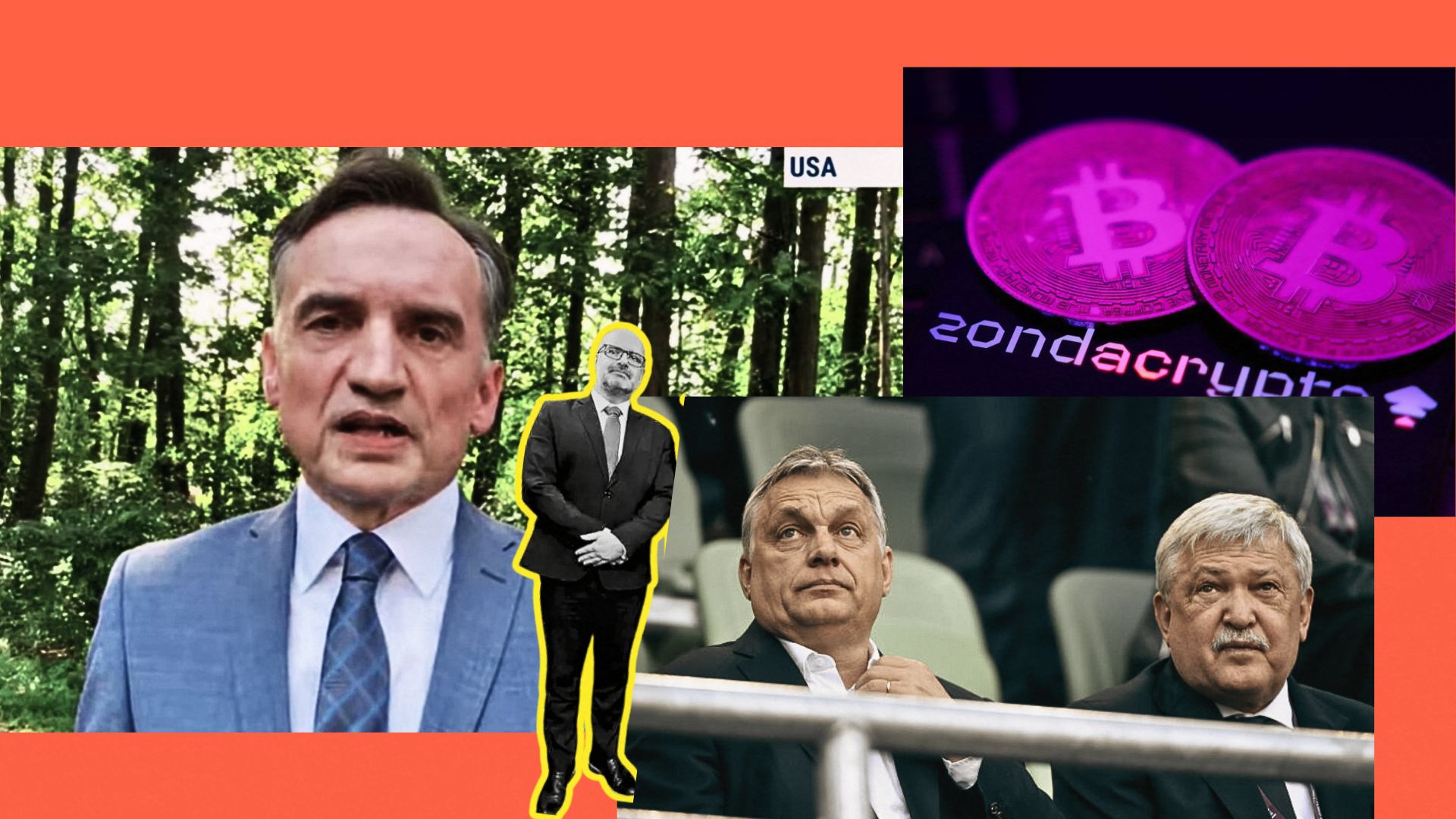
A Polish Crypto Rescue Priced on Orbán Staying in Power
9 September 2026
Economic Security
Events
Think Tank
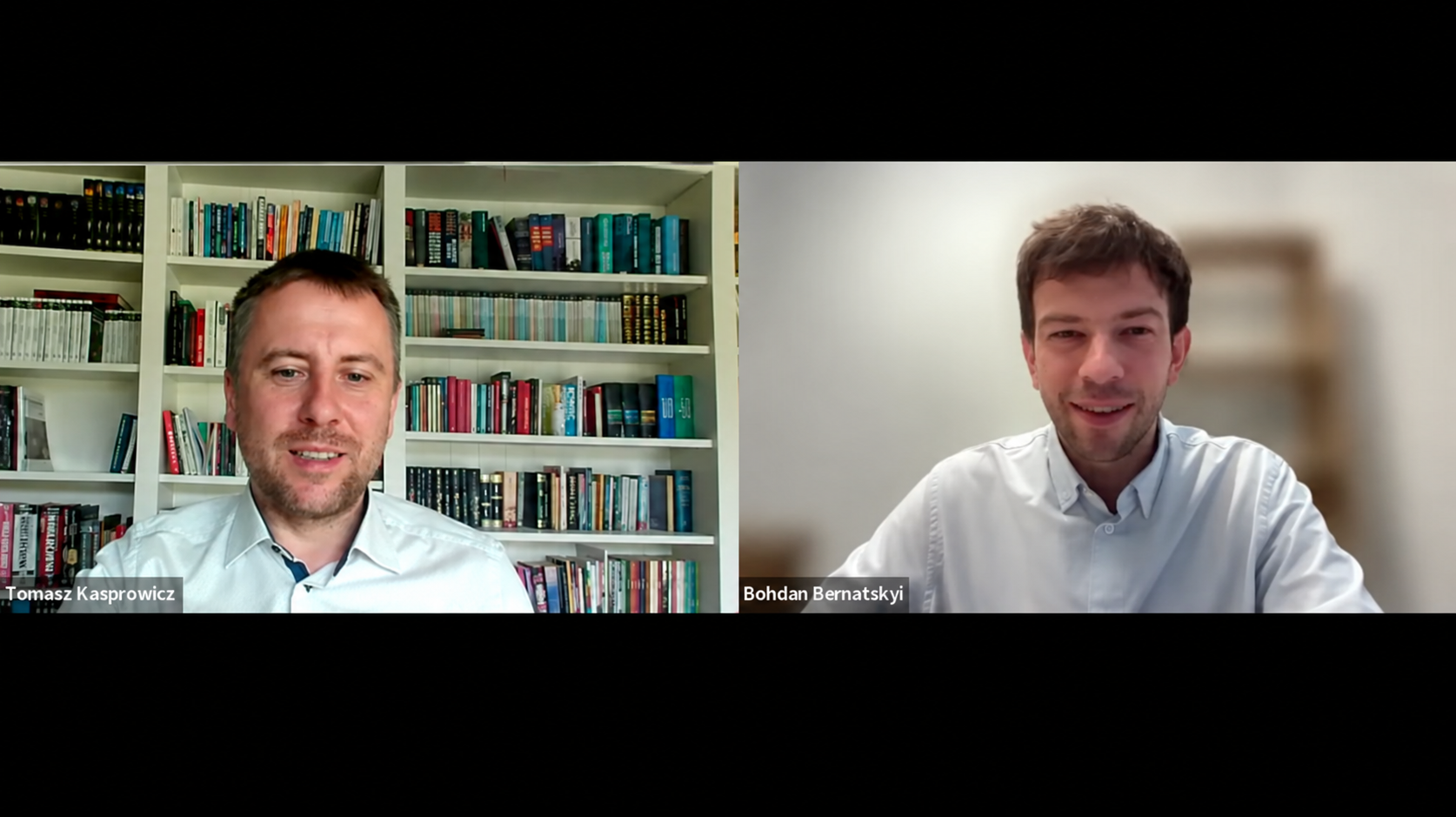
Europe Aligned with Iran Sanctions Long Before D-Day
8 September 2026