
Analysis
Democratic Security
Hungary-Ukraine Spat Gains a New Dimension – OVERVIEW
1 October 2026

10 February 2026

The relationship between Russia and the People’s Republic of China has transformed into a form of strategic coordination that allows China to benefit from the Kremlin’s willingness to absorb economic, military and political risks.
On 20 January 2026 Russian Foreign Minister Sergey Lavrov described Russia-China relations as unprecedented in both depth and scope, citing close alignment between Moscow and Beijing on developments across Eurasia and the broader international arena. Chinese Foreign Minister Wang Yi echoed this assessment earlier in December 2025, emphasising the need for strategic mutual trust and the consolidation of a comprehensive partnership.
Previously, on 28 December 2025 Lavrov publicly stated that Moscow would support China if a Taiwan contingency flares up, citing treaty obligations to defend national unity and territorial integrity. His remarks followed joint-bomber patrols near Japan involving Russian nuclear-capable Tu-95 strategic bombers operating alongside Chinese H-6 bombers as well as parallel Russian and Chinese diplomatic support for Venezuela. Rather than signalling a formal alliance, these statements and activities indicate that China is incorporating Russian actions into its broader strategic competition with the West. At the same time, Russia functions as a buffer that absorbs the costs of escalation, allowing Beijing to expand its reach across European, Indo-Pacific and Western theatres without triggering direct escalation.
On 31 December 2025 Russian and Chinese leaders exchanged New Year greetings, highlighting substantial progress in cooperation projects, particularly in implementing reciprocal visa-free arrangements and continuing the construction of the energy corridor.

Analysis
Democratic Security
Hungary-Ukraine Spat Gains a New Dimension – OVERVIEW
1 October 2026

Economic Security
Think Tank
How Poland Wants to Turn a Failing Train Maker into a Geoeconomic Asset
30 September 2026
Commentary
Economic Security
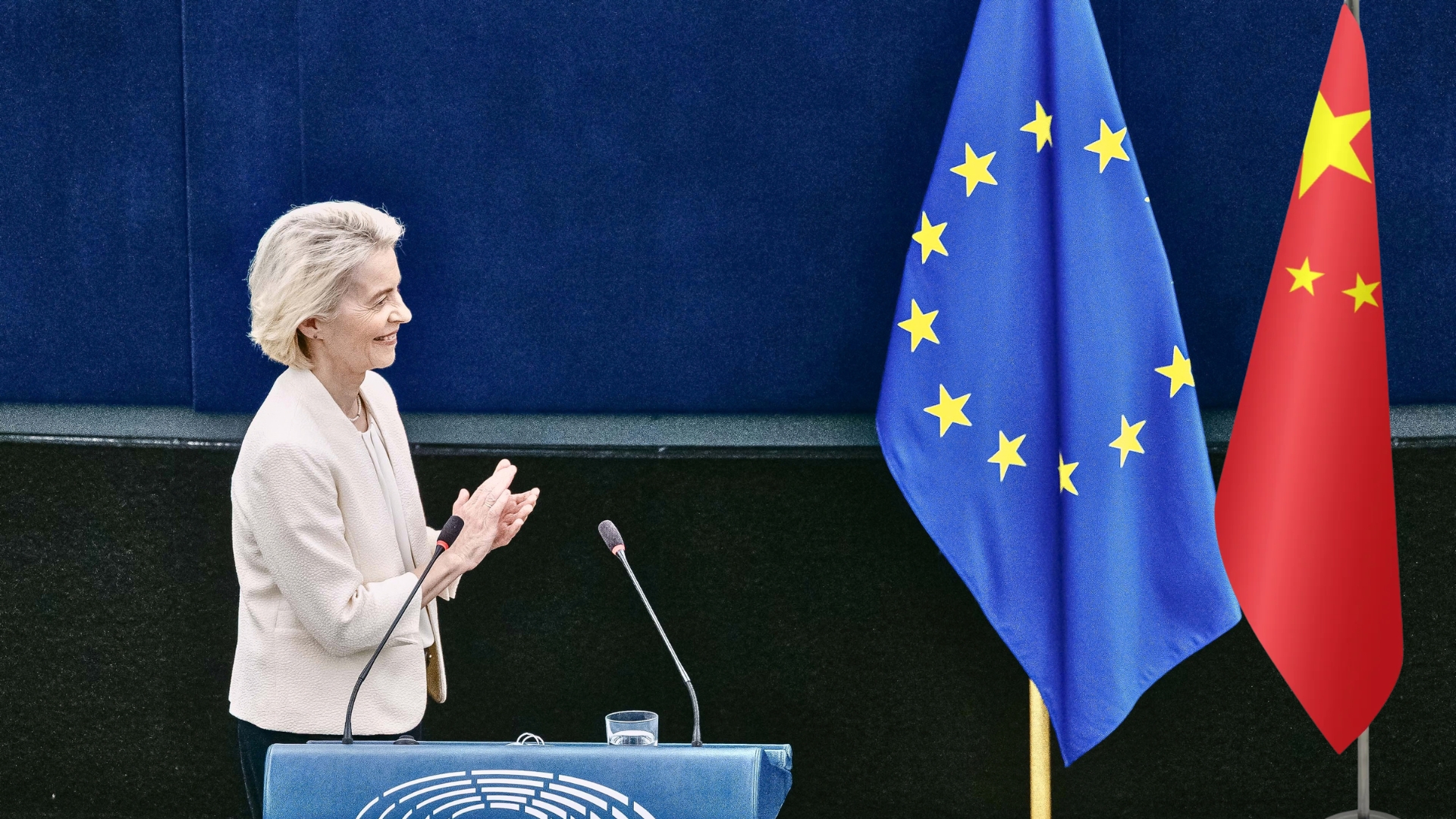
No Endgame in Von Der Leyen’s China Strategy
23 September 2026

Analysis
Economic Security
The Western Balkans Are Ageing Before Getting Rich
9 September 2026