Analysis
Economic Security
Serbia’s Balancing Act Is Running Out of Time
24 October 2026

9 September 2026
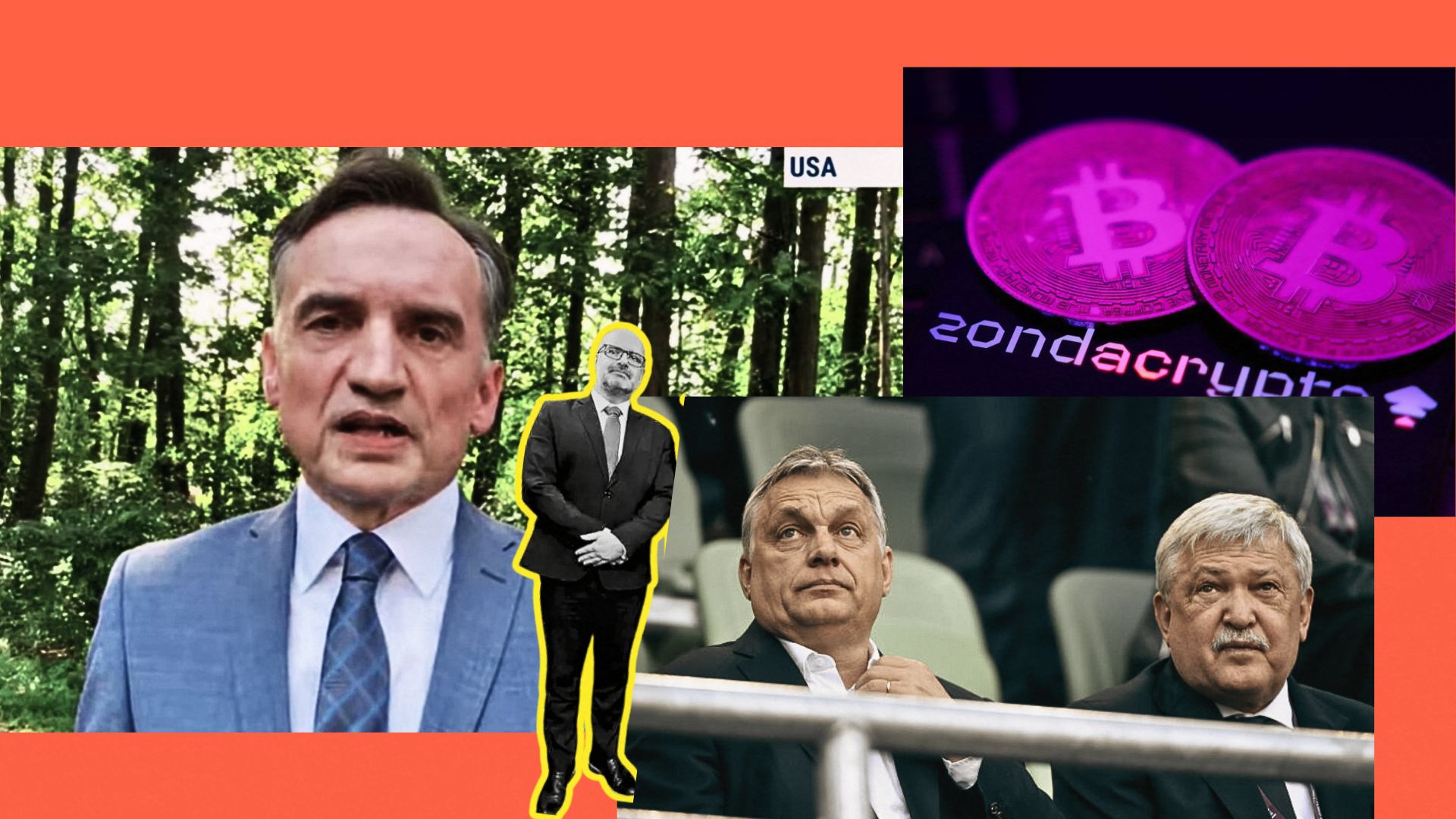
A Polish investigation into the collapsed Zondacrypto exchange shows how access to Viktor Orbán’s circle was sold as a service, priced against the Hungarian election calendar and delivered to nobody.
For nine months a retired Polish anti-corruption officer billed the head of a crypto exchange 15,000 euros a month. Part of what he sold was Hungary. He told his client that Orbán’s people would buy the exchange, pointed him towards the chairman of Hungary’s largest bank and made the deal conditional on Fidesz surviving the vote of 12 April 2026. Fidesz did not survive, the money never came and the bank says it never heard of any of it.
Reporters from TVN24 and Wirtualna Polska published on 9 September 2026 the latest instalment of a joint investigation into the affair around Zondacrypto, the Polish cryptocurrency exchange that collapsed in spring 2026. The subject is Artur Chodziński, a former officer of the Central Anti-Corruption Bureau (CBA), the Polish agency created in 2006 under the Law and Justice (PiS) government of the day.
According to the investigation, Chodziński’s consultancy Astrea Consulting issued its first invoice to Expofer Servis House s.r.o., a Czech company belonging to Zondacrypto chief executive Przemysław Kral, on 30 June 2025 for seven thousand euros. Monthly invoices of 15,000 euros followed until 31 March 2026, totalling 135,000 euros, or more than half a million zloty. Kral now faces prosecution charges over participation in fraud of significant value and is cooperating with investigators.
Chodziński denies the central characterisation of what he was paid for. ‘My remuneration was not payment for arranging political contacts, brokering decisions of state institutions or any “fixing” of Przemysław Kral’s affairs by means of such contacts’, he told the reporters, describing his work as document analysis and Open Source Intelligence (OSINT). The reporters record that he changed his account on 11 separate points within a month.
The Hungarian thread opens in February 2026, when Zondacrypto was already under pressure and Chodziński told Kral he would bring him a buyer for the whole exchange.
‘Artur Chodziński assured the exchange’s chief executive that he had an arrangement in Hungary with Viktor Orbán’s people and that the Hungarian prime minister had undertaken to invest in Zondacrypto’, people who worked around Kral at the time told the reporters. The investment was supposed to run through an oligarch described as the owner of one of the Hungarian banks.
The name arrived as Chodziński wrote: ‘Documents passed on, the story passed on. We are waiting for contact.’ Kral replied within a minute: ‘Excellent.’ And then: ‘Thank you very much. OTP Bank, well known. We have an account there.’
What followed was a sequence of progress reports and silences. ‘Przemek, Hungary. Some director of his called. «We are preparing a proposal for a financing mechanism and a few additional questions, we ask for another week»’, Chodziński wrote. Then nothing. Kral asked whether the Hungarians had gone quiet. ‘I really have been bombarding them since yesterday, but I keep hearing “a bit longer, we will call today”. I brought them into the conversation and I feel responsible for it’, came the answer. A day later, with the silence continuing, Chodziński complained that a bank chairman of that rank could at least send an apology, ‘something very important, like a granddaughter’s birthday’.
Kral, for his part, offered to fly to Budapest at any moment.
Asked by the reporters whether anyone on their side had conducted such talks, and whether an English-language email sent to ‘Arthur’ was authentic, OTP Bank and the office of Sándor Csányi answered: ‘The matter you mention is entirely unrelated to our company. We have nothing to do with it and therefore we will not comment on it.’
For readers outside the region, the choice of name explains the mechanism. Sándor Csányi has run OTP Bank since 1992 and is its chairman. OTP is Hungary’s largest commercial lender and a genuine regional multinational, operating in around 11 countries across Central and Eastern Europe and Central Asia, with total assets of roughly 54 billion dollars in 2025. Csányi is consistently among the two or three wealthiest people in Hungary, holds interests in the oil and gas group MOL and the agribusiness Bonafarm, presides over the Hungarian Football Federation and sits as a vice-president of FIFA.
He is also, in the standard shorthand of Hungarian political reporting, a figure who has operated for decades in proximity to political power, which is precisely what made him usable as a prop for Zondacrypto.
The authenticity of the English-language email quoted below has not been established by anyone other than the reporters who saw it.
The most revealing feature of the Hungarian offer is that it was priced against a date.
In March 2026 Chodziński passed on what he called a ’50/50′ message: ‘IF they stay in power on 12 April, they will go into it.’ The same day he forwarded an English-language email: ‘Dear Artur, please tell Mr Kral that we are preliminarily interested, but everything depends on the election result.’
Kral began asking about Hungarian polling. ‘You can feel the nervousness. A bit as if they were fighting for their lives. But I am optimistic’, Chodziński reported, adding that Fidesz now held a slight lead.
It did not. On 12 April 2026 the Tisza party of Péter Magyar took 141 of 199 seats in the National Assembly on turnout of almost 79 per cent, ending Viktor Orbán’s 16 years in office and handing the opposition a two-thirds constitutional majority. Orbán conceded on the night. ‘Of course nothing came of it’, one of the reporters’ interlocutors said of the investment.
But it was not. An offer that expires with a government is not an investment thesis. It is a claim about access, and it is the clearest indication in the whole file that all that Chodziński had to offer was a promise of proximity to a particular set of people, who not long after were out power.
There is a second Hungarian layer. Telling Chodziński he would fly to Budapest whenever needed, Kral added: ‘I also have something for ZZ, so we could sort that out at the same time.’
Kral does not say who ZZ is. The reporters note that Zbigniew Ziobro, Poland’s former justice minister and prosecutor general, was in Hungary at that moment, having been granted asylum by the authorities in Budapest. The investigation dates the grant to January 2026, while other reporting places the decision in December 2025 with the first public reports in early January.
The context matters. Ziobro, one of the most powerful figures of the 2015 to 2023 PiS government, faces abuse-of-power proceedings in Poland which he says are politically motivated. Orbán’s government granted refuge to him, to his former deputy Marcin Romanowski and to his wife Patrycja Kotecka-Ziobro. Granting asylum to a citizen of one European Union (EU) member state by another is structurally exceptional, since the Treaties assume member states are safe countries for one another. Earlier reporting in this same investigation established that Zondacrypto transferred 450,000 zloty to Ziobro’s Instytut Polski Suwerennej foundation after Chodziński brokered the contact. What Kral had for ZZ in spring 2026, four months after that last transfer, is not known.
That thread has since closed as well. Ziobro left Hungary for the United States on 9 May 2026, the day Magyar was sworn in. On 2 July 2026 Polish Foreign Minister Radosław Sikorski confirmed that Hungary had revoked the refugee status of all three and invalidated their travel documents.
The Hungarian promise sits inside a wider service offer. The investigation documents that Chodziński produced for Kral a file titled FUJSUSZ, containing personal data on Michał Fuja, the TVN24 reporter who had covered the exchange, including a home address, telephone numbers, email addresses and a list of close contacts, alongside a section on Nicole Suszek, sister of the missing founder of BitBay, Zondacrypto’s predecessor. Chodziński’s answers on the contents of that file shifted three times across a week.
He also repeatedly invoked contacts at the National Security Bureau (BBN), the presidential advisory body, and with people around President Karol Nawrocki. The BBN confirmed a single recorded visit, on 12 November 2025, in a group meeting. Sławomir Cenckiewicz, then head of the BBN, said his contact with Chodziński was a one-off text message about Zondacrypto to which he reacted negatively. ‘I heard he was invoking influence and someone told me he was taking photos in front of the Palace, as if he were going in or coming out. But that is nonsense, it is easy to check those entries, because there is a list of visitors’, Cenckiewicz said. Przemysław Czarnek, the PiS candidate for prime minister whose name recurs in the correspondence, told the reporters he knows neither Kral nor Chodziński. The Frontline Foundation, set up in February 2025 by former heads of Polish special services and on whose board Chodziński sat, said it learned of his work for Kral from third parties in late April 2026 and required his resignation.
The reporters conclude that the described conduct may bear the marks of the offence of trading in influence under Polish law.
The Zondacrypto file is being read in Warsaw as a Polish story about a former officer monetising a security-service career. Read from Budapest it is something narrower and more transferable. The market that Chodziński was operating in assumed that political access in one Central European capital could be packaged and resold in another, and that an incoming Hungarian investment could be conjured simply because Fidesz was expected to stay. The change of government in Budapest deleted the product. Whether Polish prosecutors treat the Hungarian thread as fabrication, as attempted influence-peddling or as something requiring cooperation with the new Hungarian authorities will determine how much of this file ever reaches a courtroom.
Democratic security comes at a price. What is yours?
Subscribe now for full access to expert analysis and policy debate on Central Europe.
Analysis
Economic Security
Serbia’s Balancing Act Is Running Out of Time
24 October 2026
Commentary
Democratic Security
Bulgaria’s Presidency Will Be Decided in The Sea
24 October 2026
Commentary
Democratic Security
Decoding the Aliberal Temptation
23 October 2026
Commentary
Democratic Security
Is Central Europe Losing the Information War?
22 October 2026