
26 March 2019
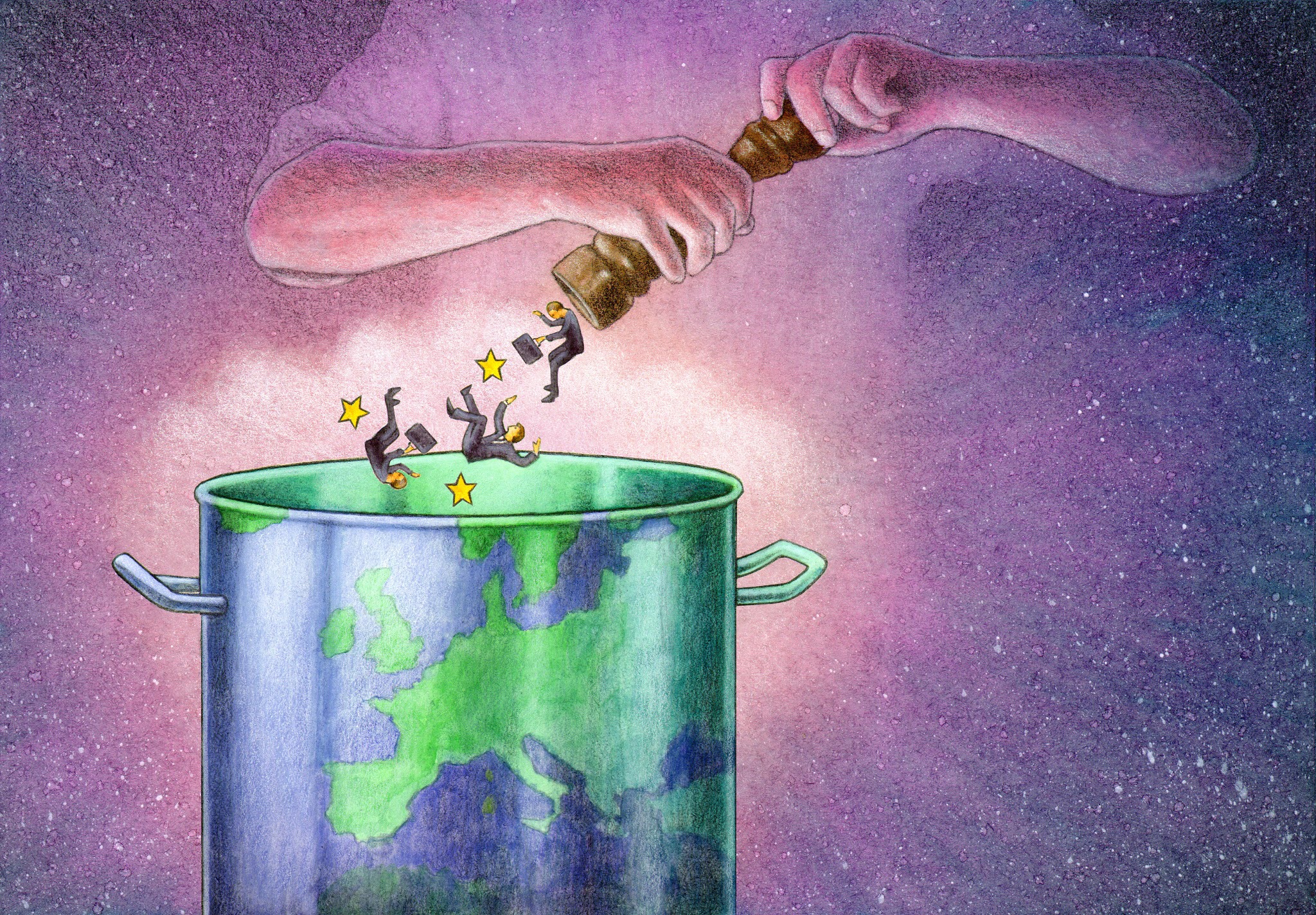
The lack of a grand coalition leaves political factions more divided. Anti-EU and exit-parties score higher than ever before. As a result, the EU is paralysed and Europe has to be managed through unstable coalitions of national governments prone to external powers’ influence.
Opinion polls – forecasting heavy losses for the EPP and S&D – turn out to be true.
This spells the end of the grand coalition and a necessity to co-opt other pro-European groupings, such as ALDE and the Greens into a new, albeit tenuous, majority.
This presents a challenging environment since the EPP and S&D have been ruling the EP ever since the direct elections were introduced in 1979.
The mixture of socialisation and cooperation between these two parties over the past 40 years cannot be overestimated, and their difficulties are exemplified by two related issues they have to contend with simultaneously.
Firstly, the declining popularity of the two mainstream parties pushes them to adopt more radical positions, which affects their prospects for cooperation.
Secondly, co-opting other factions into this loose confederation endangers the delicate ideological balance between the EPP and S&D.
However, taking in the Liberals from ALDE strengthens the pro-market dimension of the majority. It also encourages the EPP to adopt stronger pro-industrial positions, which have been often tempered by the need to satisfy the views and interests of the S&D.
At the same time, taking in the Greens strengthen the progressive elements of this confederation, which steers them towards positions contradicting the mainstream views in the EPP – including migration and social policies.
In short, the adoption of these parties with non-centrists views makes this ruling confederation more prone to internal conflicts and disagreements.
The loose coalition barely has time to contend with their own issues when a larger problem emerges from outside the majority, in particular from the eurosceptic parties.
The eurosceptics secure 26 per cent of the vote, gaining a considerable number of seats in the parliament. Sensing their potential power, the three eurosceptic groupings – the far-right ENP, the anti-European ENPP and the more-mildly eurosceptic ECR – unite forming the biggest faction of the European Parliament.
They become the most obvious alternative to those who will be dissatisfied with the mainstream parties.
However, the ties holding this group together are even more tenuous than those linking together the majority, due to the ideological differences between the radicals. The ENPP advocate for a withdrawal from the EU while others – like the ECR – are in favour of reform centred on the repatriation of powers back to national capitals.
Thus, shortly after uniting, the eurosceptic group falls apart in dramatic fashion.
The role of the Central European intake in the EP and its impact on the fragmentation will be two-fold. Those Central European parties that join the EPP and S&D will be prone to co-operation within the context of a pro-European coalition.
In fact, in Poland, the pro-European parties are already running under one banner as a European Coalition which includes Civic Platform (EPP), Popular Alliance (EPP), Alliance of the Democratic Left (S&D), Modern PL (ALDE) and the Greens (Greens-EFA). It will be natural for them to work in this ruling confederation.
After the eurosceptic coalition fails, PiS emerges to organise a new grouping in addition to those parties that already are in ECR – such as the Czech ODS and Slovak SaS and Ordinary People parties – reach out to the Italian Lega and Spanish Vox, as well.
Initially, Fidesz is invited to join the group, but they make a more radical turn and decide to forge their own alliance, unsuccessfully courting members from the ENP and ENPP.
Sensing their weak position, Orbán invites Steve Bannon and attempts to foster stronger bilateral ties between Hungary and the Trump administration to boost their international recognition. This is a misstep that leads to Fidesz’s relegation to the sidelines of the European debate.
The risk of Chinese influence on Europe rises and Beijing doubles up on its efforts to get their foot in the door while the opportunity lasts.
It materialises with Chinese companies being selected by Hungary in calls for tenders funded by the EU.
With weak and tardy opposition from the EU institutions, other countries follow suit exposing Europe to a new wave of Chinese business on the continent.
Russia finally gets sanctions lifted through its successful lobbying in many EU capitals.
Due to the nature of intergovernmental negotiations, the lifting of sanctions is pushed through Slovakia and Hungary and backed up by Austrians, Italians and Greeks.
This even generates a split in the Visegrad Group as Poland, closely tied to the U.S. position, tries to force through a unified V4 position but the move is counterproductive and partners turn their backs on Warsaw.
Turkey decides to get a better deal from European countries and new groups of migrants, allowed to pass through the country by Erdogan, start flooding through the Balkan route.
Clashes on the Hungarian border leave many dead and wounded, but there is no EU-response in an effort to avoid undermining trust in the European project across the continent.
_____
 About:
Visegrad Insight 2 (14) 2019
European Parliamentary #Futures
Download the report
Published by Res Publica Foundation
Partner: Konrad Adenauer Foundation
Supported by: ABTSHIELD
Authors:
Wojciech Przybylski, Editor-in-Chief
Marcin Zaborowski, Senior Associate
Team:
Magda Jakubowska, Director of Operations
Galan Dall, Managing Editor
Anhelina Pryimak, Editorial Assistant
Anna Kulikowska-Kasper, Contributor
Paweł Kuczyński, Illustrations
Rzeczyobrazkowe, Graphic Design